United States President Donald Trump sought to fulfil his long-standing promise of imposing high tariffs on several nations as a retaliatory move for levying high duties on the US. On April 2, which he declared as the ‘Liberation Day’ for the American economy, Trump announced a universal tariff of 10 per cent on almost all goods imported in the US, and reciprocal tariffs on around 60 countries in retaliation.
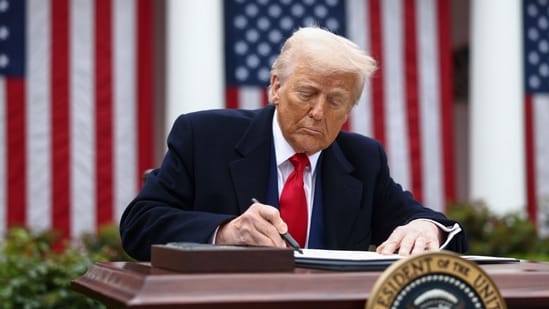
President Trump made the announcement with a chart in his hands, which named the countries set to face the reciprocal tariffs and mentioned what they charge the US and what they will now be charged. The names included key trading partners such as India, China, Vietnam, European Union among others.
While the exact impact of these duties is yet to be seen, experts have predicted that it could lead to a global trade war or instability in the global economy.
Also read: Trump tariff threats and what it means for Indo-US trade ties, explained
Here is a 10-point guide on the US reciprocal tariffs-
- The base tariff of 10 per cent on almost all US imports will be imposed by April 5, the additional reciprocal tariffs on countries will kick in on April 9. The latter are meant to take into account factors such as currency manipulation, lax pollution and labor laws, and harsh regulations that create difficulties for the US in global markets.
- Several key trading partners of the US faced high reciprocal tariffs in the April 2 announcement. China will face a 34 per cent reciprocal tariff rate, while the number is 26 per cent for India, 20 per cent for the European Union, 46 per cent for Vietnam, 24 per cent for Japan, 32 per cent for Taiwan, 25 per cent for South Korea and 36 per cent for Thailand - all of whom are major trading partners of the US.
- For China, the 34 per cent reciprocal tariff rate comes in addition to the already imposed 20 per cent tariffs by the US in February over fentanyl trafficking, cumulating to a staggering 54 per cent, according to US Treasury Secretary Scott Bessent. Russia, on the other hand, did not face any such tariff.
- In another major blow to China in Wednesday’s announcement, Trump put an end to a duty-free de minimis ‘exemption’ for small parcels from China and Hong Kong, costing less than $800. This move could impact the import of highly popular low-cost products from China to the US.
- According to the executive order signed by President Trump, Chinese products being imported using the small parcel ‘loophole’ will now face duty of either 30% of their value or $25 per item, which will increase to $50 per item from June 1.
- The growth of Chinese retailers such as Shein and Temu in the US is seen as a major reason behind the surge in shipments coming from China, making it difficult for the US officials to screen all of them.
- While Canada and Mexico, two of some of the biggest US trading partners were exempted from the Liberation Day reciprocal tariffs announcement, they already face high tariffs of 25 per cent imposed by President Trump earlier this year over allegedly not doing enough for border control and fentanyl trafficking.
- Some imports which already face a 25 per cent tariff under Section 232 of the Trade Act of 1962 such as autos and auto parts, steel and aluminum will be excluded from the newly announced reciprocal tariffs. The exemption also includes other sectors subject to ongoing or potential Section 232 national security investigations, including copper, lumber, semiconductors, and pharmaceuticals.
- To justify the new tariffs, Trump is invoking the International Emergency Economic Powers Act (IEEPA), a law that hasn’t been used to impose tariffs but only to put economic sanctions before Trump’s second term. The US President used the same law while imposing tariffs on imports from Canada, Mexico and China earlier this year.
- The new tariffs might prove difficult for the American consumers, who might be at the receiving end of bearing the cost of these tariffs. The American companies, which either have manufacturing units in the impacted countries or import their products from them, will most likely either increase their prices or stop importing - both potentially resulting in higher costs for Americans for several products.
With inputs from agencies.
{{/usCountry}}With inputs from agencies.
{{/usCountry}}