TAXIING TOWARDS the runway, the propeller stops turning as your correspondent pulls the throttle back to await take-off. On a single-engined light aircraft, that is usually a worrying sign of engine failure. Yet this plane is powered by an electric motor and, just like when you come to a halt in a Tesla, the motor stops until it is needed again. On advancing the throttle the propeller springs back to life and the aircraft is soon briskly climbing, in an
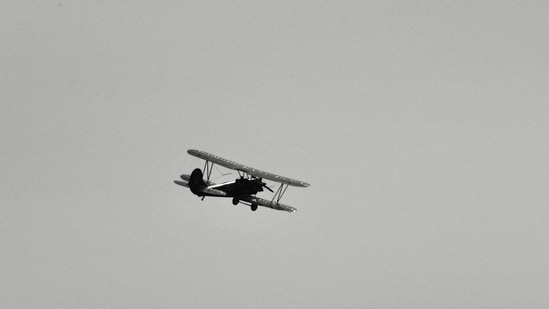
TAXIING TOWARDS the runway, the propeller stops turning as your correspondent pulls the throttle back to await take-off. On a single-engined light aircraft, that is usually a worrying sign of engine failure. Yet this plane is powered by an electric motor and, just like when you come to a halt in a Tesla, the motor stops until it is needed again. On advancing the throttle the propeller springs back to life and the aircraft is soon briskly climbing, in an eerily quiet manner.
The two-seater Pipistrel Velis Electro is the first electric aircraft to be certified for pilot training. Besides its low noise, it has other unusual features. Instead of the lengthy series of engine checks a combustion-engine plane requires before take-off, the Electro is ready to go with the flick of four switches. Since it has few moving parts, it is also cheaper to maintain. And without directly producing any nasty emissions it can claim to be green, especially if recharged with renewable power. Topping up the battery takes just over an hour.
Returning to land back at Blackbushe Airport, south-west of London, the larger expanse of Farnborough Airport looms nearby. At the eponymous biennial air show, which opened on July 20th, sustainable flying was high on the agenda. Aviation accounts for around 2.5% of anthropogenic CO2 emissions, although overall its contribution to climate change is reckoned to be greater, since high-flying jets produce other heat-trapping emissions, such as nitrogen oxides. These are proving particularly tough to clean up. As a consequence, the aviation industry’s pledge to reach net-zero emissions by 2050 will probably be missed.
Battery-powered aircraft like the Electro will reduce emission levels only slightly, for they have limited range. This plane, built in Slovenia by Pipistrel, a light-aircraft producer owned by Textron, an American aerospace group, can typically fly for no more than 50 minutes, leaving time in hand for emergencies.
Nevertheless, it is finding plenty of fans, especially among flying schools, says NEBOair, a sustainable-aviation company which leases Electros to customers. The firm is developing a network of recharging stations to enable cross-country flights. Better batteries are also in the pipeline, driven by developments in the car industry. Those in the Electro can be swapped in the future for newer versions, so its range will increase over time. Yet it is unlikely batteries will ever be powerful enough, let alone light enough, to fly large numbers of passengers any great distance.
Moreover, batteries are a deadweight, meaning that, unlike a combustion-engine aircraft, an electric plane does not benefit from getting lighter as fuel is burnt. And commercial aircraft are required to have enough fuel to circle if a runway is unavailable or to divert to another airport, which might be a long way off. Batteries powerful enough to run even a small airliner for several hours, with sufficient reserve for emergencies, would be so heavy that few, if any, passengers could be carried.
Hence the industry is increasingly looking at hybrids, which combine an electric motor and a combustion engine. Most passenger planes are powered by gas turbines, working either as jets or as turboprops, in which the turbines turn propellers. The first such hybrids are likely to be turboprops operating regional routes. There are several ways these could be made.
In Torrance, California, Heart Aerospace is developing the ES-30, a 30-seat hybrid-electric aircraft for use on short-haul journeys. This would have an electric-only range of 200km but in hybrid form it could manage 800km. Having completed ground trials, the company is about to fly a demonstrator. This will use only a pair of electric motors, which will make it the largest battery-powered aircraft ever to take off.
In the production version, a gas turbine operating as an electrical generator would be incorporated into the housing containing the electric motors. This set up would act as a “series” hybrid, meaning the propellers would always be turned by the electric motors, with the turbine providing additional electricity when required. The combination would reduce overall fuel-burn, and therefore emissions. Heart expects the ES-30 to be some 40% cheaper to operate than existing regional jets.
Also in America, GE Aerospace is developing a different arrangement, known as a “parallel” hybrid, in collaboration with NASA, the country’s aerospace agency. This is a conventional turboprop with an attached electric motor that can be used to increase the turboprop’s power during certain phases of flight, such as a take-off and climbing. A modified Saab regional airliner, which has had one of its two engines replaced with the hybrid version for testing, flew across the North Atlantic, to appear at Farnborough.
Perhaps the most intriguing aspect of electric flight, though, are car-sized electric vertical-take-off-and-landing craft (eVTOLs). These have long been talked of, but are at last starting to be deployed. Being able to hover, eVTOLs are likely to replace helicopters for some operations, and work as air taxis carrying handfuls of passengers on short flights. One, made by Vertical Aerospace, a British producer, became the first eVTOL to fly at Farnborough. The company has started working on a hybrid version to provide greater range. A lot of development work remains ahead. But in one form or another electric aviation has started to reach for the sky.
One Subscription.
Get 360° coverage—from daily headlines
to 100 year archives.
Archives
HT App & Website