...
...
Next Story

Factional fighting hits Taliban govt, differences are over Pakistan

The factional fighting is evident between the Taliban's Kandahari section headed by Mullah Mohammed Yaqoob Omari and the Kabul faction headed by Sirajuddin Haqqani. The Kandahari faction wants no interference from Pakistani ISI. However, the ISI is orchestrating power play in Kabul through Haqqanis.

Published on: Sep 21, 2021, 13:11:59 IST
By , Hindustan Times, New Delhi
Prefer HTon Google
Advertisement

More than a month after the Taliban militarily occupied Afghanistan, there is factional fighting evident between the Kandahari section headed by Mullah Mohammed Yaqoob Omari and the Kabul faction headed by Sirajuddin Haqqani, head of eponymous global terror network with Emir-ul-Momeen or supreme leader Haibatullah Akhundzada nowhere in picture and presumed dead.
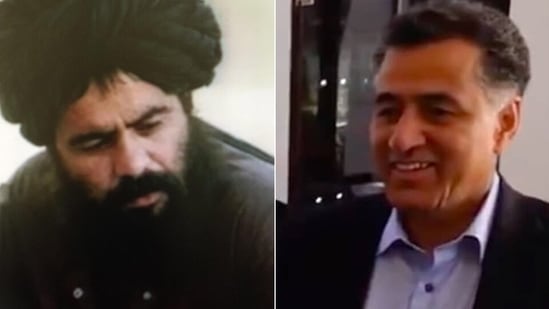
The terrorist and his handler: This combination photo shows Sirajuddin Haqqani (left) and Pakistan ISI chief Lieutenant General Faiz Hameed (right). Haqqani is the interior minister of Afghanistan who has a $10 million bounty on his head.

While reports from western media indicate that Mullah Abdul Ghani Baradar has been kidnapped by the Haqqani faction, Kabul watchers confirm that the man who negotiated the peace process with US is sulking in Kandahar. The Kandahari faction headed by defence minister Mullah Yaqoob wants no interference from Pakistani ISI, which is coveting Afghanistan as Pakistan occupied territory. Mullah Baradar on his part wants that all commitments made to the US with Qatar, UK and Pakistan acting as brokers should be honoured and an inclusive government with representation from minorities and women should be formed in Kabul.

However, the situation in Afghan capital is totally different with ISI orchestrating the power play in Kabul through the Haqqani family terror company. As Zadran tribe, which is dominant in Haqqani network, has control over Kabul-Jalalabad axis up to Khyber border, the Haqqani brothers are running the show with no less than 6,000 heavily armed cadre on streets of Kabul. Prodded by the Pakistani deep state, the Haqqanis do not want to share power with other communities and see no role for women in the government.

The problem has got more complicated in Afghanistan as the supreme leader Hibatullah Akhundzada is nowhere to be seen for the past five months. While Akhundzada could have played a major role in reconciling the differences between Kandaharis and Kabul-ites over power sharing, intelligence agencies are saying that the supreme leader may have been killed. He was last seen in Karachi Army cantonment more than five months ago by intelligence agencies.

While countries like UK and Germany want to warm up to Pakistan to gain access to Taliban by supplying them humanitarian aid, France and other members of EU are in no mood to cultivate Islamabad for the same. The EU apart from Germany is most upset with Pakistan for foisting a terror government in Kabul, and will not engage the Taliban till a inclusive government with women representation is formed.

 
ABOUT THE AUTHOR
Shishir Gupta

Shishir Gupta is Executive Editor at Hindustan Times and one of India's top journalists covering national security, strategic affairs, foreign policy and geopolitics. Over the past three decades, he has extensively reported on India's military, diplomatic and security landscape, covering every major conflict and national security challenge, from the 1999 Kargil War and the 2020 East Ladakh standoff to Operation Sindoor in 2025. He has also covered major terror attacks, including the IC-814 hijacking, the 26/11 Mumbai attacks and the 2025 Pahalgam terror strike, along with numerous Pakistan-backed terrorist incidents in the Kashmir Valley and across India. He has reported on national and state elections for more than three decades. A recognised authority on strategic affairs, Gupta has covered India's nuclear programme since the Pokhran-II (Shakti series) tests in May 1998 and has written extensively on global nuclear issues, Indian diplomacy and the country's expanding global outreach. He has also reported widely on international conflicts and terrorism, with a special focus on the Indian subcontinent. Gupta has interviewed Prime Minister Narendra Modi more than four times, including Modi's first interview with the print media after becoming Prime Minister in May 2014. His other interviews include three with the Dalai Lama, as well as conversations with Benjamin Netanyahu, Amit Shah, Yogi Adityanath, S. Jaishankar, Nirmala Sitharaman and Piyush Goyal. He is the author of Indian Mujahideen: The Enemy Within (Hachette, 2011) and Himalayan Face-off: Chinese Assertion and Indian Riposte (Hachette, 2014). He was awarded the Chevening-Wolfson Joint Scholarship at Wolfson College, University of Cambridge, UK, in 1998 and participated in the International Visitor Leadership Program (IVLP) of the US State Department in 2006. He received the Ben Gurion Prize from Israel in 2011 and the K. Subrahmanyam Prize for Strategic Studies in 2015 from the Manohar Parrikar Institute for Defence Studies and Analyses (MP-IDSA). Since 2024, he has hosted Point Blank, Hindustan Times' weekly YouTube show on global geopolitics.

Get the latest World News, breaking headlines and global updates from the US, UK, Pakistan, Bangladesh, Russia and other countries. Follow major international events on Hindustan Times.
SHARE THIS ARTICLE ON
Hindustantimes wants to start sending you push notifications. Click allow to subscribe