
 E-Paper



‘Far beyond missiles and drones’: Iran's Mojtaba Khamenei vows to fight ‘global arrogance’ in Eid & Nowruz message
In his Eid and Nowruz message, he said, “I express my condolences and sympathy to all the families and survivors of the honorable martyrs.”

 Prefer HTon Google


Iran's Supreme Leader Ayatollah Mojtaba Khamenei said on Friday that the war with Israel and US “goes far beyond missiles, drones, torpedoes, and battlefield”. In his Eid and Nowruz message, he said, “I express my condolences and sympathy to all the families and survivors of the honorable martyrs.”
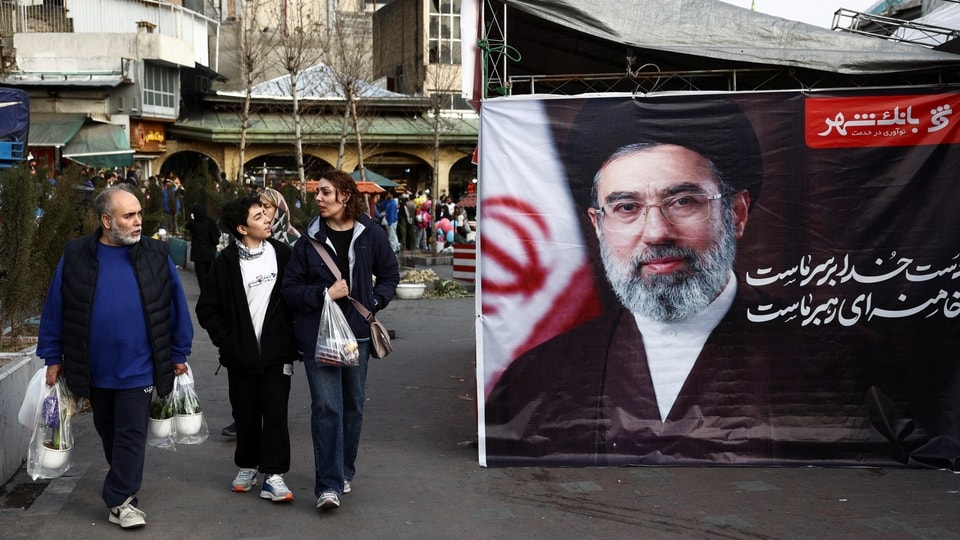
He also praises his country's “relentless resistance” to “global arrogance”.
Track: Live updates on the war here
“This year, the spring of spirituality and the spring of nature – i.e., the auspicious Eid al-Fitr and the age-old Eid of Nowruz – have coincided, and I congratulate each and every one of the people of the nation on these two religious and national holidays,” said one of a series of X posts by Khamenei, who took the top post after his father, Ali Khamenei, was killed in a US-Israeli strike on the first day of the war on February 28.
“In the Name of Allah, the Most Compassionate, the Most Merciful. O Transformer of hearts and sights, O Director of nights and days, O Transformer of situations and circumstances, Transform our circumstances to the best of circumstances!” posted Mojtaba, who is also a top Shia Muslim religious leader.
On the conflict with the US and Israel, he wrote, “In the past year, our people have experienced three military and security wars. The first war was the June war, when the Zionist enemy, with the special help of the United States and in the midst of negotiations, martyred about 1,000 of our fellow citizens,” referring to the Israeli aggression, backed by the US, for 12 days last year. He claimed that “the enemy… saved itself through mediation and cessation of fighting”.
Iran has maintained that was the US-Israeli side that sought a ceasefire last time, and later sat down with Tehran for talks, in the middle of which the new attack was launched at the end of February.
He called the January protests in Iran “the second war” and “the January Coup”.
He said that was when “the US and the Zionist regime, thinking that the Iranian people were implementing the enemy’s vision due to the economic problems, used their mercenaries to create countless disasters”.
The US has insisted it acted this time as a “pre-emptive” move, as Trump claims Iran “would have attacked us, if we did not act".
Iranian foreign minister again replied to this claim on X on Friday, saying, “We are men and women of principles. Iranians do not sneak attack adversaries while engaged in dialogue. Only when attacked do we powerfully respond. We have intelligence on Israeli plans to strike infrastructure. Once again: ZERO restraint if our infrastructure is attacked.”


