
Fewer countries ban same-sex relations than a decade ago and more lesbian, gay, bisexual and transgender (LGBT) people have legal protection from discrimination, but homophobic violence and abuse is rife, a global rights group said on Monday.
The International Lesbian, Gay, Bisexual, Trans and Intersex Association (ILGA) said same-sex sexual activity was a crime in 72 countries, a drop from 92 in 2006, when the global rights group began documenting laws regarding LGBT people.
Suggested For You
Gay marriage is now legal in 23 countries, and 43 states have banned hate crimes, including on the basis of race and sexual orientation, according to the ILGA report.
“Hate crimes (against LGBT people) are being really noticed in the world. So protections for people who ... are hurt on the basis of sexual orientation are increasing,” co-author of the report Aengus Carroll told the Thomson Reuters Foundation.
Last year, the United Nations Human Rights Council appointed Vitit Muntarbhorn as its first independent investigator to help protect homosexual and transgender people worldwide from violence and discrimination.
But ILGA said attacks against the LGBT community is still common, most recently in Russia’s majority Muslim republic of Chechnya, where over 100 gay men or men suspected of being gay were rounded up and tortured, newspaper Novaya Gazeta reported last month.
{{/usCountry}}But ILGA said attacks against the LGBT community is still common, most recently in Russia’s majority Muslim republic of Chechnya, where over 100 gay men or men suspected of being gay were rounded up and tortured, newspaper Novaya Gazeta reported last month.
{{/usCountry}}“The ongoing case of Chechnya offers us the most recent, horrific example of such abuses,” said Renato Sabbadini, ILGA’s executive director, in a statement.
“Survivors have expressed fears that the social media accounts of men perceived to be gay or bisexual are being hacked and used to identify and contact others who have not yet been arrested.”
Across eight countries, including Iran, Saudi Arabia, Yemen and Sudan, having gay sex could result in the death penalty.
Hundreds of LGBT people have been killed and thousands injured in recent years, in violence that included knife attacks, anal rape and genital mutilation, as well as stoning and dismemberment, the U.N. said in a 2015 report.
In 2011, the U.N. rights body declared there should be no discrimination or violence against people based on their sexual orientation.
Carroll said there was no country where LGBT people, including himself, would feel entirely safe from homophobic attacks if they were with their partner.
“There’s nowhere in the world at the moment where I would say that LGBT people would feel super safe. Absolutely none,” he said.
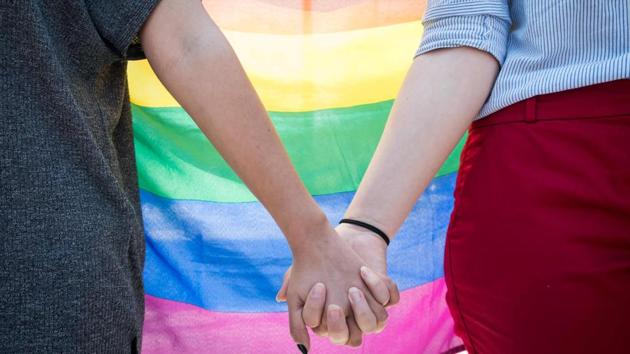
In April, a married gay couple in the Netherlands were beaten for walking hand-in-hand, which prompted Dutch men around the world to hold hands as a campaign against homophobic violence.
“Is there a possibility that we could stop having these fights? said Carroll.
“I would like to see that happen through legislative change across the planet, but it’s not going to be easy. We’re going to need to fight for quite a long time.”
Explore More
ABOUT THE AUTHOR
Follow the latest breaking news, major developments and agenda-setting stories from India and around the world with the newsdesk at Hindustan Times. Operating round the clock, the desk brings together experienced editors, reporters and correspondents to deliver fast, accurate and contextual reporting across subjects that influence public policy, governance, business, society and international affairs. The HT News Desk covers politics, elections, government policies, the economy, business and markets, science and technology, the environment, law and order, infrastructure, education, climate issues and geopolitics, while closely tracking developments across states, institutions and global capitals. The team also leads coverage of major breaking news events, policy announcements, court proceedings, natural disasters, public emergencies and significant international developments. Reports published by the newsdesk are based on information gathered from reporters on the ground, official statements, government agencies, court records, regulatory filings, recognised institutions and other authoritative sources. Stories undergo editorial scrutiny and verification processes to ensure accuracy, fairness and relevance, and are updated as events evolve and additional information becomes available. Whether covering a key political decision in New Delhi, an economic policy shift affecting millions, a landmark court ruling or a major global event, the HT News Desk aims to provide readers with reliable, fact-based journalism that delivers not only the latest developments but also the context and analysis needed to understand their wider implications.