Hamilton Police said that they are investigating reports that sewing needles were found in Halloween chocolate bars possibly collected on Limeridge Rd between Upper Ottawa St and Upper Kenilworth Ave. They urged parents and teachers to check their children’s candies before they consume them.
What Hamilton Police said
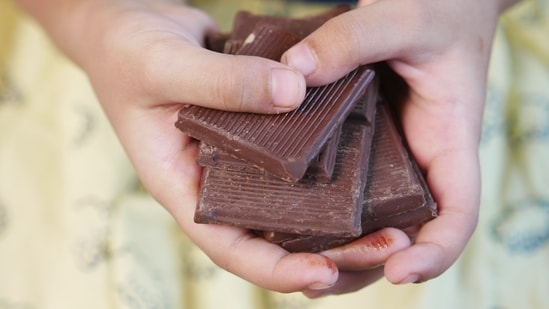
Officers responded to a residence near Upper Ottawa Street and Mohawk Road on Tuesday, November 2, after a parent reported that they found needles in candy their children had collected while trick-or-treating. These chocolate bars included Aero, KitKat and Caramilk.
Also Read | Luca Hanlon remembered by friends as 19-year-old CU Boulder student killed by Omar Perez on Halloween night
“Police believe the candy may have been collected along Limeridge Road, between Upper Ottawa Street and Upper Kenilworth Avenue, on either side of the street,” Hamilton Police Service said in a release. “Parents and caregivers are urged to inspect all Halloween candy before children eat it. If you find anything suspicious, do not consume or discard it. Keep the candy and packaging and contact police.”
Shocking photos shared by police show needles protruding from chocolate bars.
{{/usCountry}}Shocking photos shared by police show needles protruding from chocolate bars.
{{/usCountry}}An investigation is underway, and anyone with information is urged to contact the Division 30 Staff Sergeant at 905-546-3886.
Also Read | Omar Perez, suspect in deadly Halloween shooting near CU Boulder, arrested
The kids got the chocolates while trick-or-treating, a tradition that became popular in the US in the early to mid-twentieth century. Halloween reached the US by the mid-nineteenth century, the Smithsonian estimates that the practice of trick-or-treating did not start stateside until the 1920s. This is when Halloween pranks became popular, which explains the "trick" part of "trick-or-treat."
The earliest recorded use of the phrase "trick-or-treat" in the United States is from 1928, per The Providence Journal.
The Library of Congress blog states that earlier, treats were not always candy, but also fruit, nuts, coins and toys.