...
...
Next Story

Heavy losses to Taliban in Kapisa as Afghan resistance counterattacks

Panjshir is the only province giving fight to the Taliban, which seized power in Afghanistan earlier this month in the wake of withdrawal of US forces. The counter-attack comes days after terror group Islamic State carried out blasts near the Kabul airport in which more than 150 people were killed.

Published on: Aug 28, 2021, 19:28:19 IST
By , Hindustan Times, New Delhi
Prefer HTon Google
Advertisement

Taliban suffered heavy casualties in Afghanistan's Kapisa province, as the resistance force under former vice president Amrullah Saleh gave a fitting reply to the insurgent group. The clashes are taking place in Sanjan in Kapisa province and Khost Wa Fereng district in Baghlan.
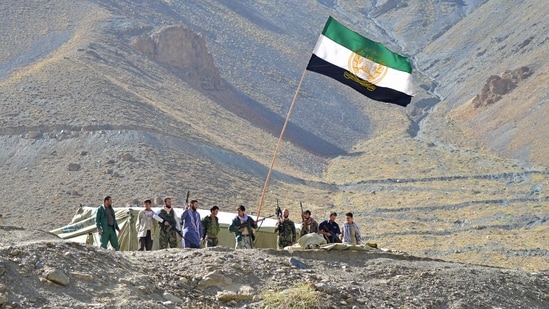
Afghan resistance movement and anti-Taliban uprising forces stand guard on a hilltop in the Astana area of Bazarak in Panjshir province. (AFP Photo)

The resistance forces are, meanwhile, also giving the Taliban a tough fight in Panjshir province, forcing the Sunni Pashtun group to pull back. The counter-attack is a result of violation of ceasefire by the Taliban in Panjshir.

Panjshir is the only province not captured by the Taliban, which seized power in Afghanistan earlier this month in the wake of withdrawal of US forces. The counter-attack comes days after terror group Islamic State carried out blasts near the Kabul airport in which more than 150 people, and 13 American soldiers, were killed.

After the attacks, Saleh asked the world to unite against terrorism. "The world must not bow to terrorism. Let's not allow Kabul airport to be the site for humiliation of humanity & "rules based world order". Let's believe in our collective effort and energy. Defeatist psyche puts you under risk more than terrorists. Don't die psychologically," he tweeted on Friday.


There is still confusion between the factions of Taliban about forming an Islamic Emirate in Afghanistan. According to reports from Afghanistan, the Haqqani network has taken control of the capital city led by Anas Haqqani, brother of Sirajuddin Haqqani, head of the terrorist group and deputy leader of the Taliban. Sirajuddin Haqqani is said to be passing instructions from Quetta.

Meanwhile, the Taliban faction headed by Mullah Yaqoob, son of late Mullah Omar and head of Taliban military commission, is eyeing Kandahar, the traditional seat of Pashtuns. Taliban leader Abdul Ghani Barader met Mullah Yaqoob after he arrived from Doha on August 18. It was here in Kandahar that Mullah Yaqoob’s father was declared Emir ul Momeen on April 4, 1996. The religious head of Taliban, Mullah Haibatullah Akundzada, is still based in Karachi in Pakistan.

Haqqani network is known as the most radical and violent branch of the Islamist movement. It has perpetrated the deadliest attacks in Afghanistan in the last 20 years. The group was formed by Jalaluddin Haqqani, who was a valuable CIA asset in the 1980s. He later allied with the Taliban and also served as a minister between 1996 and 2001.

 
ABOUT THE AUTHOR
Shishir Gupta

Shishir Gupta is Executive Editor at Hindustan Times and one of India's top journalists covering national security, strategic affairs, foreign policy and geopolitics. Over the past three decades, he has extensively reported on India's military, diplomatic and security landscape, covering every major conflict and national security challenge, from the 1999 Kargil War and the 2020 East Ladakh standoff to Operation Sindoor in 2025. He has also covered major terror attacks, including the IC-814 hijacking, the 26/11 Mumbai attacks and the 2025 Pahalgam terror strike, along with numerous Pakistan-backed terrorist incidents in the Kashmir Valley and across India. He has reported on national and state elections for more than three decades. A recognised authority on strategic affairs, Gupta has covered India's nuclear programme since the Pokhran-II (Shakti series) tests in May 1998 and has written extensively on global nuclear issues, Indian diplomacy and the country's expanding global outreach. He has also reported widely on international conflicts and terrorism, with a special focus on the Indian subcontinent. Gupta has interviewed Prime Minister Narendra Modi more than four times, including Modi's first interview with the print media after becoming Prime Minister in May 2014. His other interviews include three with the Dalai Lama, as well as conversations with Benjamin Netanyahu, Amit Shah, Yogi Adityanath, S. Jaishankar, Nirmala Sitharaman and Piyush Goyal. He is the author of Indian Mujahideen: The Enemy Within (Hachette, 2011) and Himalayan Face-off: Chinese Assertion and Indian Riposte (Hachette, 2014). He was awarded the Chevening-Wolfson Joint Scholarship at Wolfson College, University of Cambridge, UK, in 1998 and participated in the International Visitor Leadership Program (IVLP) of the US State Department in 2006. He received the Ben Gurion Prize from Israel in 2011 and the K. Subrahmanyam Prize for Strategic Studies in 2015 from the Manohar Parrikar Institute for Defence Studies and Analyses (MP-IDSA). Since 2024, he has hosted Point Blank, Hindustan Times' weekly YouTube show on global geopolitics.

Get the latest World News, breaking headlines and global updates from the US, UK, Pakistan, Bangladesh, Russia and other countries. Follow major international events on Hindustan Times.
SHARE THIS ARTICLE ON
Hindustantimes wants to start sending you push notifications. Click allow to subscribe