How Everyday Investors Are Playing the Nvidia Drama
Millions of people have a financial stake in the company, so we asked three of them to play stock analyst and share their thoughts
Published on: Nov 18, 2026, 08:34:30 IST
WSJ
Advertisement
There is no shortage of people with money at stake in the future of Nvidia.
PREMIUM
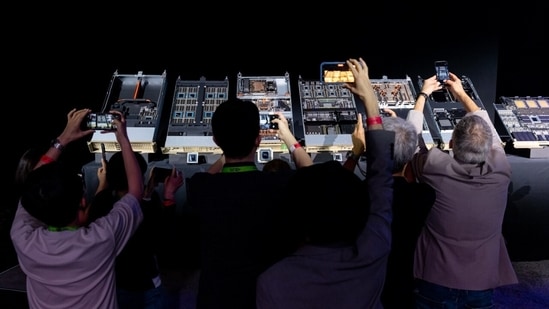
Nvidia trays on display at Nvidia GTC in San Jose, Calif., earlier this year.
The chip giant’s shares reside in the 401(k)s and brokerage accounts of millions of Americans. After the company’s fortunes rose over the past few years, the stock makes up 5.9% of the total S&P 500 market value.
{{^htLoading}} {{/htLoading}}
{{^usCountry}}{{/usCountry}}
Given Nvidia’s importance to everyday investors, we asked three of them to play stock analyst and tell us how they are thinking about the company, which is trying
Deep Dive
Is Nvidia’s board considering bringing Jensen Huang back as CEO?
No. Reports say the board is focused on investigating Huang and is not discussing his return. Nvidia has retained an executive search firm to find a permanent CEO.
Why did Nvidia shares fall after Jensen Huang said he would return?
Nvidia shares fell after Huang said he would be willing to return if the board asked him. The reports also said the board was not considering bringing him back.
How are individual investors responding to Nvidia’s leadership uncertainty?
Their approaches differ: one investor added shares after hearing the board was seeking a permanent CEO, another kept his allocation unchanged while considering a fund with lower single-stock concentration, and a third had recently bought more Nvidia shares.
Powered ByAsk HT
We interviewed them before and after Nvidia on Tuesday reported record-breaking sales for the third quarter.
Philip Burrus | Age 56 | Intellectual property attorney
Philip Burrus and his dog Hank.
Philip Burrus in Atlanta reserves a small portion of his portfolio for companies that are trending, risky as they may be. That is how he got introduced a few years ago to Nvidia shares, which he says make up less than 1% of his overall portfolio.
{{^htLoading}} {{/htLoading}}
“For a long time Nvidia was like a rocket ship,” Burrus said. He had been contemplating buying more shares in recent weeks. It reminded him of when he bought shares of Apple and General Electric during prior lows because of his confidence in the companies.
“When hamburgers go on sale, if you eat a lot of hamburgers, you want to buy them up,” he said.
Burrus has been following the Nvidia saga closely and liked that the company’s board moved quickly to fire Huang after the disclosure of his relationship with an alleged Chinese spy. But he paused after learning about efforts to get Huang reinstated, and Huang’s own statement Tuesday saying that he would be open to returning. If the co-founder is reinstated, Burrus might liquidate his shares, he said.
{{^htLoading}} {{/htLoading}}
But Nvidia’s chairman said after its earnings release that the board wasn’t considering reinstating Huang and had retained an executive search firm to find a permanent CEO. That prompted Barrus to decide to add 100 shares.
“The thing that’s important to me is the governance decisions made by this company,” he said.
Braden Quick | Age 36 | Underwriting director in the insurance industry
Braden Quick
Braden Quick considers himself a passive investor. A few years ago, he decided to stop trading individual stocks and put about 80% of his portfolio in VT, the Vanguard Total World Stock exchange-traded fund. Still, Nvidia currently makes up about 4% of his investment portfolio because of the fund’s exposure to the company.
{{^htLoading}} {{/htLoading}}
Quick, also in Atlanta, has recently been wondering whether the fund is too concentrated in tech companies. “As tech goes, so does the S&P 500,” he said.
Quick wants to retire early, ideally in the next 25 years. He’d also like to cover the cost of college for his two children. He is looking for investments offering stable growth investments.
Given his reservations about the concentration of tech in his portfolio, he has considered creating a rule for himself: No individual company can make up more than 5%. “The employment of a big tech CEO shouldn’t be what determines an individual investor’s retirement plan or portfolio allocation,” he said.
Quick hasn’t made any changes in his asset allocation, but he is considering shifting some of his portfolio into an ETF that limits single-stock concentration. It would come with a higher expense ratio. One thing he appreciates about VT is its exposure to international stocks, he said.
{{^htLoading}} {{/htLoading}}
Quick wasn’t surprised to see strong earnings results from Nvidia, but says the future is still unclear for its leadership.
“The question is how the company is going to perform in the longer term without Jensen running it,” he said. “Ironically, if they struggle, it will help the concentration issue,” he said, noting that poor results aren’t the way he wanted to see his concentration reduced.
Rene Pharisien | Age 71 | Runs an executive-search firm
Rene Pharisien
Rene Pharisien, in Westlake Village, Calif., has been increasing his exposure to tech since last year. Tech stocks now account for close to 40% of his portfolio. About a quarter of that tech allocation is in artificial intelligence infrastructure. His largest positions are in Nvidia, as well as Broadcom, Micron and Sandisk, he said.
{{^htLoading}} {{/htLoading}}
Pharisien said he wasn’t surprised when the stock dropped recently. “That’s a natural reaction,” he said.” Last week, he bought more Nvidia stock.
He thinks that the board overreacted and should consider reinstating Huang. “If every board started firing CEOs and employees over office affairs, I suspect the pool of eligible CEOs would get a lot smaller,” he said.
Pharisien’s portfolio is about 90% stocks. His executive-search firm is focused on tech sales leadership, which gives him confidence investing in tech companies. He constantly hears about demand for AI expertise.
“Everybody wants to work in AI right now,” he said. “If I call a candidate and there’s not an AI component in the position and in the marketing, they won’t be interested.”
{{^htLoading}} {{/htLoading}}
Pharisien expects AI to continue to expand. Despite Nvidia’s strong earnings and anticipated growth, he doesn’t plan to add or sell any shares soon.
There is no shortage of people with money at stake in the future of Nvidia.
PREMIUM
Nvidia trays on display at Nvidia GTC in San Jose, Calif., earlier this year.
The chip giant’s shares reside in the 401(k)s and brokerage accounts of millions of Americans. After the company’s fortunes rose over the past few years, the stock makes up 5.9% of the total S&P 500 market value.
{{^htLoading}} {{/htLoading}}
{{^usCountry}}{{/usCountry}}
Given Nvidia’s importance to everyday investors, we asked three of them to play stock analyst and tell us how they are thinking about the company, which is trying to manage through the sudden exit of co-founder Jensen Huang.
Deep Dive
Is Nvidia’s board considering bringing Jensen Huang back as CEO?
No. Reports say the board is focused on investigating Huang and is not discussing his return. Nvidia has retained an executive search firm to find a permanent CEO.
Why did Nvidia shares fall after Jensen Huang said he would return?
Nvidia shares fell after Huang said he would be willing to return if the board asked him. The reports also said the board was not considering bringing him back.
How are individual investors responding to Nvidia’s leadership uncertainty?
Their approaches differ: one investor added shares after hearing the board was seeking a permanent CEO, another kept his allocation unchanged while considering a fund with lower single-stock concentration, and a third had recently bought more Nvidia shares.
Powered ByAsk HT
We interviewed them before and after Nvidia on Tuesday reported record-breaking sales for the third quarter.
Philip Burrus | Age 56 | Intellectual property attorney
Philip Burrus and his dog Hank.
Philip Burrus in Atlanta reserves a small portion of his portfolio for companies that are trending, risky as they may be. That is how he got introduced a few years ago to Nvidia shares, which he says make up less than 1% of his overall portfolio.
{{^htLoading}} {{/htLoading}}
“For a long time Nvidia was like a rocket ship,” Burrus said. He had been contemplating buying more shares in recent weeks. It reminded him of when he bought shares of Apple and General Electric during prior lows because of his confidence in the companies.
“When hamburgers go on sale, if you eat a lot of hamburgers, you want to buy them up,” he said.
Burrus has been following the Nvidia saga closely and liked that the company’s board moved quickly to fire Huang after the disclosure of his relationship with an alleged Chinese spy. But he paused after learning about efforts to get Huang reinstated, and Huang’s own statement Tuesday saying that he would be open to returning. If the co-founder is reinstated, Burrus might liquidate his shares, he said.
{{^htLoading}} {{/htLoading}}
But Nvidia’s chairman said after its earnings release that the board wasn’t considering reinstating Huang and had retained an executive search firm to find a permanent CEO. That prompted Barrus to decide to add 100 shares.
“The thing that’s important to me is the governance decisions made by this company,” he said.
Braden Quick | Age 36 | Underwriting director in the insurance industry
Braden Quick
Braden Quick considers himself a passive investor. A few years ago, he decided to stop trading individual stocks and put about 80% of his portfolio in VT, the Vanguard Total World Stock exchange-traded fund. Still, Nvidia currently makes up about 4% of his investment portfolio because of the fund’s exposure to the company.
{{^htLoading}} {{/htLoading}}
Quick, also in Atlanta, has recently been wondering whether the fund is too concentrated in tech companies. “As tech goes, so does the S&P 500,” he said.
Quick wants to retire early, ideally in the next 25 years. He’d also like to cover the cost of college for his two children. He is looking for investments offering stable growth investments.
Given his reservations about the concentration of tech in his portfolio, he has considered creating a rule for himself: No individual company can make up more than 5%. “The employment of a big tech CEO shouldn’t be what determines an individual investor’s retirement plan or portfolio allocation,” he said.
Quick hasn’t made any changes in his asset allocation, but he is considering shifting some of his portfolio into an ETF that limits single-stock concentration. It would come with a higher expense ratio. One thing he appreciates about VT is its exposure to international stocks, he said.
{{^htLoading}} {{/htLoading}}
Quick wasn’t surprised to see strong earnings results from Nvidia, but says the future is still unclear for its leadership.
“The question is how the company is going to perform in the longer term without Jensen running it,” he said. “Ironically, if they struggle, it will help the concentration issue,” he said, noting that poor results aren’t the way he wanted to see his concentration reduced.
Rene Pharisien | Age 71 | Runs an executive-search firm
Rene Pharisien
Rene Pharisien, in Westlake Village, Calif., has been increasing his exposure to tech since last year. Tech stocks now account for close to 40% of his portfolio. About a quarter of that tech allocation is in artificial intelligence infrastructure. His largest positions are in Nvidia, as well as Broadcom, Micron and Sandisk, he said.
{{^htLoading}} {{/htLoading}}
Pharisien said he wasn’t surprised when the stock dropped recently. “That’s a natural reaction,” he said.” Last week, he bought more Nvidia stock.
He thinks that the board overreacted and should consider reinstating Huang. “If every board started firing CEOs and employees over office affairs, I suspect the pool of eligible CEOs would get a lot smaller,” he said.
Pharisien’s portfolio is about 90% stocks. His executive-search firm is focused on tech sales leadership, which gives him confidence investing in tech companies. He constantly hears about demand for AI expertise.
“Everybody wants to work in AI right now,” he said. “If I call a candidate and there’s not an AI component in the position and in the marketing, they won’t be interested.”
{{^htLoading}} {{/htLoading}}
Pharisien expects AI to continue to expand. Despite Nvidia’s strong earnings and anticipated growth, he doesn’t plan to add or sell any shares soon.
Get the latest World News, breaking headlines, and real-time coverage from key global hotspots, including the US News, Russia, Ukraine, Iran News, and the UAE News. Track developing conflicts, high-stakes diplomacy, and major international events on Hindustan Times.
Get the latest World News, breaking headlines, and real-time coverage from key global hotspots, including the US News, Russia, Ukraine, Iran News, and the UAE News. Track developing conflicts, high-stakes diplomacy, and major international events on Hindustan Times.
Home/World News/How Everyday Investors Are Playing the Nvidia Drama
{{^htLoading}}
Advertisement
{{/htLoading}}
SHARE THIS ARTICLE ON
{{#usCountry}}{{/usCountry}}
Notifications
Get breaking alerts directly from the newsroom
Notifications are on!You'll be notified when news breaks