
 E-Paper



Impact of Nepal Gen Z protests: Cops hunt for 12,500 prisoners who escaped jail
India has tightened security along the 1,751-km Nepal border, with SSB stepping up checks and ID verifications to stop fugitive prisoners from crossing.

 Prefer HTon Google


Over 12,500 prisoners are still at large in Nepal after violent anti-government protests earlier this week triggered mass jailbreaks across more than two dozen prisons, in what officials say is one of the country’s largest security crises in decades.
At least 15,000 inmates initially escaped as Gen Z demonstrators took to the streets against corruption and the government’s social media ban, a movement that ultimately led to Prime Minister KP Sharma Oli’s resignation on Tuesday.
Many of the escapees have been recaptured, including several near the India-Nepal border. However, Nepal Police figures cited by Agence France-Presse show that about 12,500 remain at large.
India has intensified security along its 1,751-km border with Nepal to prevent any fugitives from entering the country. The Sashastra Seema Bal (SSB), responsible for patrolling the unfenced frontier, has tightened checks at all entry points, focusing on verifying identity documents, which the escapees are unlikely to possess.
Over the past two days, SSB personnel apprehended around 60 individuals along border points in Uttar Pradesh, Bihar, and West Bengal, news agency PTI reported.
Most are suspected Nepalese escapees, while a few claim Indian origin and are being verified. Those captured have been handed over to the state police for questioning.
The SSB, under the Ministry of Home Affairs, has deployed roughly 50 battalions, about 60,000 personnel, across Bihar, Uttar Pradesh, Uttarakhand, West Bengal, and Sikkim.
Enhanced surveillance, joint patrols with Nepal’s Armed Police Force, and independent flag marches have been conducted to demonstrate readiness to respond to any fallout from the unrest.
Authorities emphasised that genuine nationals of India and Nepal, carrying valid IDs, are being allowed to cross the border, with Nepal assured of full cooperation.
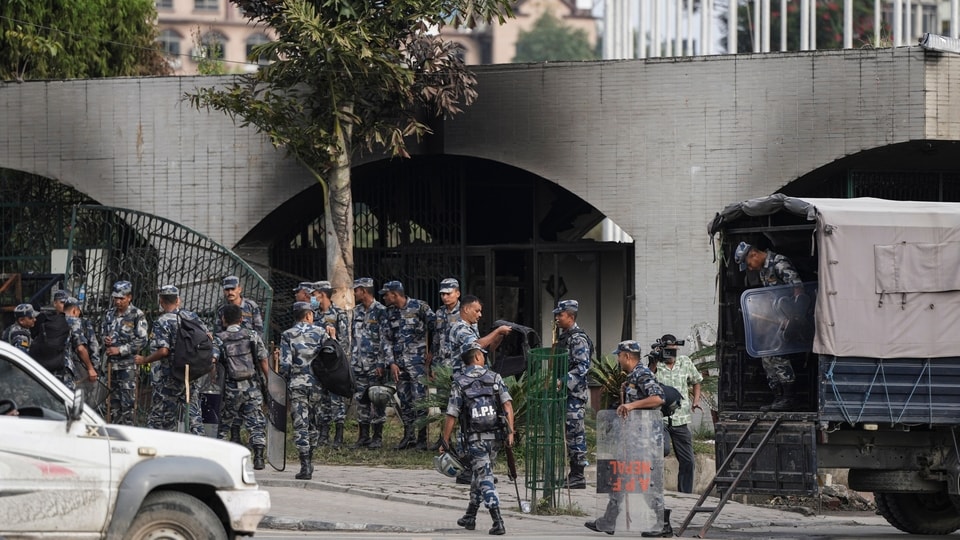
Nepal’s police force is gradually resuming operations in the Kathmandu Valley after violent anti-government protests that left dozens of stations and posts vandalised or set ablaze.
The Kathmandu Valley Police Office said damaged stations, beats, and units are reopening, with Nepal Police and Armed Police Force personnel returning to the streets and around posts across the Valley. The exact number of vandalised stations is yet to be confirmed, but officials stressed that efforts to restore full policing are underway.
In several areas, locals have begun helping to rebuild damaged posts, with community leaders urging residents to join repair and cleanup drives, PTI reported.
During the unrest, many police personnel had taken shelter in army barracks after coming under attack from protesters. The Nepali Army subsequently assumed charge of national security to restore order.
With agencies inputs


