Dismissing reports that New Delhi sought to influence the presidential election process in Sri Lanka, India on Wednesday reiterated its stand of backing for the stability and economic recovery of the island nation after Ranil Wickremesinghe was elected as their new president.
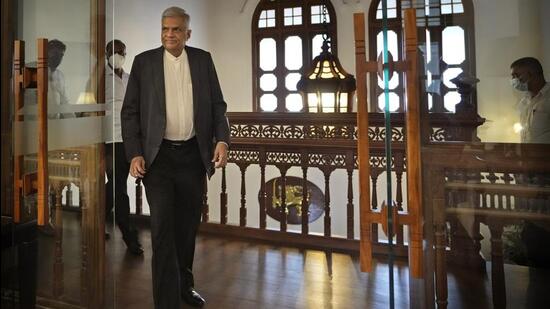
Wickremesinghe, who has served as prime minister six times, was elected to the post by Sri Lankan parliamentarians, defeating his main rival Dullus Alahapperuma by 134 votes to 82. Massive public protests spurred by the country’s worst economic crisis forced former president Gotabaya Rajapaksa to flee Sri Lanka and resign last week.
In a set of tweets, the Indian high commission in Colombo noted that Wickremesinghe was elected president by Sri Lanka’s Parliament “in exercise of the provisions of the Sri Lankan Constitution”.
“As a close friend and neighbour of Sri Lanka and a fellow democracy, we will continue to be supportive of the quest of the people of Sri Lanka for stability and economic recovery, through democratic means and values, established democratic institutions and constitutional framework,” the mission added.
This was in line with India’s position over the past few weeks of squarely throwing its weight behind the Sri Lankan people, while distancing itself from political parties.
{{/usCountry}}This was in line with India’s position over the past few weeks of squarely throwing its weight behind the Sri Lankan people, while distancing itself from political parties.
{{/usCountry}}“We have seen baseless and purely speculative media reports about efforts at [the] political level from India to influence political leaders in Sri Lanka regarding elections in the Sri Lankan Parliament to the post of the President of Sri Lanka,” the Indian high commission said in another set of tweets.
“We categorically deny these media reports as completely false. They are clearly a figment of someone’s imagination,” the mission said.
Also Read:Ranil Wickremesinghe elected as Sri Lanka President
The high commission reiterated that India supports the realisation of aspirations of the people of Sri Lanka in line with democratic means and constitutional provisions, and said New Delhi “doesn’t interfere in internal affairs and democratic processes of another country”.
Since the economic crisis worsened at the beginning of this year, India has provided Sri Lanka with economic assistance worth $3.8 billion, including lines of credit for emergency purchases of food, fuel, medicines and fertilisers, a currency swap and deferral of payments to the Asian Clearing Union. The Indian leadership has said it will support Sri Lanka’s efforts to get financial assistance from multilateral bodies such as the International Monetary Fund (IMF).
On Tuesday, Union external affairs minister S Jaishankar said the “big lessons” to be drawn from Sri Lanka’s economic crisis were the need for fiscal prudence and good governance. He said Sri Lanka is facing a “very severe crisis” and the situation, in terms of the political and financial consequences, was unprecedented.
“It is a very close neighbour and so naturally [there is a] level of concern and worry that there would be a spillover to India,” Jaishankar told reporters following a meeting convened by the government to brief all political parties about the situation in Sri Lanka.