The Islamic State of Khorasan (ISIS-K) claimed responsibility for the deadly bombing attack on a mosque in Afghanistan's Kunduz on Friday that left at least 55 people dead and dozens of others severely injured. In a statement released on its Telegram channels, the jihadist group – an associate of the Islamic State (ISIS) – said that its suicide bomber specifically targeted a crowd of Shiite worshippers who gathered inside a mosque and it was there that the attacker “detonated an explosive vest”.
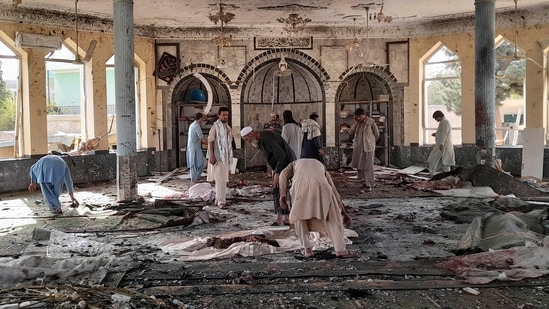
Also Read | Afghanistan: Multiple causalities after explosion hits mosque in Kunduz city
The Islamic State group, moments after taking out the first statement, released another in which it elaborated on the suicide bombing attack in northern Afghanistan. The terror outfit said in its second statement, seen by AFP, that the “perpetrator of the attack was an Uyghur Muslim”, a minority that the Taliban – the new rulers of Afghanistan – “vowed to expel”. The statement was later carried by the IS-linked Aamaq news agency.
The development hints at aggravating sectarian violence in the war-ravaged nation as the extremist Islamic State group, bitter rivals of the Taliban, has time and again targeted the Shiite population to stir up unrest in the Sunni-majority Afghanistan. The outfit bombed a Shiite mosque in the west of Kabul in a similar suicide attack in October 2017, killing at least 56 people and wounding 55 others, including women and children who gathered for the evening prayers. Islamic State terrorists have also targeted Taliban positions and attempted to recruit members from their ranks.
{{/usCountry}}The development hints at aggravating sectarian violence in the war-ravaged nation as the extremist Islamic State group, bitter rivals of the Taliban, has time and again targeted the Shiite population to stir up unrest in the Sunni-majority Afghanistan. The outfit bombed a Shiite mosque in the west of Kabul in a similar suicide attack in October 2017, killing at least 56 people and wounding 55 others, including women and children who gathered for the evening prayers. Islamic State terrorists have also targeted Taliban positions and attempted to recruit members from their ranks.
{{/usCountry}}Also Read | Taliban destroy Islamic State cell in Kabul after deadly mosque attack
In the past, the Taliban were not shaken by the Islamic State due to the presence of the United States military on the ground, which ensured the terrorists stayed limited to certain pockets. However, with the withdrawal of the American forces in August, it remains unclear whether the Taliban can now suppress what appears to be a growing ISIS footprint. The terrorists, once confined to the east, have penetrated the capital of Kabul and other provinces with new attacks.
The development comes at a critical moment, as the Taliban attempt to consolidate power and transform their guerrilla fighters into a structured police and security force. But while the group attempts to project an air of authority through reports of raids and arrests of IS members, it remains unclear if it even has the capability to protect soft targets, including religious institutions.
According to news agencies, Shiites make up roughly 20 per cent of the population of Afghanistan. Many of them are Hazaras, an ethnic group that has been heavily persecuted in the land for decades.