NEW DELHI: As 2022 wore on, the pre-existing fractures in the international order became deeper and more urgent. But the year itself had begun with great expectation: Covid was nearly over, the world economy flush with funds, there were new opportunities in cryptocurrency and a smorgasbord of startups were available to the intrepid investor.
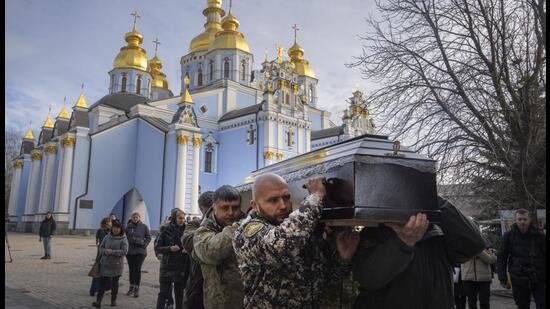
Instead, Russia invaded Ukraine on February 24 and everything turned upside-down, except prices which only went up.
Though geographically isolated, the impact of the war has been global. Ukraine is one of the largest grain and edible oil exporter and the war’s de facto blockade of the Black Sea exacerbated already rising food prices in the world. The 10 months of fighting, a throwback to the Europe of a previous century, have created a humanitarian crisis within the central European country, leaving at least 6.5 million people internally displaced, 7.8 million refugees across Europe, and more than 7 million without electricity as winter deepens.
The conflict has also interrupted climate policies as disruptions in the energy trade have sent fuel prices soaring and brought many coal-fired plants back in action in Europe, where Russia is the main provider of natural gas. Geopolitical tensions have revived the importance of the North Atlantic Treaty Organisation (Nato), with Sweden and Finland shedding their strategic neutrality to join the alliance. At times, when Moscow felt it was on the back foot and concerned about Ukrainian incursions into Russia proper, nuclear language was used. As the US government has admitted, neutral players such as India played a role in ensuring that rhetoric did not become reality.
Challenges for India
{{/usCountry}}Challenges for India
{{/usCountry}}Back home, the economic turbulence that followed saw India, which in January was forecast to be looking at 8% growth, lose two percentage points off its GDP numbers. The reality was that the war masked pre-existing inflationary pressures that arose from the world’s central banks printing too much money and global underinvestment in new oil and gas fields. Battles over unknown towns such as Kherson and Kupiansk added about $20 a barrel to oil prices that would have probably risen close to $100 under normal circumstances.
In light of these developments, India faced some difficult choices.
The first was geopolitical: India’s grand strategy had been about softly balancing against China, for example, by joining the Quad and its anti-Chinese tech coalitions, without attracting the full heat of the dragon’s fire. Part of this strategy was maintaining ties with Russia; the idea being that Moscow would stay neutral if India and China were to go head-to-head. The other part was its ties with the US, which has been India’s main partner in its China strategy. But the war put US at direct odds with Russia, and India in a fix.
As a result, New Delhi spent weeks talking to all affected parties to explain the logic of what it was doing and why it wasn’t a bad thing for anyone, achieving great success in getting Washington to accept it was in its interest to let India have a free hand in deciding its policy regarding Russia.
The Biden administration at the highest level decided to grin and bear India’s neutrality regarding the war as it worked on its foreign policy pivot. Pentagon chief General Lloyd Austin in June declared the Indo-Pacific the “centre of strategic gravity” in the US national security policy, implying that the Quad and India were on the top rung of the American strategic ladder.
Europeans grumbled but, given the Ukraine war revealed how irrelevant their post-modern world view was, when push came to shove, they also found new salience in India.
The other challenge was economic. India had come out of the pandemic with little fiscal space: a fifth of its budget was consumed by interest on debt. Given its dependence on imported oil, gas and fertilisers, it was left reeling when these prices went through the roof. The Modi government pulled out a few rabbits from its economic hat, including the controversial decision to buy discounted Russian crude and, just as importantly, urea. The government navigated Western sanctions on Moscow for the war with a geopolitical map. Again, the US accepted that keeping the Indian economy ticking was more important than maintaining a perfect blockade -- especially when Indian fuel purchases were dwarfed by those made by Europe and China.
India emerged from 2022 with a more fragile economy but a more robust geopolitical standing. Mainly, it was able to clarify its relationship with the US. The White House was forced to internally debate how important India was for its grand strategy, and concluded that India was almost indispensable.
Then, India had a hard look at its relations with Russia and concluded its military dependence on a Moscow hobbling on a Chinese crutch needed to be investigated. In the coming years, Russia will be watched for evidence of whether its “no limits” friendship with China lives up to its name.
China arguably came out of 2022 much the wiser about the limits of being a superpower. Unlike subsidising allies such as Pakistan and North Korea, the dragon-bear combination had been seen in Beijing as a geopolitical game-changer. The embrace may grow stronger, but Russia has almost halved its global stature thanks to its military bungling.
The US CHIPS Act was the real clarion call of the geopolitical future. The Indo-Pacific pivots around things like semiconductors, not Ukraine’s Dnipro River. China rightfully is much more worried about what further tech broadsides it will receive in the coming years. India, again, showed an ability to leverage this as electronics firms came calling and iPhones became a key part of the country’s export ledger.
Lastly, India was able to claw back a lot of the influence it had lost in its neighbourhood as China washed its hands off of the financial crises that crisped the economy of Sri Lanka and reversed the good news story of Bangladesh. Pakistan, which looks set to suffer another lost decade, also found that red ink floods were not part of an all-weather friendship with China.
It was not as if 2022 wasn’t a year of difficulty for India, but all in all, the rise of India is now being seen as a positive by more countries than arguably any time since the 1950s.
The author is South Asia practice head of Eurasia Group and former foreign editor of Hindustan Times.