Brazil's President Luiz Inacio Lula da Silva and right-wing leader Flavio Bolsonaro appear to be locked in a tight race for the top post in the country. According to a new poll, both Lula and Bolsonaro are likely to receive nearly 48 per cent votes if the Brazilian presidential elections advance to a runoff.
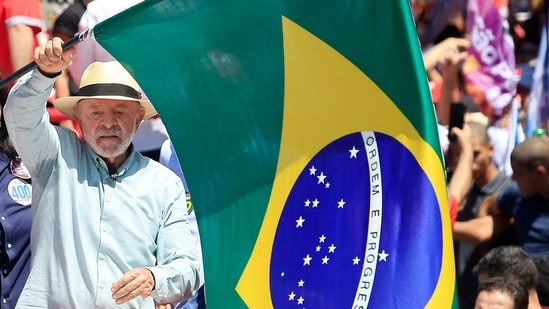
The survey conducted by AtlasIntel for Bloomberg News revealed a neck-and-neck fight between Lula and Bolsonaro. The country will vote to elect its new president next month, with the first round of polling scheduled for October 4 and a likely runoff on October 25.
Poll predicts Bolsonaro lead in first round
The AtlasIntel poll, conducted on 5,005 people between September 23 and 28, has projected slight lead for leftist leader Lula da Silva in the first round of voting, with 45 per cent votes in his favour. Flavio Bolsonaro, who is the eldest son of former Brazilian president Jair Bolsonaro, is likely to receive 42 per cent votes in Sunday's polling.
These numbers turned up different from the past week's survey as Bolsonaro's vote share saw a slight dip in the first round. The previous AtlasIntel poll, released on September 23, predicted 45.8 per cent votes for Lula and 43.4 per cent votes for Bolsonaro in the first round, while they remained tied in a close fight with 47.7 per cent and 47.4 per cent votes, respectively, in a runoff scenario.
Several polls conducted over the past few weeks have shown Lula and Bolsonaro competing in a close race, with the elections likely to advance to a runoff three weeks later. The AtlasIntel voter survey has a margin of error of plus or minus 1 percentage point, Bloomberg said.
What's behind Bolsonaro’s rise; key issues in Brazil’s election
{{/usCountry}}Several polls conducted over the past few weeks have shown Lula and Bolsonaro competing in a close race, with the elections likely to advance to a runoff three weeks later. The AtlasIntel voter survey has a margin of error of plus or minus 1 percentage point, Bloomberg said.
What's behind Bolsonaro’s rise; key issues in Brazil’s election
{{/usCountry}}Brazil’s presidential race has been shaped by a major bank fraud investigation that has affected both leading campaigns. Flavio Bolsonaro has gained ground by linking the scandal to President Lula da Silva and tapping into anti-establishment sentiment.
The controversy centres on jailed banker Daniel Vorcaro, the former owner of Banco Master SA. Bolsonaro has denied wrongdoing but is under a federal police investigation over alleged money laundering, corruption and tax evasion linked to his relationship with Vorcaro. His ties to the banker have also come under scrutiny after he sought funding for a film about his father, former President Jair Bolsonaro.
Lula, meanwhile, has faced political pressure after revelations linking Supreme Court justices to Vorcaro. In an effort to regain momentum, his government recently increased benefits under its flagship social welfare programme. Lula has also banned online gambling and announced plans to purchase delinquent consumer debt from banks, measures aimed at easing household financial pressures.
The economy remains another key issue. Brazil’s unemployment rate fell to 5.3 per cent in the three months through August, the lowest for that period since the current methodology began in 2012, according to IBGE. Job growth was particularly strong in construction and industry, while informal employment remained at 37.5 per cent of the workforce.