
Some Trump administration officials are holding up efforts to finalize a landmark agreement that would open the door to the United Arab Emirates buying billions of dollars in Nvidia’s cutting-edge artificial-intelligence chips, due to national-security concerns.
President Trump championed the agreement during a Middle East trip in May, and the sides hoped to work out the details quickly. Chip designer Nvidia looked forward to the sales.
Yet the countries haven’t been able to hash out the specifics to date, in part because some U.S. officials have expressed concerns that China could get access to the cutting-edge U.S. technology, people familiar with the talks said.
The disagreement might not be resolved unless the U.A.E. agrees to different terms to address the U.S. officials’ national-security concerns, the people said.
The officials have discussed, for instance, cutting off direct access to chips by G42, an AI firm based in Abu Dhabi that was slated to get access to roughly 20% of the semiconductors as part of the agreement.
President Trump with Sheikh Mohammed bin Zayed al Nahyan, president of the United Arab Emirates, in May.
{{/usCountry}}President Trump with Sheikh Mohammed bin Zayed al Nahyan, president of the United Arab Emirates, in May.
{{/usCountry}}The Commerce Department now doesn’t plan to approve chips going to G42, though it may in the future, some of the people said.
Commerce Secretary Howard Lutnick “is confident that the implementation plan for the deal signed in the Emirates will continue on time and on schedule, a spokesman said. UAE officials also expressed optimism about the discussions. The deal “will deliver enormous benefits to both countries,” the UAE’s ambassador to the U.S., Yousef Al Otaiba, said in a statement.
Many involved in the negotiations expect the chip deal to eventually go through. Lutnick and other U.S. officials met with representatives from the U.A.E. on Tuesday at a tech-and-energy summit in Pittsburgh and discussed how to move the agreement forward, the people said.
The slow pace, however, has pitted administration officials against each other, while frustrating some tech-industry executives seeking to boost their AI businesses overseas, according to the people.
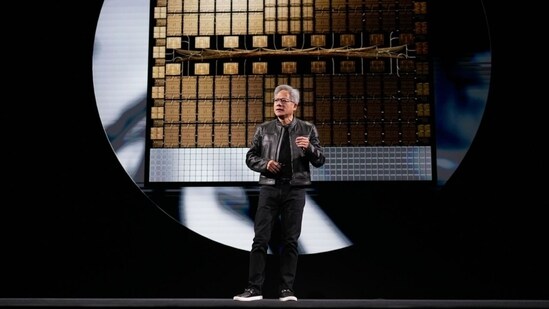
Nvidia Chief Executive Jensen Huang told President Trump about the importance of the agreement during a recent meeting, people familiar with the discussion said.
Some administration officials fear the Chinese tech firm Huawei, which has been trying to sell chips in the Middle East, could capitalize on the delay. The challenges moving the agreement forward show the thorny security issues raised by exporting the highest-performance AI technology.
At the center of the holdup are some of the most advanced semiconductors available, chips from Nvidia that would power AI data centers.
U.S. Commerce Secretary Howard Lutnick is one of the U.S. officials pushing to get the deal done.
The facilities—and the chips that power them—are the lifeblood of the burgeoning AI industry. They are used to train models and are considered critical to winning a race between the U.S. and China to develop cutting-edge AI capabilities.
Gulf countries like the U.A.E. and Saudi Arabia, which is pursuing its own agreement with the U.S., have sought to house data centers to boost their own tech industries and diversify their economies.
The U.S.-U.A.E. deal came together quickly and required many details to be ironed out, including national-security provisions. It was a nonbinding commitment.
Under the broad terms, the U.A.E. would receive hundreds of thousands of Nvidia chips over years and help build data centers. Most of the chips would go to U.S. tech companies operating the data centers.
ChatGPT maker OpenAI and Microsoft are among the companies expected to operate data centers in the U.A.E. To have chips exported to the U.A.E., the companies would need licenses that would likely need to be approved by several U.S. agencies, a process likely to increase scrutiny of the national-security implications.
Aside from getting earmarked for 20% of the chips in the deal, G42 could also have some involvement in the U.A.E. data centers operated by U.S. companies.
Some administration officials have expressed concerns that China could find ways to access the advanced chips through G42 or other U.A.E. entities and personnel involved in the project, according to the people familiar with the matter.
David Sacks, the White House AI czar, was an architect of the U.S.-U.A.E. chip deal.
Changing the agreement to no longer send chips directly to G42 could anger the Emiratis, who see the deal as vital to keeping pace in AI and saw G42’s involvement as a central part of the framework agreed to in May.
Slowing the deal has bothered some officials including White House AI czar David Sacks, who has embraced the idea of exporting the latest U.S. chips to the Middle East and the investment that comes with it.
“If we don’t provide the technology, then our global competitors will,” Sacks said at the summit in Pittsburgh, adding that concern about chips being diverted “has been wildly blown out of proportion.”
Sacks was a lead architect of the U.S.-U.A.E. chip deal. Lutnick helped close the agreement. Officials from the U.S. and U.A.E. who were supposed to move the chip deal forward and iron out details have barely met since the deal was signed, some of the people said.
The U.S. bars exports of advanced chips to certain countries like China for national-security reasons.
The Trump administration got rid of a Biden-era rule that would have limited advanced semiconductor exports to many friendly nations, but hasn’t said how it will replace it. The administration also hasn’t said how many chips companies can send—or how advanced the chips can be—fueling uncertainty in the sector.
The administration recently said it would let Nvidia resume shipments of a lower-performance chip to China, a shift from some of its previous semiconductor policies.
Write to Amrith Ramkumar at amrith.ramkumar@wsj.com and Eliot Brown at Eliot.Brown@wsj.com