Born to Indian parents of Tamil descent in Durban and raised in the slums of Clairwood, KwaZulu-Natal, Navanethem ‘Navi’ Pillay grew up in a home without books, newspapers or a radio. Poverty and discrimination shaped her early years, Pillay has mentioned in interviews over the years.
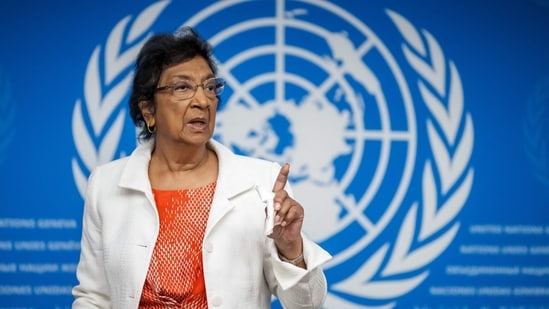
Yet, the girl who once faced doubts about whether she could even become a lawyer went on to hold some of the most influential positions in the international justice system. On October 9, Pillay was announced as the winner of the 2026 Nobel Peace Prize in recognition of her efforts to advance peace and international law. According to the Norwegian Nobel Committee, she was honoured for her instrumental role in ensuring the prosecution of war crimes, crimes against humanity and genocide.
Deep Dive
Why did Navi Pillay win the 2026 Nobel Peace Prize?
How did Navi Pillay overcome barriers to become a lawyer?
What was Navi Pillay's contribution to international justice?
“I tell this story all over the world and it’s very new to them – it’s not new to South Africans – we all come from deprivation, discrimination and poverty,” Pillay, the former United Nations (UN) High Commissioner for Human Rights, was quoted as saying in a blog published by the University of the Witwatersrand, where she was awarded an honorary doctorate.
{{/usCountry}}“I tell this story all over the world and it’s very new to them – it’s not new to South Africans – we all come from deprivation, discrimination and poverty,” Pillay, the former United Nations (UN) High Commissioner for Human Rights, was quoted as saying in a blog published by the University of the Witwatersrand, where she was awarded an honorary doctorate.
{{/usCountry}}Her journey from apartheid-era South Africa to the global human rights stage was not without obstacles. The 85-year-old faced barriers imposed by race, class and gender, and the determination it took to overcome them.
‘How did you get from there to here?’
At universities around the world, Pillay said, she is often asked how she made it from her humble beginnings to positions of international influence.
“That question is so loaded, because you could see the underlying thinking there – that ‘you’re black, you’re poor, you’re a woman, you come from apartheid South Africa’,” she told University of the Witwatersrand in an interview, recalling how people were intrigued that someone raised under apartheid could pursue higher education.
Pillay’s father worked as a bus driver, while her mother was an uneducated homemaker who had been denied the opportunity to attend school. Her maternal family’s struggles stretched back generations. Her grandfather had been brought to South Africa as an indentured sugarcane labourer by British plantation owners.
A dream that few believed in
Pillay recalled that her grandfather had predicted she would become a lawyer when she was a little girl. What began as a childhood ambition, however, was largely treated as a family joke. For a Black girl from a poor family under apartheid, the prospect of becoming a lawyer seemed far-fetched to those around her.
She also remembered a teacher discouraging her ambition by suggesting that her father must have considerable money to send her to university.
The opportunity eventually came through the support of her community. Residents contributed whatever they could, including small coins and two-rand notes, after the school identified her potential and appealed for help with her university education.
Also Read | Henri Kagan wins Nobel Prize at 95: Who are the oldest Nobel laureates in history?
“Thinking back, I could see that what moves us is confidence and faith in ourselves, a willingness to work hard, and parents who appreciate the value of education,” she said, according to University of the Witwatersrand.
Facing the same barriers as Mandela
Graduating with a BA LLB from the former University of Natal, now the University of KwaZulu-Natal, did not end Pillay’s struggles. At 24, she found that securing articles at a law firm was difficult. The university registrar refused to help, saying she could not exercise authority over white staff, and suggested that she consider teaching instead.
Pillay approached law firms, most of which were white at the time, but encountered discrimination on multiple fronts.
“I was trebly discriminated against. One for being black and two on class … and gender,” she recalled, describing questions about her family’s wealth, ability to bring business to a firm and the possibility of becoming pregnant.
She drew a parallel with Nelson Mandela’s early experience in the legal profession. While reading about Mandela obtaining articles in 1941, she learnt that he had been told not to use the teacups reserved for white staff and had to bring his own metal cup for tea.
Also Read | Navi Pillay wins Nobel Peace Prize: Her grandparents were Indian indentured labourers
One lawyer had also warned Mandela against trying to rise above his status.
“Twenty-five years later, there I was experiencing those same obstacles,” Pillay told the University of the Witwatersrand.
From South African courts to the United Nations
Pillay’s career eventually took her from South African legal institutions to international courts. According to the United Nations, she was appointed an acting judge of South Africa’s High Court in 1995 and elected that year to the International Criminal Tribunal for Rwanda. She served there for eight years, including four as president, and contributed to landmark jurisprudence recognising rape as a form of genocide, according to United Nations website.
In 2003, she became a judge at the International Criminal Court in The Hague, serving until 2008. She subsequently served as UN High Commissioner for Human Rights.
Her work extended beyond the courtroom. In South Africa, she contributed to efforts to secure constitutional protections against discrimination through the Women’s National Coalition. She also co-founded Equality Now, an international organisation advocating for women’s rights, and worked on issues involving children, detainees, torture survivors and victims of domestic violence, according to the UN.
(With inputs from ANI, University of the Witwatersrand and United Nations)