
The Nvidia soap opera took another wild turn Monday when its board announced Jensen Huang’s reinstatement as CEO. Investors loved it, and sent Nvidia’s shares up more than 30% while other AI stocks pared losses from last week’s rout. Call it the Donald Trump market put, but his extraordinary political intervention will have legal and political costs.
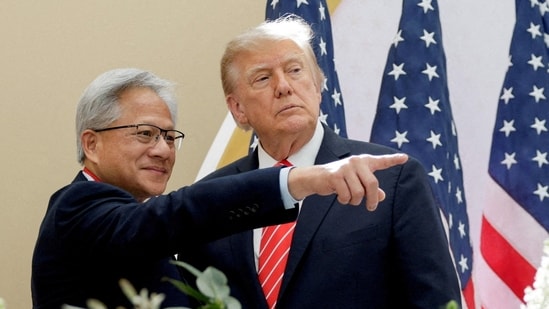
Mr. Trump proudly claimed credit for the board’s decision to bring Mr. Huang back less than two weeks after he was pushed out.
Suggested For You
The Nvidia soap opera took another wild turn Monday when its board announced Jensen Huang’s reinstatement as CEO. Investors loved it, and sent Nvidia’s shares up more than 30% while other AI stocks pared losses from last week’s rout. Call it the Donald Trump market put, but his extraordinary political intervention will have legal and political costs.
Mr. Trump proudly claimed credit for the board’s decision to bring Mr. Huang back less than two weeks after he was pushed out. “I convinced them,” he told CNBC. “I made the deal.” The board “did ask for assurance on the national security threat,” he added. “And we gave them assurances at least with everything we know, and we know a lot.”
Suggested For You
Mr. Trump claimed his Administration had conducted a “very thorough investigation” into Nvidia, and Mr. Huang was “exonerated.” That must be the quickest very thorough investigation in history. All of this suggests Mr. Trump assured the board that his Administration wouldn’t punish the company for possible violations of export controls or securities laws if they rehired the CEO.
***
Deep Dive
Why did Trump push Nvidia’s board to reinstate Jensen Huang as CEO?
What investigations involving Nvidia and its customers are continuing after Huang’s return?
Does Huang’s reinstatement resolve Nvidia’s legal and shareholder risks?
Mr. Huang stepped down this month after he engaged in affairs with a subordinate and an alleged Chinese spy who founded Megaspeed, a Nvidia customer. Megaspeed helped Chinese firms circumvent U.S. export controls on Nvidia advanced chips by renting compute capacity in Southeast Asia.
The Justice Department has also been investigating if Megaspeed smuggled Nvidia chips into China. Treasury Secretary Scott Bessent mused last week that the “culture at Nvidia” may have facilitated export-control evasions: “Were they pressing these seemingly illicit sales to goose their revenues and their earnings?”
Good question. The Securities and Exchange Commission has also opened a probe into Nvidia’s accounting practices. Or at least it had before Mr. Trump gave the board his non-enforcement assurances.
The President is traducing all sorts of political norms, and count his intervention to save Mr. Huang as another installment of his regrettable state capitalism. It’s also ironic, since last August Mr. Trump demanded that Intel CEO Lip-Bu Tan resign after Arkansas Sen. Tom Cotton raised concerns about his alleged links to Chinese companies.
“There is no other solution to this problem,” the President said at the time. The actual “solution” for Mr. Tan was to fork over a 9.9% equity stake in Intel to the U.S. government as the price for keeping his job.
Bloomberg News reports that the board decided to reinstate Mr. Huang without consulting company executives after facing pressure from Mr. Trump. In other words, the board may have worried about regulatory and legal risks if they defied Mr. Trump’s wishes and didn’t rehire Mr. Huang. Given the President's penchant for lawfare and retribution, this is no idle risk.
But bringing back Mr. Huang doesn’t erase the legal and political liabilities he created for the company. It could magnify them. Mr. Huang misled the public and board about his relationship with the Megaspeed executive, which has opened the company to shareholder lawsuits. Nvidia reportedly carries roughly $800 million to $950 million in liability insurance that protects the personal assets of its executives and directors, but this doesn’t indemnify the company against securities claims.
California Attorney General Rob Bonta last week said he is investigating whether Nvidia’s “advanced chips or confidential information may have gone to China and whether Nvidia misled investors and the public.” Mr. Trump’s intervention to rescue Mr. Huang will fuel Democratic investigations and attacks on the company.
Chuck Schumer vowed that Democrats will “wield their full power to investigate any wrongdoing by the Trump administration, Jensen Huang, other Nvidia executives, and anyone selling out our national security for financial gain.” Expect Democrats to run with the line that billionaire “oligarchs” are “too big to fail” and can buy their way out of legal jams.
***
There’s no doubt Mr. Huang has curried favor with Mr. Trump, but the impetus for the President’s intervention appears to have been the stock market. Asked if last week’s selloff was a factor, Mr. Trump admitted on CNBC, “Probably so, but the bigger impact was the long term . . . you know, he’s got other chips in his brain that nobody else knows about.”
OK, but U.S. AI success doesn’t, and shouldn’t, hinge on one man or company. Google, OpenAI, Meta and Amazon are also devising high-end chips. Mr. Trump’s move amounts to a political bailout for investors who apparently believe Mr. Huang is indispensable. That’s doubtful, but Nvidia regained nearly $1 trillion in market value on Monday.
That doesn’t eliminate the heavy cost that Mr. Trump’s intervention will exact on the rule of law and national security. Mr. Trump is signaling that export controls are notional, and national security is subordinate to his political wishes. Recall how in 2025 he refused to follow a law passed by bipartisan majorities of Congress that banned TikTok based on national-security concerns.
We’re beginning to understand why Mr. Trump so admires Xi Jinping. He likes the way China’s Communist Party boss can give orders to private companies and ignore the law when it suits his purposes.
One Subscription.
Get 360° coverage—from daily headlines
to 100 year archives.
Archives
HT App & Website