
 E-Paper



Operation False Target: Russia's new plan to scare Ukraine with decoy drones
A Russian factory plans to create drones surrounding by decoys that cant be detected by radars or sharpshooters

 Prefer HTon Google


A Russian plan dubbed Operation False Target intends to use small explosive drones with undetectable decoys in attacks against Ukraine, an investigation by news agency AP revealed.
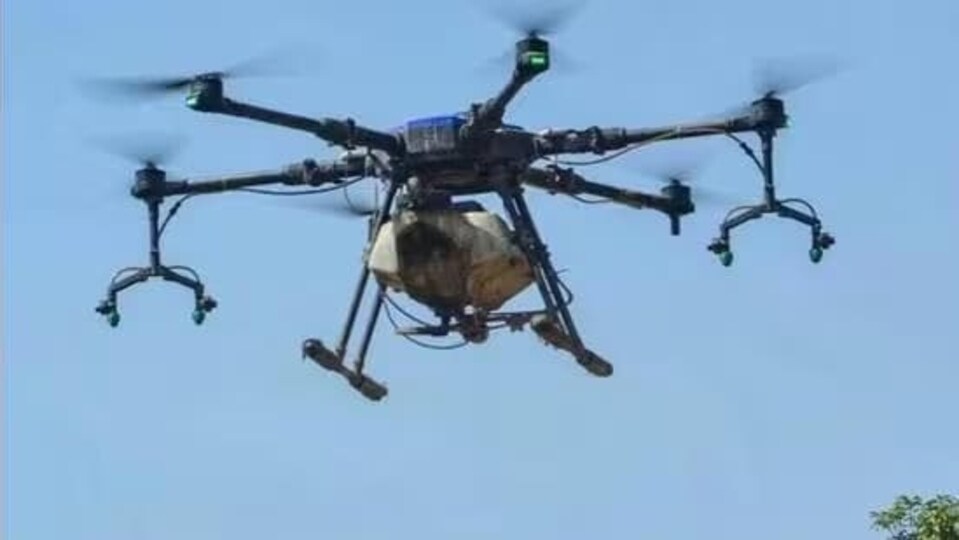
The plan is intended to force Ukraine to expend scarce resources to save lives and preserve critical infrastructure, including by using expensive air defense munitions, sources told the news agency.
Also Read: US Senators call for probe into Elon Musk's SpaceX contracts, cites Russian involvement
Neither radar, sharpshooters nor even electronics experts can detect the difference between the deadly drones and their decoys in the sky.
Unarmed decoys now make up more than half the drones targeting Ukraine and as much as 75 per cent of the new drones coming out of the factory in Russia’s Alabuga Special Economic Zone, an anonymous Russian expert stated.
Also Read: Russia joins P’nut the Squirrel’s death row, top official reshares post calling it ‘reminiscent of Saddam Hussein story'
The factory is located in an industrial complex about 1,000 kilometers east of Moscow, is a laboratory for Russian drone production which has been expanded since it was originally set up in 2006.
Also Read: 85 Indians discharged from Russian Army, India working for release of 20 more
In October, Russia attacked with at least 1,889 drones – 80 per cent more than in August, AP reported. On Saturday, Moscow launched another 145 drones across Ukraine.
An AP analysis revealed that since the summer, most drones crash, are shot down or diverted by electronic jammings. Less than 6 per cent hit a target, but even a few of them landing can be deadly.
Though the factory promoted itself as an innovation hub, David Albright from the Institute for Science and International Security, stated that it's current purpose is to produce and sell drones to the ministry of defense in Russia.
When Russia and Iran signed a $1.7 billion deal for Shaheds in 2022, production began in Alabuga.
The most dangerous adaptation designed at the plant is known as vacuum bombs. The decoys to accompany them were developed in late 2022, with production beginning early this year.
Now the plant turns out about 40 of the unarmed drones a day and around 10 armed ones, an official said.
These armed drones can even go after targets in fortified buildings or deep underground, generating heat that sucks out all oxygen in their path.
Alabuga’s drones are especially destructive when they strike buildings, because they are also loaded with ball bearings to cause maximum damage .
They also cause physical effects such as collapsed lungs, crushed eyeballs, brain damage, according to Arthur van Coller, an international humanitarian law expert at South Africa’s University of Fort Hare.
The plan is also cost effective as the unarmed drones costs considerably less than the estimated $50,000 for an armed Shahed drone, reported AP.


