
A motion to reject the immigration levels plan introduced by the Canadian government earlier this month was defeated in the House of Commons on Wednesday, even as Ottawa’s one-time programmes, which could potentially grant permanent residency (PR) to more than 280,000 people, continue to attract controversy.
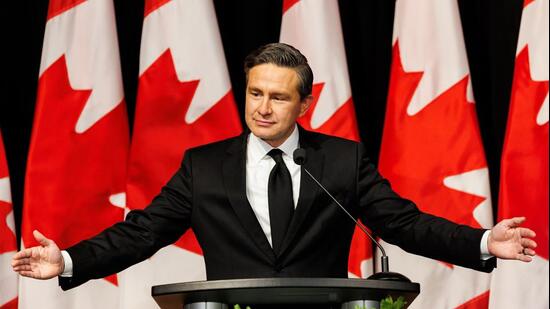
The motion was moved by Conservatives leader Pierre Poilievre. It said, “That, in order to ensure housing, wages, healthcare, jobs and other social services keep pace with the population growth, the House reject the Prime Minister’s plan to increase permanent immigration next year to the highest levels in history.”
Suggested For You
The motion referred to the government’s target of admitting 380,000 permanent residents annually from 2027 to 2029. But another transition programme for just this year could provide a pathway to PR for another 200,000 temporary workers and under humanitarian and compassionate streams. Finally, there is a carry over of 82,000 for a similar scheme announced last year, providing for PR to protected people and skilled temporary workers. The total potential permanent resident intake for 2027 therefore stands at 662,000.
This would exceed the record of 483,640 permanent residents admitted including 127,375 Indians in 2024 under Canadian Prime Minister Mark Carney’s predecessor Justin Trudeau.
{{/usCountry}}This would exceed the record of 483,640 permanent residents admitted including 127,375 Indians in 2024 under Canadian Prime Minister Mark Carney’s predecessor Justin Trudeau.
{{/usCountry}}Carney rejected the opposition attack in the House of Commons, stating that under his government immigration was “under control”. He added, “We’re working with the provinces to bring in the people this country needs.”
The motion attracted the support of 154 MPs who were outnumbered by those against it – 175.
Immigration, Refugees and Citizenship Minister Lena Metlege Diab told the House on Tuesday that the actual number under the programme announced this year would depend on the requirement of provinces and territories.
A day after the plan was announced on November 6, Carney had defended the transition programme, saying it was “the right thing to do” as those benefiting from it had already been in the country for years and contributing to their communities.
Half of those eligible are workers already in the country awaiting decisions on their PR applications. On November 12, Immigration, Refugees and Citizenship Canada said it was “offering the provinces and territories optional, additional space to transition” the combined 100,000 workers and their families. “Communities across the country benefit each and every day from the contributions of workers—both Canadians and those who have chosen Canada. Our government understands that by retaining high-value, established workers, we can support economic growth and help our businesses thrive,” Diab said on November 12.
The other half will be on humanitarian grounds and includes spouses, common-law partners and children of Canadians and permanent residents.
“I believe this could provide much-needed relief to thousands of Indian temporary workers facing uncertainty over their immigration status and permanent residence prospects,” Raghav Jain, principal lawyer with the Toronto-based Vantage Immigration Law, said. India was the largest source country for people whose work permits became effective in 2025, accounting for 215,250 out of 743,770 (28.9% of the total), according to IRCC data.
“Canada is clearly shifting from attracting new temporary residents toward retaining economically established workers,” he added.
Explore More
ABOUT THE AUTHOR
Anirudh Bhattacharya is a Toronto-based commentator on North American issues, and an author. He has also worked as a journalist in New Delhi and New York spanning print, television and digital media. He tweets as @anirudhb.