Economists at the University of Oxford have developed a new and “largely accurate” method to measure global poverty using satellite data that shows places in the world where people have no night-time access to lights.
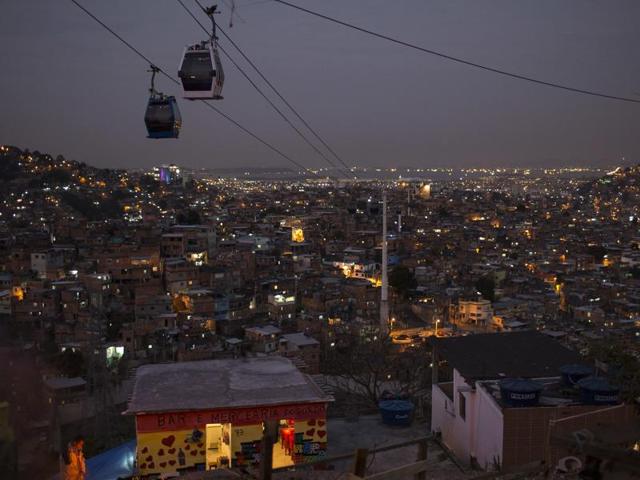
Researchers analysed two separate data sets from satellites: the first showed images of all areas of the world that light up at night, and the second estimated population using images of roads, buildings and other signs of human habitation.
Both satellites covered every square kilometre around the world, accounting for 100 million data points every year. By combining the two data sets into one, the researchers identified places in the world where populations have no night-time lights. They find this largely accurately identifies people in poverty after comparing it with more than 600,000 household surveys.
The satellite-based study is faster, cheaper and has better coverage than the surveys typically used for measuring poverty, the university said on Friday.
“Our measure is one of rural poverty. In poor, highly populated, dense countries like India, Pakistan and Bangladesh, the poor tend to be urban, rather than rural,” Samuel Wills of the department of economics told HT.
“For example, when we compared our lights measure to household surveys in Bangladesh, we found that we could only accurately identify 39% of people as above or below the World Bank poverty line. Sixty-one percent of households surveyed were classified as poor, but lived in lit areas. I think a similar trend holds for India”.
{{/usCountry}}“For example, when we compared our lights measure to household surveys in Bangladesh, we found that we could only accurately identify 39% of people as above or below the World Bank poverty line. Sixty-one percent of households surveyed were classified as poor, but lived in lit areas. I think a similar trend holds for India”.
{{/usCountry}}The study also showed that oil booms increase inequality and do not benefit the rural poor. The benefits of oil discoveries and high oil prices appear to be limited to towns and cities, which become more illuminated, a factor that the researchers use as a proxy for greater economic activity. There is no evidence of a trickle-down effect of wealth, as the areas where the rural poor live remained unlit through a decade of high oil prices (2003-2013).