The word “populism” has been announced as the Cambridge Dictionary 2017 Word of the Year, based on the criteria that the word should not only be the most searched-for words but is also reflected in spikes — occasions when a word is suddenly looked up many more times than usual on or around a particular date.
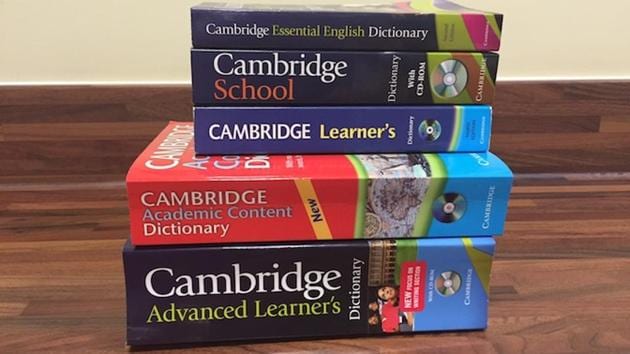
The dictionary defines populism as “political ideas and activities that are intended to get the support of ordinary people by giving them what they want”.
A release by the University of Cambridge said that even as Donald Trump was being sworn in as the US president on January 22, searches for the word “inauguration” on its online dictionary spiked.
But so did searches for the word “populism” because, on that same day, Pope Francis warned against a rising tide of populism in a widely reported interview with Spanish newspaper El Pais. In mid-March, after another high-profile interview with the pontiff – this time with the German newspaper Die Zeit – searches for populism spiked again.
Wendalyn Nichols of Cambridge University Press said: “Spikes can reveal what is on our users’ minds and, in what’s been another eventful year, plenty of spikes can be directly connected to news items about politics in the US (nepotism, recuse, bigotry, megalomania) and the UK (shambles, untenable, extradite).
“What sets populism apart from all these other words is that it represents a phenomenon that’s both truly local and truly global, as populations and their leaders across the world wrestle with issues of immigration and trade, resurgent nationalism, and economic discontent.”
{{/usCountry}}“What sets populism apart from all these other words is that it represents a phenomenon that’s both truly local and truly global, as populations and their leaders across the world wrestle with issues of immigration and trade, resurgent nationalism, and economic discontent.”
{{/usCountry}}The dictionary definition of populism includes the usage label “mainly disapproving”.
The release said: “Populism has a taint of disapproval because the -ism ending often indicates a philosophy or ideology that is being approached either uncritically (liberalism, conservatism, jingoism) or cynically (tokenism).”
Evidence from the Cambridge English Corpus – a 1.5-billion-word database of language – reveals that people tend to use the term populism when they think it is a political ploy instead of genuine.
According to the university, both aspects of -ism are evident in the use of populism this year — the implied lack of critical thinking on the part of the populace, and the implied cynicism on the part of the leaders who exploit it.