Although IMF wants to complete rescue talks with Sri Lanka as quickly as possible, the election of Ranil Wickremesinghe, who is a princeling of the pearl nation, as President indicates that things will go much worse in the island nation before they start to get better.
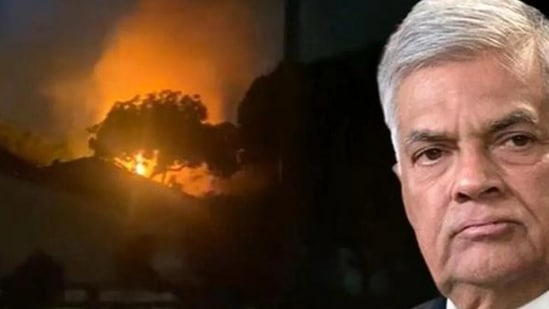
Ranil Wickremesinghe is deeply unpopular with the masses, who have been gripped by severe shortages of fuel, food and other essentials after its foreign reserves dried up. So much so that he is often derided as Ranil Rajapaksa by the public as he is seen as a front for the Rajapaksa empire and as a five-time prime minister and multiple times finance minister is also seen by the public as a major contributor to the economic mess. However, as someone who has dealt with the IMF in the past, Ranil also has an opportunity in this if he can ease the economic situation in the country and restore his credibility. This is easier said than done as the public today has to wait three to four days for a gas cylinder and four to five days to get motor vehicle fuel.
While IMF Managing Director Kristalina Georgieva has stated that she wants negotiations with Sri Lanka on an economic rescue package to be completed as quickly as possible, the track record of Colombo with the Bretton Woods Institution is nothing to write home about. It has not been able to close negotiations with IMF at least six to seven times in the past. Sri Lanka pre-emptively defaulted on its foreign debt for the first time earlier this year after the pandemic devastated its core tourism sector. Today, the country has high inflation with one US dollar equivalent to 360 Sri Lankan rupee and depreciating at a rapid rate.
{{/usCountry}}While IMF Managing Director Kristalina Georgieva has stated that she wants negotiations with Sri Lanka on an economic rescue package to be completed as quickly as possible, the track record of Colombo with the Bretton Woods Institution is nothing to write home about. It has not been able to close negotiations with IMF at least six to seven times in the past. Sri Lanka pre-emptively defaulted on its foreign debt for the first time earlier this year after the pandemic devastated its core tourism sector. Today, the country has high inflation with one US dollar equivalent to 360 Sri Lankan rupee and depreciating at a rapid rate.
{{/usCountry}}Also Read | Sri Lanka made 'dumb bets' on China: CIA chief on crises-hit country
Since the economic crisis began, India has contributed USD 3.8 billion to Sri Lanka without any quid pro quo. Despite contrary advice from its Parliament MPs, the Modi government has chosen not to intervene in any way with the Sri Lankan polity except for providing support in the form of food, fuel, fertilizer, and medicine with the long term aim of stabilizing the neighbour. This has not been the case with Sri Lanka’s other debtor China, which gave high-interest loans to the Rajapaksa empire to flaunt economically unviable white elephant infra-projects like the commercial port and airport at Hambantota and contributed to the economic collapse of the country. One must not forget that if the disgraced Rajapaksas allowed entry of China into Sri Lanka, it was Ranil who gave the 99-year lease of Hambantota to Beijing. Countries like Pakistan, Maldives and Nepal are also headed in the same direction and are under the Chinese debt trap. Japan, Sri Lanka’s other major debtor, has also refused to give credit till such time a proper government is restored in the country. The west beyond supporting Ranil simply does not care as it is embroiled in the never-ending war in Ukraine.
It is quite evident that the public mood in Sri Lanka is against Ranil Wickremesinghe as they set fire to his private home. His election as President is also a slap on the face of the public as he is only a nominated member of the Sri Lankan Parliament and the only face of his party. The public may not take kindly to this political manipulation and will get increasingly agitated if the economic situation is not addressed soon. And this is not possible without giving more pain to the public as the IMF will set hard conditions in form of rationalization of taxes, job cuts and lay-offs to shed the weight of government.
With the IMF MD clearly indicating that the risk of global recession has gone up with China heading for a “quite significant downgrade” from its 4.4 per cent growth forecast in the institution’s April projections, world is headed for uncharted waters and countries like Sri Lanka and Pakistan will bear the burnt in terms of both economic and political uncertainty. President Ranil Wickremesinghe faces an uphill task in rescuing Sri Lankan economy with political uncertainty looming on the horizon.