
 E-Paper



Second White House Covid-19 infection raises questions about workplace safety
President Donald Trump and Vice-President Mike Pence were tested agin after press secretary Katie Miller’s diagnosis and both were negative.


US vice-president’s press secretary became Friday the second White House official to test positive for Covid-19 in recent days raising questions about protection from the virus at the country’s safest workplace as American businesses seek to reopen and pick up from where they left off before the lockdown.
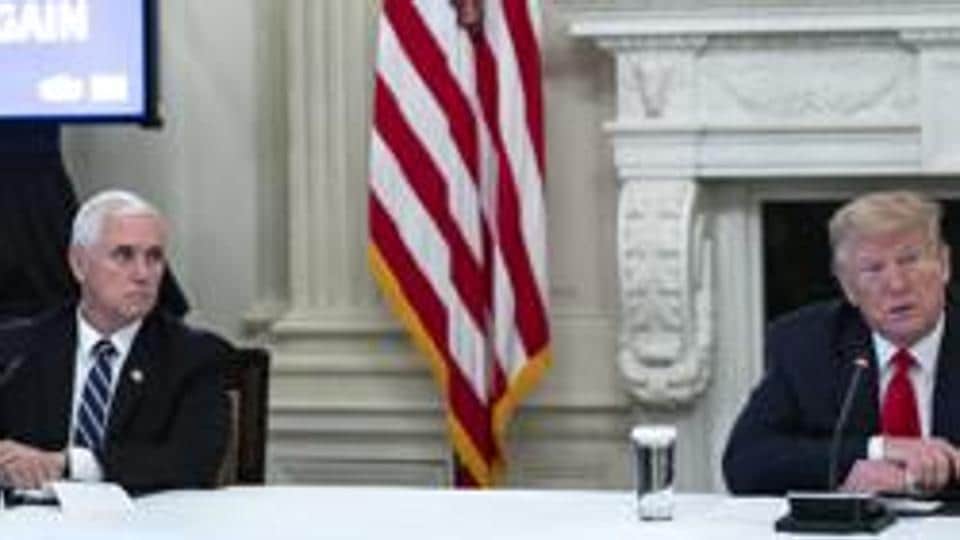
President Donald Trump and Vice-President Mike Pence were tested agin after press secretary Katie Miller’s diagnosis and both were negative. A personal military valet to the president, who and other valets work closely with the president and the first family, had tested positive on Thursday.
A personal aide to Ivanka Trump, the president’s daughter and adviser, has also tested positive, according to news reports that pointed out said she has been teleworking from home and not been around the first daughter for weeks. Both Ivanka Trump and her husband Jared Kushner, a senior adviser to the president, were tested on Friday and they were both negative.
Coronavirus outbreak: Full coverage
The president and the vice-president are now being tested for the virus every day and the White House sought assure Americans every precaution is being taken to prevent the virus from spreading. “This is the safest place you can come to,” White House chief of staff Mark Meadows told reporters.
The White House has sad that every staff member working in close proximity to the president and the vice-president is being tested daily, in addition to the enforcement of social distancing, daily temperature checks and symptom histories, and the use of hand sanitizers and regular deep cleaning of all work spaces.
Nearly 1.3 million people have contracted the coronavirus in the the United States with 26,960 new infections in the last 24 hours only and the 77,180 hav died of it, up by 1,518.
President Trump is optimistic it will be over soon. He told reporters at a meeting with Republican lawmakers that the virus “This is going to go away without a vaccine. It’s going to go away, and it’s -- we’re not going to see it again, hopefully, after a period of time.”
“You may have some -- some flare-ups and I guess, you know, I would expect that,” he added. “Sometime in the fall, you’ll have flare-ups maybe.”
The American president has previously said a vaccine is likely by the end of the year, though medical experts on his coronavirus task force have been a little more circumspect and suggested January or later.
But the president’s optimism is in line with his earlier remarks that the epidemic will be gone like a “miracle”, which were attributed initially to his reluctance to acknowledge the gravity of the crisis and, then, once he finally did, with mounting infections and fatalities, his eagerness to reopen the country.
The infections at the White House, have however, raised questions about the workplace safety around the country as businesses reopen. The White House may have added to these uncertainties by blocking the release of reopening guidelines put together by the government’s top medical experts.
(For print) And amid rising tensions with China on the coronavirus outbreak, the United States on Friday cut visa period for Chinese journalists to 90 days, with the option of extending it. The two countries have been engaged in a series of retaliatory actions against journalists in recent months.


