Indian-origin aeronautical engineer Sirisha Bandla will activate a Nasa-supported plant experiment at critical data-collection stages during Virgin Galactic’s first fully crewed spaceflight, scheduled to take off from New Mexico on July 11. The US space agency on Saturday said that Bandla, vice president of government affairs and research operations at Virgin Galactic, will operate the experiment on the “Unity 22” flight on behalf of co-investigators from the University of Florida.
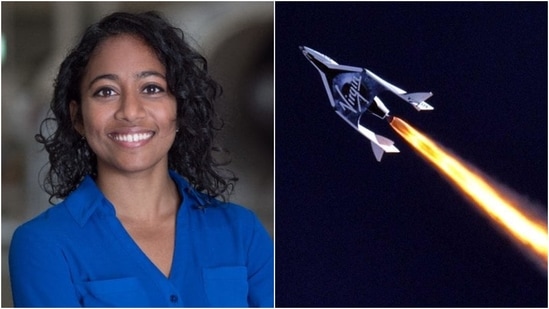
As part of the experiment, Bandla will activate three plant-filled tubes to release a preservative at critical data-collection stages - at standard Earth’s gravitational force before the rocket boost, just before entering microgravity, and after the conclusion of microgravity. The university researchers have flown similar experiments on suborbital flights in the past. But the data collected during the Unity 22 flight will provide a “first look at human-tended payloads on SpaceShipTwo.”
For years, the two researchers from the University of Florida in Gainesville have been using plants to study biological changes in organisms when they travel through the Earth’s atmosphere and into space. The experiments are aimed at arriving at the answers to fundamental research questions essential to understanding the impact of space travel on humans and other organisms.
Also Read | Who is Sirisha Bandla: Know all about Indian-origin woman to fly to space
{{/usCountry}}Also Read | Who is Sirisha Bandla: Know all about Indian-origin woman to fly to space
{{/usCountry}}Co-principal investigators Robert Ferl and Anna-Lisa Paul began studying how plants respond to microgravity on the molecular level with space shuttle experiments in the late 1990s. The researchers found that plants behave quite differently in space compared to on the ground. They applied the findings to longer-term observations with nine experiments on the International Space Station.
“About half of the genes in our bodies encode the exact same proteins in plants,” explained Paul. “And that’s very exciting because it means that as we look at how plants behave in the absence of gravity, we can translate many of those basic biological processes to humans.”