
A bankruptcy court delayed approval of Google’s $10 million purchase of Spirit Airlines’ data after former flight attendants objected, warning that the deal could violate worker privacy to feed artificial intelligence models.
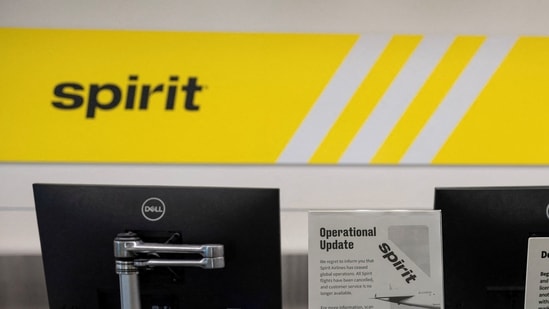
A labor union representing thousands of former Spirit flight attendants asked the court to decline the transaction unless the agreement expressly provides that all confidential flight attendant information is excluded from the sale or at least receives the same protection as consumer information, according to an objection filed
A bankruptcy court delayed approval of Google’s $10 million purchase of Spirit Airlines’ data after former flight attendants objected, warning that the deal could violate worker privacy to feed artificial intelligence models.
A labor union representing thousands of former Spirit flight attendants asked the court to decline the transaction unless the agreement expressly provides that all confidential flight attendant information is excluded from the sale or at least receives the same protection as consumer information, according to an objection filed with the U.S. Bankruptcy Court in Manhattan on Tuesday.
Google last week won the auction of Spirit’s digital archives that include decades of payroll, travel and recruiting files, along with about 100 million emails, 80,000 email accounts and millions of additional digital items. Google said it plans to use the data to improve its products and AI models, and that personal customer information wouldn’t be included in the purchase.
The flight attendants’ association said in its objection that while customer data might be protected, the deal lacks adequate safeguards to protect information about the attendants who worked for the defunct airline.
“We will not receive any personal information from this data set,” said a Google spokesperson. “Any data we receive will be rigorously scrubbed of any personally identifiable information by a third party before receipt.”
Spirit said it is “engaging a third party to deidentify the data and certify that the data sold at auction is compliant with applicable privacy laws and regulations.”
Judge Sean Lane, who is overseeing the bankruptcy case, postponed the sale hearing to Sept. 9 to give the court time to evaluate the claims.
The sale agreement between Google and Spirit mandates that the data be “deidentified” to remove elements that would link the information to a consumer or otherwise be considered personal data.
The union countered that “deidentification addresses whether a record can be traced to a named individual. It does not address whether the contents of the record are confidential.”
The union said there is an asymmetry in how the transaction treats customer information versus employee information. While customer profiles, email addresses, loyalty data and chat sessions were largely “not included,” nearly every category tied to former employees, including time card information, payroll records, tax forms and business travel records, is part of the sale, it said.
“The privacy architecture of this transaction is consumer-facing; its payload is disproportionately employee-facing,” the flight-attendant association said in the objection.
Write to Alexander Gladstone at alexander.gladstone@wsj.com
One Subscription.
Get 360° coverage—from daily headlines
to 100 year archives.
Archives
HT App & Website