
 E-Paper



Prince Aga Khan, spiritual leader of Ismaili Muslims, dies at 88
Prince Aga Khan was considered by his Ismaili Muslim followers to be a direct descendant of the Prophet Muhammad.

 Prefer HTon Google


The Aga Khan, who became the spiritual leader of millions of Ismaili Muslims at just 20 while studying at Harvard and dedicated his vast fortune to funding homes, hospitals, and schools in developing countries, passed away aged 88.
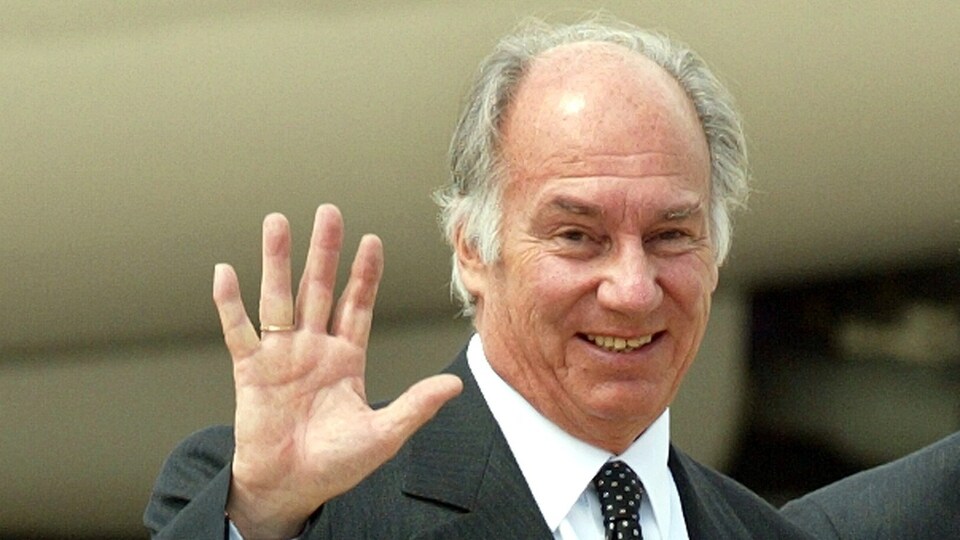
His Aga Khan Foundation and the Ismaili religious community announced on their websites that His Highness Prince Karim Al-Hussaini, the Aga Khan IV and 49th hereditary imam of the Shia Ismaili Muslims, died Tuesday in Portugal, surrounded by his family. They stated that an announcement regarding his successor would follow later. He is survived by three sons and a daughter.
Considered by his followers to be a direct descendant of the Prophet Muhammad, His Highness Prince Karim Aga Khan IV was a student when his grandfather passed over his playboy father as his successor to lead the diaspora of Shia Ismaili Muslims, saying his followers should be led by a young man “who has been brought up amid the new age.”
Over the decades, the Aga Khan became both a business magnate and a philanthropist, seamlessly balancing the spiritual and the worldly.
Recognized as a head of state, he was granted the title of “His Highness” by Queen Elizabeth in July 1957, just two weeks after his grandfather, Aga Khan III, unexpectedly named him heir to the family’s 1,300-year-old dynasty as leader of the Ismaili Muslim community.
He officially became Aga Khan IV on October 19, 1957, in Dar es Salaam, Tanzania—the same place where his grandfather had once received his weight in diamonds as gifts from his followers.
Having left Harvard to be by his ailing grandfather’s side, he returned to school 18 months later, accompanied by an entourage and carrying a profound sense of responsibility.
“I was an undergraduate who knew what his work for the rest of his life was going to be,” he said in a 2012 interview with Vanity Fair magazine. “I don’t think anyone in my situation would have been prepared.”
A staunch advocate of Islamic culture and values, the Aga Khan is widely recognized as a bridge-builder between Muslim societies and the West, a role he embraced while remaining largely removed from politics.
His primary philanthropic organization, the Aga Khan Development Network, has focused on improving health care, housing, education, and rural economic development.
Hospitals bearing his name are established in regions with limited medical access, including Bangladesh, Tajikistan, and Afghanistan, where he invested tens of millions of dollars to strengthen local economies.
With a keen eye for architecture and design, he founded a prestigious architectural prize and established programs for Islamic Architecture at MIT and Harvard. His dedication to cultural preservation led to restoring historic Islamic structures worldwide.
Accounts differ regarding Prince Karim Aga Khan’s birth date and place. According to “Who’s Who in France,” he was born on Dec. 13, 1936, in Creux-de-Genthod, near Geneva, Switzerland, the son of Joan Yarde-Buller and Aly Khan.
The extent of the Aga Khan’s financial empire is hard to measure. Some reports estimated his personal wealth to be in the billions.
The Ismailis—a sect originally centred in India but which expanded to large communities in East Africa, Central and South Asia, and the Middle East—consider it a duty to tithe up to 10% of their income to him as a steward.
“We have no notion of wealth accumulation being evil,” he told Vanity Fair in 2012. “The Islamic ethic is that if God has given you the capacity or good fortune to be a privileged individual in society, you have a moral responsibility to society.”


