...
...
Next Story
Trending News

The Gulf survived a short, hot war. A long, cold one will be harder

Conflict could continue until 2029

Published on: Nov 25, 2026, 09:15:54 IST
The Economist
Advertisement

FOR HALF a century trouble elsewhere in the world was often good for business in the Gulf. The Arab-Israeli war of 1973 and subsequent oil embargo sparked an economic boom in the region. Russia’s invasion of Ukraine in 2022 brought an influx of foreign capital and a spike in oil prices. This year trouble came to the Gulf itself. Yet in some ways life is returning to normal—as if the trouble were somewhere else entirely.
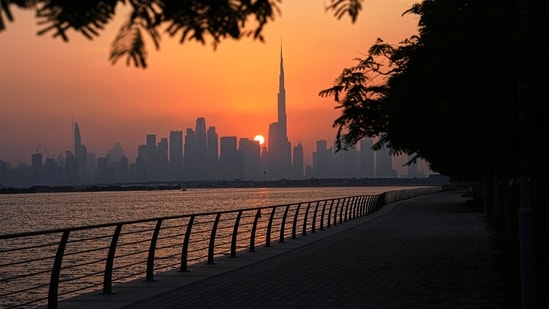
PREMIUMThe city skyline with Burj Khalifa is silhouetted during sunset in Dubai, United Arab Emirates, Thursday, Oct. 15, 2026. (AP Photo/Fatima Shbair) (AP Photo/Fatima Shbair)
The city skyline with Burj Khalifa is silhouetted during sunset in Dubai, United Arab Emirates, Thursday, Oct. 15, 2026. (AP Photo/Fatima Shbair) (AP Photo/Fatima Shbair)

Flights and hotels are busier.

Suggested For You

Chart

America’s president has retreated from those threats, at least for now. But danger and disruption remain. In both Washington and the Gulf, many officials expect the conflict to continue throughout 2027, and perhaps until Mr Trump leaves office in January 2029. The Gulf states managed to weather a short, hot war earlier this year. A long, cold one could prove more challenging.

The immediate priority is to keep it cold. None of the six members of the Gulf Co-operation Council (GCC)—Bahrain, Kuwait, Oman, Qatar, Saudi Arabia and the UAE—wants Mr Trump to make good on his threats of renewed fighting. “Everyone makes their pitch differently, but everyone starts it with ‘please don’t’,” says a Gulf diplomat in Washington.

Featured Video

But they cannot agree on much else. Qatar is desperate to broker a deal between America and Iran in order to get its liquefied natural gas flowing again. Saudi Arabia and the UAE fear it will be another lopsided agreement that empowers Iran. Instead they are urging America to continue strangling Iran’s economy. They view Scott Bessent, the treasury secretary, as a useful ally: he is an advocate of the blockade strategy and, they believe, one of the few lieutenants Mr Trump still trusts.

For the Saudis Iran is no longer the most pressing threat, in any case. They are desperate for American help against the Houthis, an Iran-backed militia in Yemen that has spent months firing missiles and drones at Saudi cities. In repeated phone calls Muhammad bin Salman, the crown prince, has asked Mr Trump to launch air strikes against the rebels. The president has refused. Saudi officials hope the prince will have more luck in person next month, when he attends the G20 summit in Miami.

If the status quo prevails, the next two years could look much like the past two months. The Strait of Hormuz would be neither fully open nor shut and uncertainty would linger over the Gulf. Analysts are divided on what that would mean for oil markets. Claudio Galimberti, the chief economist for Rystad Energy, a consultancy, expects a “fragile pseudo-normalisation” of the strait next year, in which America and Iran gradually relax their respective blockades. Others think America would maintain both its blockade of Iranian shipping and its expensive effort to escort friendly tankers through Hormuz.

Either way, that seems like good news for Gulf producers: they will get at least some of their crude to market. But coupled with rising production in the Americas and weak demand, it could mean a supply glut and lower prices—even with the war ongoing.

That would be good for the rest of the world, but it could prolong the economic pain for Gulf states. In October the IMF projected that five of the six GCC members would contract this year (it later revised its forecast for the UAE, from a 3.9% contraction to 0.2% growth). Only Oman, which sits outside the Strait of Hormuz, is expected to see meaningful growth in 2026.

With the war in limbo, expats have returned to the Gulf and tourists are trickling back as well. But the region is hardly back to its pre-war normal. Emirates, a state-owned carrier in Dubai, carried 22% fewer passengers in the six months through September than a year earlier. Hotel occupancy is 15 to 20 percentage points below normal in the city. Salik, a toll operator in Dubai, recorded an 11% drop in chargeable trips in the first nine months of 2026.

A longer war will bring additional concerns. Supply chains are one. Oil might be getting out of the Gulf, but most other commodities, from fertiliser to helium, are stuck inside the strait. Nor is much going in the other direction. Lloyd’s List, a shipping journal, recorded just 227 container ships transiting through Hormuz since March, an average of less than one per day (the pre-war average was around 20).

While food, medicine and other essential goods are still readily available, businesses across the region are struggling with shortages. Bars in Bahrain are running out of beer. A property developer halted a project in Dubai because he could not find the right bathroom fittings. Furniture shops and car dealers are low on stock. Inflation has probably doubled in most Gulf countries this year, largely due to the higher cost of shipping goods by road or air.

A second worry is that a long war will derail long-term investments. The UAE has hoped to make itself a hub for data centres, including a 5GW facility that would be one of the world’s largest. It has started considering plans to build such facilities underground in order to shield them from Iranian attack. Some tech executives are quietly sceptical: even if servers can be buried, the infrastructure that powers and cools them cannot. Expats in Doha fear a big wave of layoffs and project cancellations if the war continues into 2027. Saudi Arabia is struggling to pay contractors.

Prolonged war will force deep-pocketed Gulf firms and sovereign-wealth funds to spend more on mitigation—from defence to new pipelines and ports—leaving less money for efforts to diversify their economies. Other spending will be cut too. Qatar is said to have slashed its foreign-aid budget by up to 85%, potentially a big blow to recipient countries such as Syria.

Governments will borrow to fill the gap. That is a third worry. Allianz, a German insurer, estimates that the Gulf states could run a collective cumulative deficit of $475bn from 2026 to 2030 (3% to 4% of GDP)—a stark contrast with the previous five years, when the region’s fiscal balance was close to even.

The pain will be shared unevenly. The UAE can balance its budget even with relatively low oil prices and can use pipelines to bypass Hormuz. Having announced its departure from the OPEC cartel in April, it also plans to boost production. “Strait-locked” countries, such as Bahrain, have a higher break-even price and fewer workarounds. They may need help from their wealthier neighbours. But those neighbours will have less to give.

Gulf states find themselves in a curious position: most cannot afford a long war, yet most are urging Mr Trump to pursue one, because the alternative looks even worse. Just how long it lasts may depend on America’s new Congress. Some Democratic lawmakers argue that their midterm victory on November 3rd was fuelled by opposition to the conflict, and that they need to deliver for voters by cutting off funds for the war. Others are nervous. “The president would love to be able to say he was on the brink of victory, only for the Democrats to yank it away from him,” says a congressional source.

If Congress does impose restrictions, the devil will be in the details. Halting funds for “offensive operations”, as some lawmakers suggest, could prevent Mr Trump from launching another big wave of air strikes. But it might not stop the blockade or the Hormuz escorts. Nor would it make the Iranians more amenable to a deal. Instead of ending the war, it could lock in the status quo.

Democrats will also be eager to investigate corruption in the Trump administration. That will mean an uncomfortable two years for Gulf states, which invested heavily in the president and his allies. Sources on Capitol Hill expect the UAE will come in for the most scrutiny, because of its $500m stake in World Liberty Financial, a cryptocurrency firm founded by Mr Trump’s family and that of Steve Witkoff, his diplomatic envoy. Qatar gave Mr Trump a jet; Saudi Arabia has done deals with Jared Kushner, his son-in-law. Gulf states thought their investments had secured them a firm alliance with a Republican-dominated America. Now they are exasperated with Mr Trump and facing criticism from Democrats.

Iran’s economy is reeling from the blockade, but so are its neighbours. The Gulf states have deeper pockets, though, and many are wagering that they have no choice but to outlast Iran. The question is how much of their business model will survive the wait.

FOR HALF a century trouble elsewhere in the world was often good for business in the Gulf. The Arab-Israeli war of 1973 and subsequent oil embargo sparked an economic boom in the region. Russia’s invasion of Ukraine in 2022 brought an influx of foreign capital and a spike in oil prices. This year trouble came to the Gulf itself. Yet in some ways life is returning to normal—as if the trouble were somewhere else entirely.

PREMIUMThe city skyline with Burj Khalifa is silhouetted during sunset in Dubai, United Arab Emirates, Thursday, Oct. 15, 2026. (AP Photo/Fatima Shbair) (AP Photo/Fatima Shbair)
The city skyline with Burj Khalifa is silhouetted during sunset in Dubai, United Arab Emirates, Thursday, Oct. 15, 2026. (AP Photo/Fatima Shbair) (AP Photo/Fatima Shbair)

Flights and hotels are busier. Marquee events are going ahead: Abu Dhabi, the capital of the United Arab Emirates (UAE), will host a Formula One race and a finance summit in December. In October nine people bought homes in Dubai valued at more than 50m dirhams ($14m), even as Donald Trump threatened to resume a war that could bring missiles and drones raining down on the city once again.

Suggested For You

Chart

America’s president has retreated from those threats, at least for now. But danger and disruption remain. In both Washington and the Gulf, many officials expect the conflict to continue throughout 2027, and perhaps until Mr Trump leaves office in January 2029. The Gulf states managed to weather a short, hot war earlier this year. A long, cold one could prove more challenging.

The immediate priority is to keep it cold. None of the six members of the Gulf Co-operation Council (GCC)—Bahrain, Kuwait, Oman, Qatar, Saudi Arabia and the UAE—wants Mr Trump to make good on his threats of renewed fighting. “Everyone makes their pitch differently, but everyone starts it with ‘please don’t’,” says a Gulf diplomat in Washington.

Featured Video

But they cannot agree on much else. Qatar is desperate to broker a deal between America and Iran in order to get its liquefied natural gas flowing again. Saudi Arabia and the UAE fear it will be another lopsided agreement that empowers Iran. Instead they are urging America to continue strangling Iran’s economy. They view Scott Bessent, the treasury secretary, as a useful ally: he is an advocate of the blockade strategy and, they believe, one of the few lieutenants Mr Trump still trusts.

For the Saudis Iran is no longer the most pressing threat, in any case. They are desperate for American help against the Houthis, an Iran-backed militia in Yemen that has spent months firing missiles and drones at Saudi cities. In repeated phone calls Muhammad bin Salman, the crown prince, has asked Mr Trump to launch air strikes against the rebels. The president has refused. Saudi officials hope the prince will have more luck in person next month, when he attends the G20 summit in Miami.

If the status quo prevails, the next two years could look much like the past two months. The Strait of Hormuz would be neither fully open nor shut and uncertainty would linger over the Gulf. Analysts are divided on what that would mean for oil markets. Claudio Galimberti, the chief economist for Rystad Energy, a consultancy, expects a “fragile pseudo-normalisation” of the strait next year, in which America and Iran gradually relax their respective blockades. Others think America would maintain both its blockade of Iranian shipping and its expensive effort to escort friendly tankers through Hormuz.

Either way, that seems like good news for Gulf producers: they will get at least some of their crude to market. But coupled with rising production in the Americas and weak demand, it could mean a supply glut and lower prices—even with the war ongoing.

That would be good for the rest of the world, but it could prolong the economic pain for Gulf states. In October the IMF projected that five of the six GCC members would contract this year (it later revised its forecast for the UAE, from a 3.9% contraction to 0.2% growth). Only Oman, which sits outside the Strait of Hormuz, is expected to see meaningful growth in 2026.

With the war in limbo, expats have returned to the Gulf and tourists are trickling back as well. But the region is hardly back to its pre-war normal. Emirates, a state-owned carrier in Dubai, carried 22% fewer passengers in the six months through September than a year earlier. Hotel occupancy is 15 to 20 percentage points below normal in the city. Salik, a toll operator in Dubai, recorded an 11% drop in chargeable trips in the first nine months of 2026.

A longer war will bring additional concerns. Supply chains are one. Oil might be getting out of the Gulf, but most other commodities, from fertiliser to helium, are stuck inside the strait. Nor is much going in the other direction. Lloyd’s List, a shipping journal, recorded just 227 container ships transiting through Hormuz since March, an average of less than one per day (the pre-war average was around 20).

While food, medicine and other essential goods are still readily available, businesses across the region are struggling with shortages. Bars in Bahrain are running out of beer. A property developer halted a project in Dubai because he could not find the right bathroom fittings. Furniture shops and car dealers are low on stock. Inflation has probably doubled in most Gulf countries this year, largely due to the higher cost of shipping goods by road or air.

A second worry is that a long war will derail long-term investments. The UAE has hoped to make itself a hub for data centres, including a 5GW facility that would be one of the world’s largest. It has started considering plans to build such facilities underground in order to shield them from Iranian attack. Some tech executives are quietly sceptical: even if servers can be buried, the infrastructure that powers and cools them cannot. Expats in Doha fear a big wave of layoffs and project cancellations if the war continues into 2027. Saudi Arabia is struggling to pay contractors.

Prolonged war will force deep-pocketed Gulf firms and sovereign-wealth funds to spend more on mitigation—from defence to new pipelines and ports—leaving less money for efforts to diversify their economies. Other spending will be cut too. Qatar is said to have slashed its foreign-aid budget by up to 85%, potentially a big blow to recipient countries such as Syria.

Governments will borrow to fill the gap. That is a third worry. Allianz, a German insurer, estimates that the Gulf states could run a collective cumulative deficit of $475bn from 2026 to 2030 (3% to 4% of GDP)—a stark contrast with the previous five years, when the region’s fiscal balance was close to even.

The pain will be shared unevenly. The UAE can balance its budget even with relatively low oil prices and can use pipelines to bypass Hormuz. Having announced its departure from the OPEC cartel in April, it also plans to boost production. “Strait-locked” countries, such as Bahrain, have a higher break-even price and fewer workarounds. They may need help from their wealthier neighbours. But those neighbours will have less to give.

Gulf states find themselves in a curious position: most cannot afford a long war, yet most are urging Mr Trump to pursue one, because the alternative looks even worse. Just how long it lasts may depend on America’s new Congress. Some Democratic lawmakers argue that their midterm victory on November 3rd was fuelled by opposition to the conflict, and that they need to deliver for voters by cutting off funds for the war. Others are nervous. “The president would love to be able to say he was on the brink of victory, only for the Democrats to yank it away from him,” says a congressional source.

If Congress does impose restrictions, the devil will be in the details. Halting funds for “offensive operations”, as some lawmakers suggest, could prevent Mr Trump from launching another big wave of air strikes. But it might not stop the blockade or the Hormuz escorts. Nor would it make the Iranians more amenable to a deal. Instead of ending the war, it could lock in the status quo.

Democrats will also be eager to investigate corruption in the Trump administration. That will mean an uncomfortable two years for Gulf states, which invested heavily in the president and his allies. Sources on Capitol Hill expect the UAE will come in for the most scrutiny, because of its $500m stake in World Liberty Financial, a cryptocurrency firm founded by Mr Trump’s family and that of Steve Witkoff, his diplomatic envoy. Qatar gave Mr Trump a jet; Saudi Arabia has done deals with Jared Kushner, his son-in-law. Gulf states thought their investments had secured them a firm alliance with a Republican-dominated America. Now they are exasperated with Mr Trump and facing criticism from Democrats.

Iran’s economy is reeling from the blockade, but so are its neighbours. The Gulf states have deeper pockets, though, and many are wagering that they have no choice but to outlast Iran. The question is how much of their business model will survive the wait.

All Access.
One Subscription.

Get 360° coverage—from daily headlines
to 100 year archives.

E-Paper
Full
Archives
Full Access to
HT App & Website
Games
 

Explore More

Get the latest World News, breaking headlines, and real-time coverage from key global hotspots, including the US News, Russia, Ukraine, Iran News, and the UAE News. Track developing conflicts, high-stakes diplomacy, and major international events on Hindustan Times.
SHARE THIS ARTICLE ON
Notifications

Get breaking alerts directly from the newsroom

Notifications are on!You'll be notified when news breaks