Large swaths of armyworms—specifically the fall armyworm—have been invading lawns, eating up grass and plants in an infestation, which experts say they have not seen in decades, reported across the US. Rick Brandenburg, an entomologist at North Carolina State University, said the insects are laying siege to areas such as North Carolina, Texas, Michigan and northeastern states, which rarely see such significant armyworm populations. "This year is like a perfect storm. In my 40 years, I have never seen the problem as widespread as it is this year,” Brandenburg told USA Today.
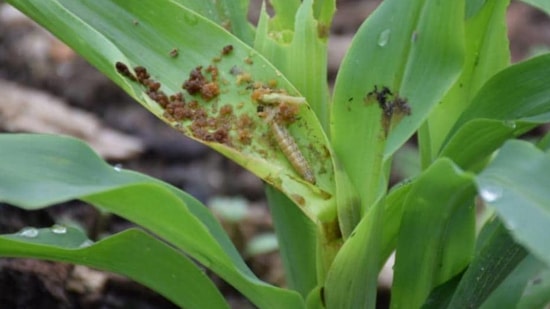
Entomologist Thomas Kuhar said this was the largest infestation he has seen in 30 years, and “perhaps the most unique”. Kuhar, a professor at Virginia Tech, said armyworms are often found in crops such as corn, rice and sorghum, but this year’s outbreak is selectively targeting lawns and some hayfields. “That’s not a normal fall armyworm behaviour. They should just be devouring things in their path,” he told Bloomberg.
Eric Rebek, an Oklahoma State University entomology professor, said these pests return to Oklahoma every year in late summer and early fall as they travel in large swaths from one food source to another until the winter frost kills them. "They can easily munch their way through whatever, whether it's a lawn or a park or a golf course. They just lay waste to everything in their path, moving through just like an army on the move," Rebek told USA Today.
What are fall armyworms?
{{/usCountry}}What are fall armyworms?
{{/usCountry}}According to Rebek, there are two kinds of armyworms: the true armyworm and the fall armyworm. The fall armyworms, which are indigenous to the US, are the larval stage of the fall armyworm moth. The caterpillars grow up to two inches long and can be green, brown or black in colour. Rebek said they can be identified by an inverted white "y" on their head capsules. A single female can lay as many as 1,500 eggs.
What damage do armyworms inflict?
Rebek said fall armyworms eat up grass of all kinds, adding the extent of the damage depends on the type of grass. "For warm-season grass, is mostly an aesthetic issue. But if you have cool-season grass, you probably want to treat your lawn,” he said.
What’s the reason behind the widespread outbreak?
According to experts, it could be a number of factors, including a warming climate, wetter weather or changes in natural enemies such as predators, parasites and pathogens.
"It's hard to point your finger at any one thing… It's likely a very complex interaction that is occurring this year that leads to this outbreak," Rebek said.
Brandenburg said while climate change has the potential to increase the likelihood of tropical pests like fall armyworms infesting lawns, it's difficult to make a direct link between the two because so many factors are at play.
How can armyworm attacks be prevented?
People can’t do much to protect their lawns from armyworms and Rebek warned homeowners to be watchful. “It's hard to deter them. And it's hard to predict where they'll land and prevent that from happening,” he said adding that people must check the label on their insecticide.