
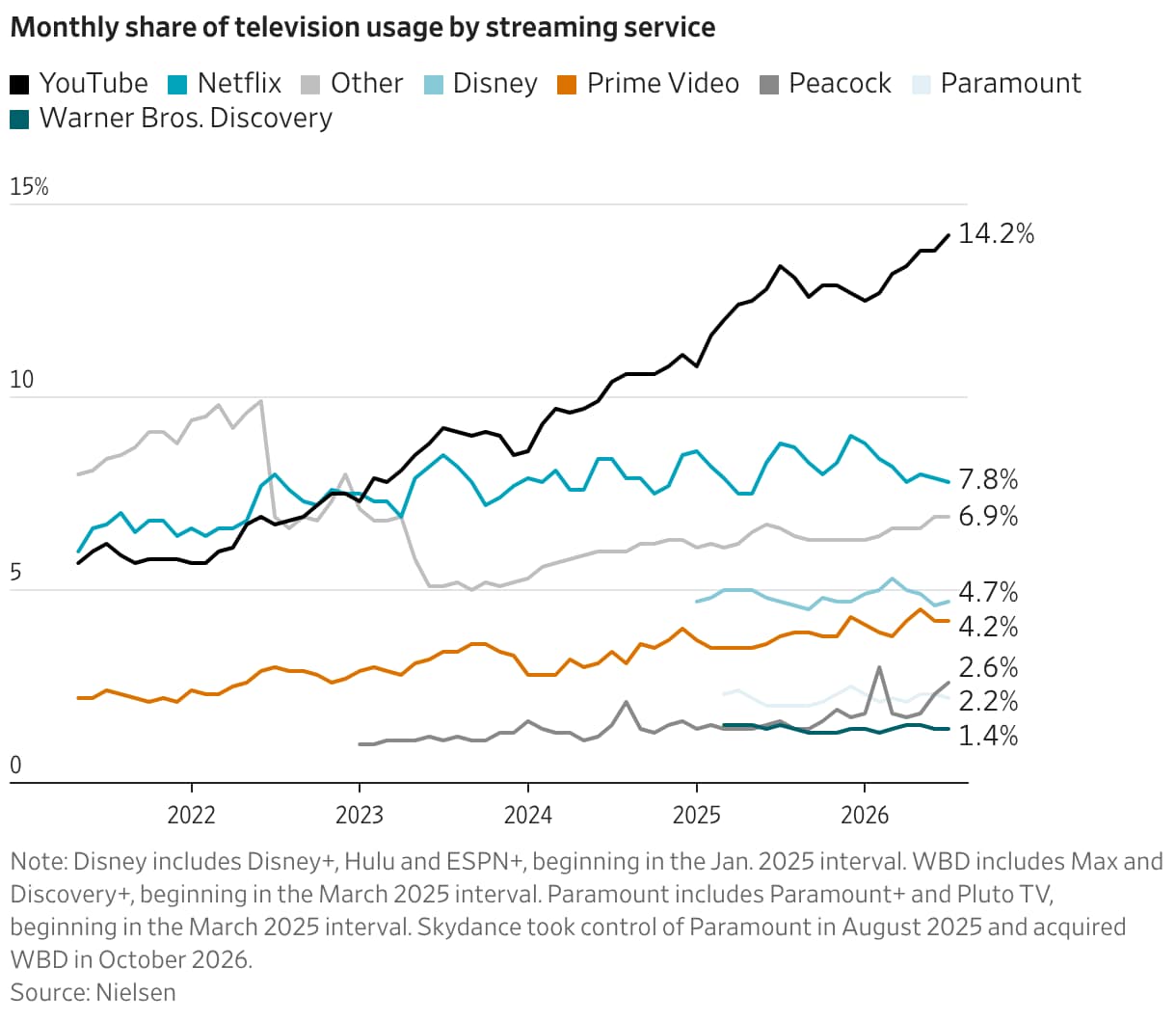
Americans are tired of spending ever more on streaming services.
Netflix, Disney+, HBO Max and other premium streaming services have steadily hiked prices for years, even bumping up the monthly price tag of lower-priced ad-supported tiers. Now, viewers are increasingly tuning in to cheaper and free options.
Suggested For You
The price of Disney+ without ads has more than tripled since its 2019 launch, while Netflix’s comparable price has grown more than 50% over the same period of time. Overall inflation during that
Americans are tired of spending ever more on streaming services.
Netflix, Disney+, HBO Max and other premium streaming services have steadily hiked prices for years, even bumping up the monthly price tag of lower-priced ad-supported tiers. Now, viewers are increasingly tuning in to cheaper and free options.
Suggested For You
The price of Disney+ without ads has more than tripled since its 2019 launch, while Netflix’s comparable price has grown more than 50% over the same period of time. Overall inflation during that period has been about 32%.
The moves have helped stoke revenue growth, pleasing investors who stopped rewarding subscriber growth at all costs and started scrutinizing the profitability of the services.
But with prices soaring, more consumers are gravitating toward cheaper ad-supported tiers, and an ever-growing share of premium streaming subscriptions are now from ad-supported plans.
In addition to increasing prices, the growing availability of live sports on streaming services and the plethora of content to keep up with is driving the shift to ad-supported streaming, said Brendan Brady, vice president of strategy for data firm Antenna. “There’s so much TV out there that, in an effort to potentially stack services, users may opt for those lower-priced offers,” Brady said.
But some services generate less money per user on average from ad-based subscription versions, compared with premium tiers, according to industry analysts. Streamers are trying to increase the money they make from advertising to make up the difference.
And customers who opt for cheaper plans tend to be less loyal, according to Antenna data. That means streamers continue to spend marketing dollars to recruit new subscribers or woo back people who left. In recent years, media companies have increasingly relied on bundles to keep cancellation rates in check. Brady said that part of the difference in cancellation rates is due to longtime premium Netflix subscribers, who tend to be more loyal.
Lately, there are signs that the number of premium subscriptions per household is plateauing, according to S&P Global, a signal that the days of heady subscription growth from streaming are coming to an end.
The clear winner as consumers grow less tolerant of price hikes: YouTube. The Google-owned service’s nearly infinite well of free content has powered its continued ascent.
Write to Elizaveta Galkina at elizaveta.galkina@wsj.com and Ben Fritz at ben.fritz@wsj.com
One Subscription.
Get 360° coverage—from daily headlines
to 100 year archives.
Archives
HT App & Website