Emmanuel Macron cast himself as a wartime leader as he laid out his manifesto just three weeks before the presidential election, suggesting he was the safest choice for voters in troubled times.
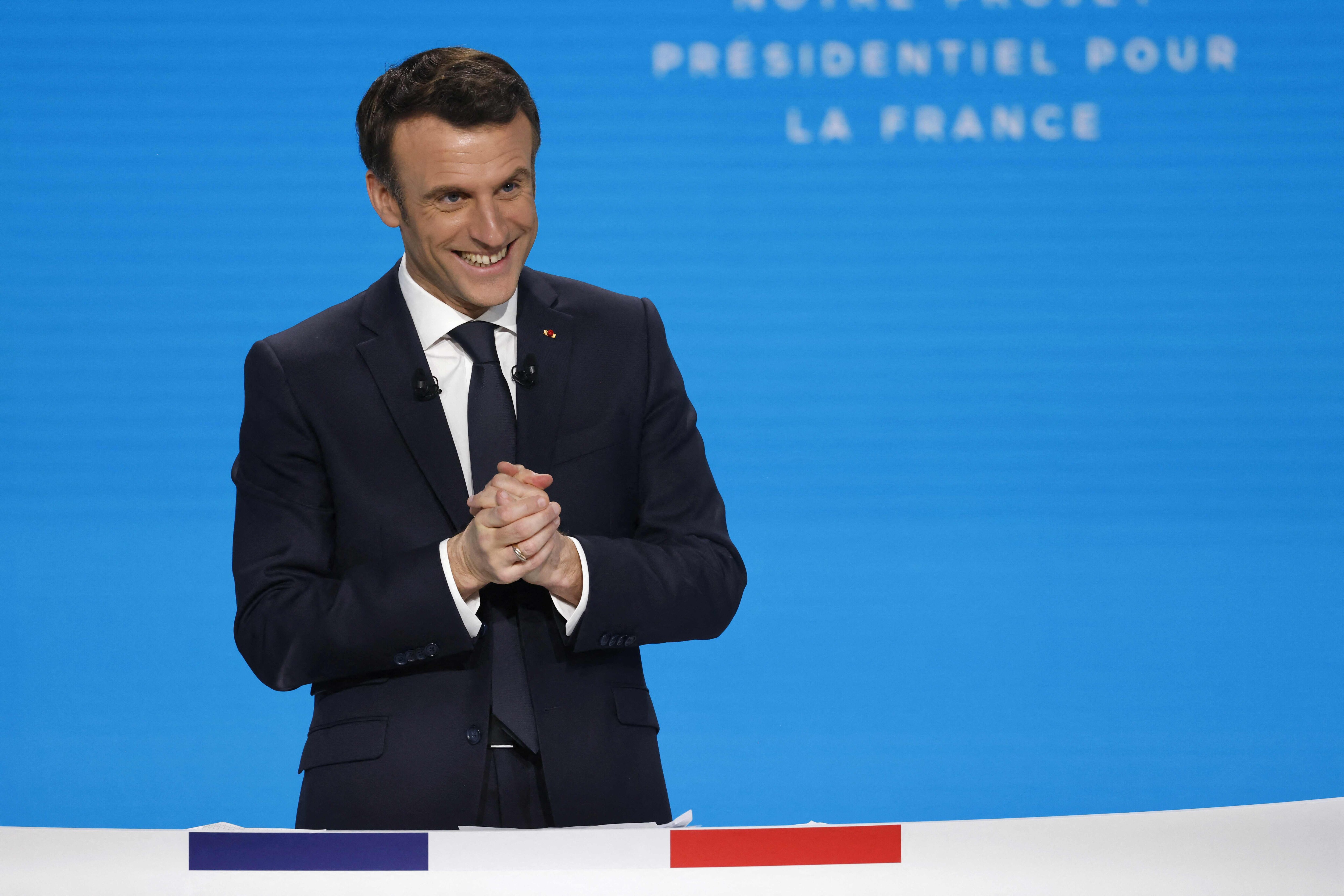
“Facing the unforeseeable, you already have a certain idea of how I behave,” Macron said during a four-hour long press conference in Aubervilliers, near Paris, on Thursday.
Macron put himself at the center of failed European diplomatic efforts to avert Russia’s invasion of Ukraine. With the war now in its fourth week and intensifying, the French leader vowed to beef up defense spending to face threats including cyber attacks and conventional warfare. He pledged a more independent France “within a stronger Europe.”
Often accused of being a Jupiterian ruler, Macron said his campaign motto ‘With you’ reflects “a method for the long term.” He smiled and appeared mostly relaxed as he talked about issues ranging from energy to education and surrogacy, but also he bristled, once telling reporters they should be more patient with his long answers.
Macron set aside so much time to take questions from journalists in a bid to appear more accessible after keeping the press at arms-length last time around, and for much of his five-year term. It was also an attempt to defuse criticism that he’s barely been out campaigning -- though in some respects, he doesn’t need to.
{{/usCountry}}Macron set aside so much time to take questions from journalists in a bid to appear more accessible after keeping the press at arms-length last time around, and for much of his five-year term. It was also an attempt to defuse criticism that he’s barely been out campaigning -- though in some respects, he doesn’t need to.
{{/usCountry}}His efforts to help end the crisis in Ukraine have drawn scorn and ridicule abroad, with opponents saying he is been played by Vladimir Putin and went too far in trying to appease the Russian president. But at home, he’s benefiting from a sense of national union.
The war boosted Macron’s approval rating to 51%, according to a recent Ifop poll for Paris Match. A BVA poll for RTL-Orange put his popularity at 42% in February, already higher than his immediate predecessors at this stage in their mandate -- Francois Hollande was at 22% in 2017, and Nicolas Sarkozy at 32% in 2012.
All polls show Macron leading both the first round on April 10 and the second round two weeks later. He’d beat his main rival, far-right nationalist leader Marine Le Pen, by at least 12 points in the runoff, according to many surveys. Bookmakers favor Macron to win, with a likelihood of more than 90%.
In trying to appear statesmanlike, Macron delayed announcing his re-election bid until hours before the deadline for candidates to register. He also made it clear that he won’t join debates, skipping even live discussions with rivals on women’s rights and the environment.
The war in Ukraine reinforced a perception among the French that Macron is a good crisis manager, said Adelaide Zulfikarpasic, director of Paris-based BVA Opinion, a pollster, recalling how he survived the Yellow Vests protests and handled Covid-19. The risk is he loses that appeal when the crises ebb.
“If he’s re-elected and gets a more normal mandate,” she said, “with no health crisis or no war, he would be exposed to challenges like handling reforms and be judged by his record.”