St. Michael’s College managed to keep coronavirus cases at bay for almost two months this fall with students tested upon arrival and once every three weeks.
But in mid-October, cases at the small Vermont school started to climb. The outbreak was linked to an ice rink more than 40 miles (64 kilometers) away. The liberal arts college shifted to all-remote learning and closed the campus to visitors. By November, a total of 76 of the roughly 1,600 students had tested positive, the school said.
“It was very concerning to experience the spike in cases that we did after so many weeks of surveillance tests with no positives,” President Lorraine Sterritt said by email.
When students come back for the spring semester, St. Michael’s will begin testing them weekly. The college may also require students to move to a separate residence hall when they are told to quarantine.
The coronavirus presented huge challenges for the fall semester for US colleges that opened the academic year with in-person learning, including some that took a battering from outbreaks. Those not joining the growing number that will offer only virtual learning are assessing how they would bring students back after the winter holidays while the country faces crushing rates of virus infections.
Schools that are bringing students back are adjusting testing protocols, introducing new screenings, and eliminating spring breaks to discourage students from traveling to help keep campuses open.
{{/usCountry}}Schools that are bringing students back are adjusting testing protocols, introducing new screenings, and eliminating spring breaks to discourage students from traveling to help keep campuses open.
{{/usCountry}}Other schools big and small think it’s still possible to keep a pandemic-era residential college experience.
California Polytechnical University in San Luis Obispo plans to add saliva testing in the winter quarter that will be processed on campus and will allow it “to test many more people much more quickly — our current estimate is 4,000 tests per day by mid-January,” President Jeffrey Armstrong said in a campus-wide message this month.
In the spring semester, Colby College in Maine wants to add some rapid antigen tests to twice-weekly tests for students, faculty and staff. It also did away with the one-week spring break replacing it with two mini-breaks in March and April.
“We’ll program stuff for the campus so people get a break,” Chief Financial Officer Douglas Terp said.
More schools are expected to require students get tested before they come to campus rather than when they arrive, as some institutions did before the fall semester, said Barbara Mistick, president of the National Association of Independent Colleges and Universities.
Institutions like Syracuse University in New York abandoned in-person learning earlier than planned this fall but are planning on a resumption of campus life next semester.
But a growing number of schools will stick with virtual instruction through the spring.
“We are seeing a rapid rise in colleges and universities announcing they will move to remote learning for the remainder of this semester and for the spring,” said Lynn Pasquerella, president of the Association of American Colleges and Universities.
George Washington University in Washington, D.C., for one, announced early last month it will continue most of its classes virtually.
Student cooperation with protocols helped to keep the number of coronavirus cases low at the University of Vermont’s campus in the small city of Burlington, President Suresh Garimella said.
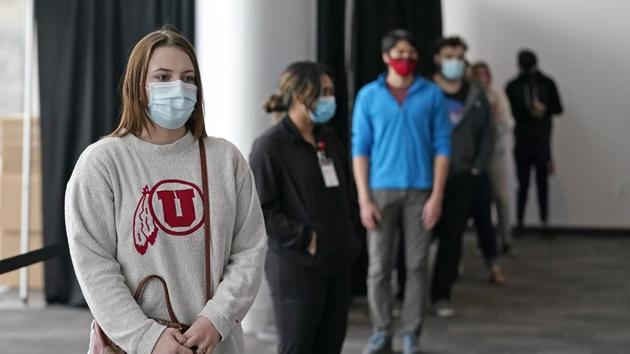
On a recent day, students wearing masks streamed through a tent outside the student center where they are required to be tested weekly. They stayed apart, stopped at a station to sanitize their hands and blow their nose and then proceeded into the indoor testing center.
“It’s part of my routine,” said sophomore Brian Boyle of the testing.
The school received federal coronavirus relief funding for virus-related expenses like testing, but Garimella estimates it will spend an additional $10 million to $15 million.
There are also a lot of precautions in place, rules for social distancing and the maximum number of people in a group, Boyle said. It’s harder to get together with people socially, but he said students can find ways to go about it and still follow the rules and be safe.
“You know being outside in small groups and stuff,” he said.
As cases rose in Vermont and at UVM in November, though, he said he was becoming a bit concerned about whether the spring semester will be in-person.
“My biggest concern is probably that people will become more relaxed with their individual social distancing/quarantining measures over winter break,” he said by email. “I can only hope that people will remember how important these safety measures are, and will continue to practice them for the sake of their health and for the sake of our education.”