The Donald Trump-led US administration has suspended Microsoft and other firms from the United States' green card programme, in a move which might affect H-1B workers employed at these firms too.
Apart from Microsoft, other companies facing suspension include Adobe, Cognizant, Infosys, TCS, Wipro, HCL and Capgemini. The move is part of US President Donald Trump’s efforts during his second term in office to restrict the number of foreign-born people gaining US citizenship and permanent residency. His administration has argued that the presence of foreign workers affects employment opportunities for Americans.
How will the move affect H-1B workers?
While the suspension will not have a blanket effect on all H-1B visa holders, it directly halts the PERM filings of the firms suspended from the Green Card programme, thus impacting those working at these firms. The Permanent Labor Certification Program is the mandatory first step for employment-based green card sponsorship.
Deep Dive
Which companies are affected by the US green card sponsorship suspension?
Does the green card suspension cancel H-1B visas held by employees of the affected companies?
How could the PERM suspension affect H-1B workers seeking a green card?
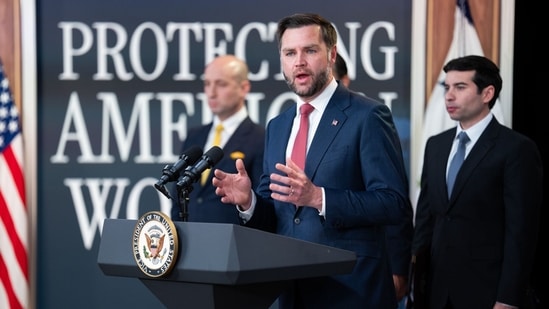
US President JD Vance, while making the announcement of suspension, specifically mentioned Microsoft. The company comes fifth among US employers when it comes to using H-1B visas, according to data from US Citizenship and Immigration Services. Vance said that while Microsoft last year laid off 6,000 American workers, it had obtained 6,300 H-1B visas and almost 3,000 green cards.
‘Hire great American workers': Why US suspended eight firms from green card programme
{{/usCountry}}‘Hire great American workers': Why US suspended eight firms from green card programme
{{/usCountry}}Microsoft is the largest filer of PERM applications, or the permanent labor certification process, according to data from the US labor department. The company had filed about 1,680 petitions for permanent status through the third quarter of the 2026 federal fiscal year which ended September 30.
On the other firms being targeted, labor secretary Keith Sonderling said they had, since 2009, sought almost three million foreign workers, and had received over 230,000 H-1B visa approvals and over 100,000 permanent labor certifications. The move may have a trickle-down effect on H-1B workers, given that Microsoft and other firms often use the H-1B program to bring in foreign workers and then help some of them remain in the country through the system. Now, Trump has made it harder for them to use H-1B visas to attract foreign talent.
What has the Trump administration said? How did the firms respond?
Vance specifically pointed to Microsoft while announcing the suspension. “There has been no company in the United States, unfortunately, that has abused the system more than Microsoft,” he said. About the company's hiring process, Vance claimed, “They’ll put an advertisement in a small-town newspaper. They’ll go out there and say that ‘We have advertised for a position with our company, and nobody is responding to it.’ And they will use that lack of response to then go and replace American workers with what is effectively foreign indentured servants.”
He added that the suspensions would last “as long as it needs to”, adding that the Trump administration wanted to companies to change how they hire employees. In a message to Microsoft, the US Vice-President said, “You’re a great American company, but you’ve got to hire great American workers.”
US labor secretary Sonderling said the suspension was to “ensure we’re prioritizing American workers first instead of foreign fraudsters,” adding that it would “fundamentally change” the H-1B visa program.
In response, Microsoft said that of the nearly 6,000 H-1B visa applications it submitted last year, 80 per cent were “to extend or change the status of existing Microsoft employees.” “These were not to hire new people,” the company said, adding that the remaining filings were for people who were already legally staying in the US.
“They are not new arrivals to our country,” Microsoft stated.
(With inputs from AP, Reuters and Bloomberg)