The Draconid meteor shower has made its return for its annual appearance in the night sky. Although this year’s display is expected to be fainter than previous years, experts are already predicting that 2025 could bring an impressive light show.
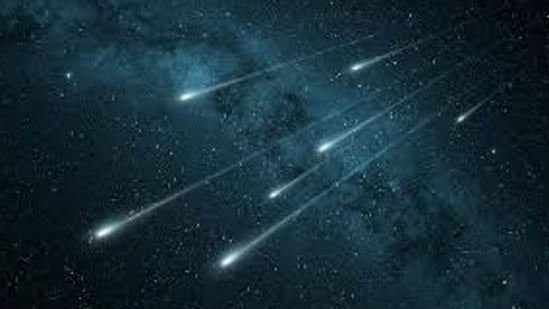
“The Draconids are what I call an all-or-nothing shower,” explained Bill Cooke, head of NASA’s Meteoroid Environment Office told Smithsonian magazine. “If there’s an outburst, it may be worth going out to see. But normal Draconid activity, they’re very faint, because they move so slowly. So, a normal Draconid year, you might see two to three meteors per hour, and that’s pretty much nothing.”
From October 6 to October 10, those Americans fortunate enough to live in areas with minimal air pollution will have a chance to witness the Draconids, which are associated with the dragon constellation Draco.
When and where to see dozens of shooting stars?
The Draconid meteor shower is predicted to peak at 3 UTC on October 8, 2024. The best time to watch will be the evening of October 7 through the early morning hours of October 8. With a waxing crescent moon that will be just 27% illuminated and setting a few hours after sunset, viewers will have the opportunity to observe the shower in a relatively moon-free sky.
{{/usCountry}}The Draconid meteor shower is predicted to peak at 3 UTC on October 8, 2024. The best time to watch will be the evening of October 7 through the early morning hours of October 8. With a waxing crescent moon that will be just 27% illuminated and setting a few hours after sunset, viewers will have the opportunity to observe the shower in a relatively moon-free sky.
{{/usCountry}}The Northern Hemisphere offers the best vantage point, with peak visibility on the evening of October 7 leading into the early hours of October 8. You could witness up to 10 meteors per hour.
Meteors in this shower travel at a relatively slow speed of 21 kilometres per second, and in a typical year, viewers may only see two to three meteors per hour. However, the Draconids are unpredictable; in rare instances, they have been known to produce over 1,000 meteors per hour.
ALSO READ| YouTuber Jack Doherty crashes $200K McLaren sports car on Livestream; Kick bans account
The Draconid meteor shower was first discovered in 1900 by French astronomer Michel Giacobini at Nice University. Ernst Zinner observed it again in 1913, and the source of the shower, Comet 21P/Giacobini-Zinner, is named in honor of both men.