James Lovell, the commander of Apollo 13 who helped turn a failed moon mission into a triumph, died in Lake Forest, Illinois on Thursday, NASA announced. He was 97. He was at
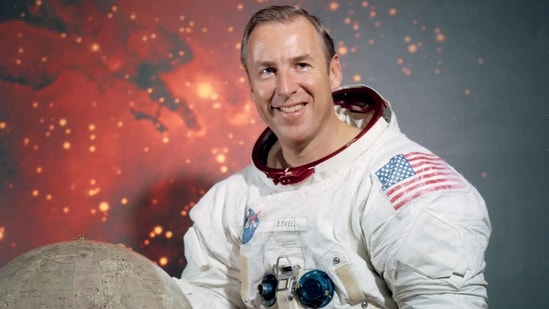
“ Jim’s character and steadfast courage helped our nation reach the Moon and turned a potential tragedy into a success from which we learned an enormous amount,” NASA said. "We mourn his passing even as we celebrate his achievements.”
His wife, Marilynn, died in 2023. He is survived by his four children.
Read More: Two giant asteroids to pass Earth today: Is there a cause of concern?
“NASA sends its condolences to the family of Capt. Jim Lovell, whose life and work inspired millions of people across the decades. Jim’s character and steadfast courage helped our nation reach the Moon and turned a potential tragedy into a success from which we learned an enormous amount. We mourn his passing even as we celebrate his achievements," the space ageny said in its press release on Friday.
Lovell flew four missions: Gemini 7, Gemini 12, Apollo 8, and Apollo 13, with his two Apollo flights capturing the world’s attention.
{{/usCountry}}Lovell flew four missions: Gemini 7, Gemini 12, Apollo 8, and Apollo 13, with his two Apollo flights capturing the world’s attention.
{{/usCountry}}In 1968, Lovell joined Frank Borman and William Anders on Apollo 8, becoming part of the first crew to leave Earth’s orbit, travel to the moon, and circle it. Though they didn’t land, the mission gave the US a critical edge over the Soviets in the space race. The crew’s now-iconic “Earthrise” photo — showing the fragile blue planet from lunar orbit, and their Christmas Eve reading from Genesis, resonated deeply with a nation facing a turbulent year. Some letter writers even credited the moment with helping to lift America’s spirit.
Read More: Trump to shut down NASA missions that monitor carbon dioxide and plant heath
Two years later came Lovell’s most famous mission, and his closest brush with disaster. Apollo 13, intended to make him the fifth man to walk on the moon, suffered a catastrophic oxygen tank explosion en route. Lovell and his crewmates endured four frigid, cramped days in the lunar module, using it as a lifeboat to survive the perilous journey home.
“The thing I want most people to remember,” Lovell reflected in a 1994 interview, “is that, in some sense, it was very much a success — not because we accomplished the mission, but because it proved the incredible capability of NASA’s people.”
James Lovell cause of death
NASA or the Lovell family have not confirmed the 97-year-old's cause of death yet. There is no comprehensive record detailing specific health conditions Lovell faced in his later years or at the time of his death.
However, earlier in his career, Lovell was temporarily disqualified from NASA’s Mercury Seven astronaut selection in 1959 due to a high bilirubin count, which could indicate a liver issue, though this was described as temporary and did not prevent his later selection in 1962 for the Gemini and Apollo programs.