
 E-Paper


Russian fighter jets spotted near Alaskan ADIZ; NORAD responds
NORAD identified Russian fighter jets in the Alaskan ADIZ. Here's why the Russian jets were in the US airspace and what happened in ADIZ.

 Prefer HTon Google


On February 19, 2026, three Russian fighter jets were identified and monitored by the North American Aerospace Defense Command (NORAD) as they were flying in the Alaskan Air Defense Identification Zone (ADIZ).
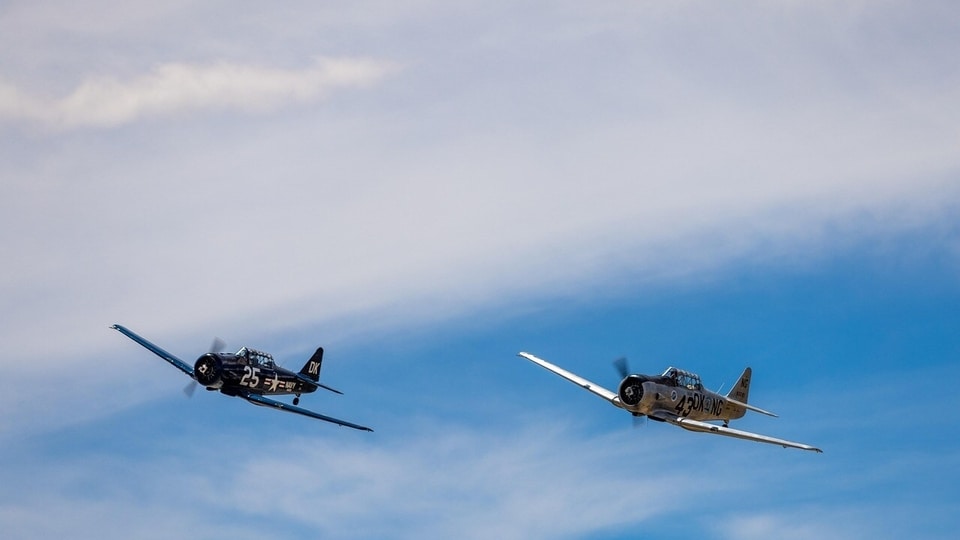
In its official statement, NORAD said it dispatched two F-16 Fighting Falcons, two F-35 Lightning IIs, one E-3 and four KC-135 to intercept and escort the aircraft from the Alaskan ADIZ.
Read more: ‘100 times more powerful’: All about ‘Trump-class’ battleships
Why are Russian fighter jets in the Arctic region?
The leadership of NATO has issued a warning over an increase in Chinese and Russian patrols throughout the Arctic, including regions close to Canada and north of Alaska.
At Sweden's National Security Conference, General Alexus Grynkewich, the Supreme Allied Commander of Europe, also issued a warning that China and Russia are increasing their combined patrols in the Arctic.
Even though Thursday's interception has been called "routine," the Arctic is increasingly being used as a site for a great power struggle, potentially raising the stakes for both national security and international stability.
Moreover, the Alaska ADIZ remains a strategically important area due to its proximity to Russia and the Arctic region.
Read more: Russia sends submarine to escort tanker US tried to seize off Venezuela: Report
What happened in ADIZ?
However, the Russian formation stayed in international airspace and did not breach sovereign U.S. or Canadian airspace, according to NORAD.
According to the NORAD press release, this regular Russian activity in the Alaskan ADIZ is not regarded as a threat.
Since September 24, this is the first time Russian aircraft have been reported to have entered the Alaskan airspace. A series of intrusions in August and July preceded the September incident, Stars and Stripes reported.
NORAD uses a multi-layered defense system that includes fighter planes, ground-based and aerial radars, and satellites to track and identify aircraft and provide information for necessary action.
The Russian formation consisted of an A-50 airborne early warning and control aircraft, two Su-35 fighters, and two Tu-95 bombers.


