Sherrod Brown, now running for the US senate position opposite Republican Jon Husted, is already a prominent figure in Ohio. Having served as the former US senator for 18 years, he previously served in the Ohio House of Representatives from 1975 to 1983. He also held positions as Ohio secretary of state and the US representative for Ohio’s 13th congressional district till 2007.
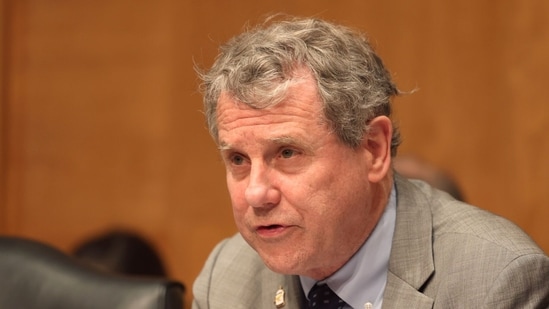
Brown is now seeking to return to the Senate in the 2026 midterm election. His campaign heavily focuses on holding health insurance companies accountable, reducing prescription drug costs, requiring data centers to pay the full cost of their utilities and banning members of Congress and their spouses from trading stocks. Describing himself as a “relentless fighter”, Brown said he aims to work for the people of Ohio.
Sherrod Brown's family and life before politics
Born in Mansfield, Ohio, Brown’s father Charles Brown worked as a physician and his mother Emily Brown was a social activist. Sherrod Brown achieved a bachelor’s degree in Russian studies from Yale University and two master’s degrees in Public Administration and Education from the Ohio State University. He also taught in Ohio State University after beginning his career.
The 73-year-old is married to Pulitzer prize winning columnist and author, Connie Schultz. They currently live in Columbus and have three daughters, one son and eight grandchildren. Brown also considers his rescue dogs Franklin and Walter, a part of his family.
Political record and current campaign of Brown
{{/usCountry}}The 73-year-old is married to Pulitzer prize winning columnist and author, Connie Schultz. They currently live in Columbus and have three daughters, one son and eight grandchildren. Brown also considers his rescue dogs Franklin and Walter, a part of his family.
Political record and current campaign of Brown
{{/usCountry}}During his time in the US senate, Brown focused heavily on workers, pensions, manufacturing, health care and consumer protection. He wrote and introduced the Butch Lewis Act in 2021 that provided financial assistance to struggling multiemployer pension plans. He also supported the Bipartisan Infrastructure Law that aimed to fix transportation, provide clean water, increase internet access and offer protection against disasters.
For his 2026 campaign, Brown claims to work on reducing living costs for Ohioans and strengthening laws for consumers and workers. His campaign directly points to his previous work on pensions, prescription drug costs, health care and social security for Ohioans. He challenged the Congress and his opponent Republican candidate Jon Husted for the Senate seat in the 2026 election.
Also Read | Weeks before midterms, Trump can't name voters' No. 1 issue
Brown's stance on immigration, jobs, trade and tariffs
Brown has shown his support for measures that aim at protecting American workers and keeping talented diaspora in the US. He also co-sponsored a bill known as Keep STEM Talent Act. This proposed legislation aimed to make it easier for foreign students with advanced degrees in science, technology, engineering, and math (STEM) to get green cards and work in the US. However, his utmost priority has been American workers as he fights to protect local manufacturing. For decades, he voted against free trade deals because he argued they sent American jobs overseas. However, he voted for the updated US-Mexico-Canada Agreement (USMCA), saying “I never voted for a single trade agreement until USMCA”. He only supported it after strict rules were added to ensure workers are treated fairly and to stop jobs from leaving the US.
Brown has heavily criticized President Trump’s tariff policies, claiming that they can increase costs for American consumers and hurt workers, farmers and small businesses. He sponsored the Leveling the Playing Field Act, which became a law in 2015. It gave domestic manufacturers better tools to fight unfair trade practices, foreign dumping and state backed subsidies especially from China. In his campaign website, he also took a dig at Husted for supporting “reckless tariffs” and “causing high prices”.
Brown's take on the Iran conflict and artificial intelligence
Brown has publicly opposed the Iran war and even criticized President Trump for the way he has been handling the conflict. He believes that the war is heavily increasing the cost of gas, diesel and fertilizer for Ohio families and farmers. Brown has also criticized his opposition candidate Jon Husted for supporting the war, with his campaign repeatedly highlighting Husted’s votes in favor of the conflict. Brown has called for an end to the war, claiming that if Democrats regain control of Congress, ending the conflict would be one of the first things they do.
In a 2023 Senate Banking Committee statement, Sherrod Brown warned that AI could increase discrimination in lending, lead to scams and affect jobs. He called for stronger testing of AI systems and protections for consumers and workers. In his 2026 campaign, he has also focused on AI data centers in Ohio. His campaign says large data centers should pay the full cost of the electricity and other utilities they use, rather than passing those costs on to Ohio residents.
Controversies and conflicts
Brown’s 2026 Senate campaign has shown his conflicts with Republican Jon Husted over data centers, electricity costs, tariffs and the economy. Brown has accused Husted of attracting data centers to Ohio through tax incentives and has argued that their energy demands are contributing to higher utility costs. Republicans have also constantly targeted Brown over his stance on immigration and other related policies. Jon Husted claimed that immigration policies created by Democrats, especially Joe Biden and Sherrod Brown, “favor undocumented immigrants over US citizens”. These issues have become major topics of disagreements between the two candidates that continue to shape the US Senate race.
Net worth and more
Sherrod Brown's net worth is estimated to be about $1 million, as per Celebrity Net Worth. Beyond politics, he has also earned through teaching. As the 2026 US midterm elections round the corner, voters will decide whether Brown can win back Ohio senate seat or not.
-by Tanisha Sharma