
 E-Paper


The Secret Service Failure at Butler, Pa., a Year Later
The protection agency needs more agents and less bureaucracy.


 Prefer HTon Google


When the Secret Service failed to stop a gunman from taking eight shots at Donald Trump last summer at a campaign rally in Butler, Pa., the country came close to a political disaster. A year later it isn’t clear that enough has changed.
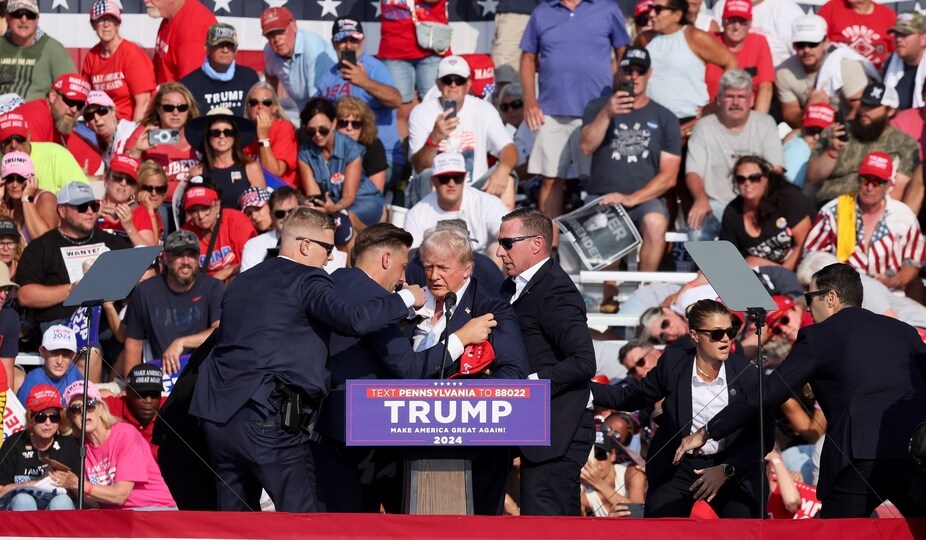
In a Senate report released Sunday, Homeland Security and Governmental Affairs Chairman Rand Paul called the near miss on Mr. Trump’s life that also killed an attendee and injured two others a “cascade of preventable failures.” The report concludes “the consequences imposed for the failures so far do not reflect the severity of the situation.”
Many details of the Secret Service’s failure in Butler have been documented. Inadequate preparation was exacerbated by a breakdown in communications among Secret Service agents, local law enforcement providing additional security at the site, and counter-snipers unaware of intelligence regarding threats against Mr. Trump.
The amateur profile of the shooter made his near success an even greater humiliation. “A 20-year-old gunman was able to evade detection by the country’s top protective agency for nearly 45 minutes,” the committee report says. “Known line-of-sight vulnerabilities were identified in advance but not addressed,” and despite these rudimentary lapses, “not a single person has been fired.” Several agents were recently put on temporary leave.
The report says the Secret Service told the committee that before the Butler rally the agency had rejected requests for additional staff and “assets,” including counter-unmanned aerial system assets, to protect Mr. Trump, often because the Secret Service was stretched too thin. At a July 2023 rally in South Carolina, Mr. Trump’s protective detail requested “counter sniper assets” which were not provided “primarily due to manpower constraints.”
A similar denial affected a July 9, 2024, event in Doral, Fla., which the report says was expected to have 10,000 to 15,000 in attendance but couldn’t be accommodated “due to POTUS travel and the NATO NSSE (National Special Security Event) during this time frame.”
Conspiracy theorists will run with any suggestion that Mr. Trump was denied protective assets during the Biden Administration, but the problem seems to be bureaucratic bungling. “Notwithstanding the history of denials from USSS Headquarters,” the report says, “the current Chief Counsel of USSS, appointed by President Trump, told the Committee that there was no discernible evidence of political animus related to the reason for these denials.”
The Secret Service has struggled with a mission divided between protecting the President and other potential targets and the odd-duck pairing of financial investigations. Agents rotate between protective details and desk jobs, an arrangement that has left the Service with an annual attrition rate from 8% to more than 10% in recent years. That’s several times the rate at the FBI or CIA.
The Butler failure boggles the mind, but the most effective short-term reforms will address the on-site communications breakdown that allowed a disgruntled loner to defeat an agency with a “zero-fail” mission. The agency also needs more protective agents in the field who aren’t working desk jobs on the side.


