
Warren Buffett, the former CEO of Berkshire Hathaway, follows a simple three-step investment strategy: find good companies, buy their stocks when prices are reasonable, and hold them for the long term. The approach focuses on building wealth over time instead of trying to make quick profits through frequent buying and selling.
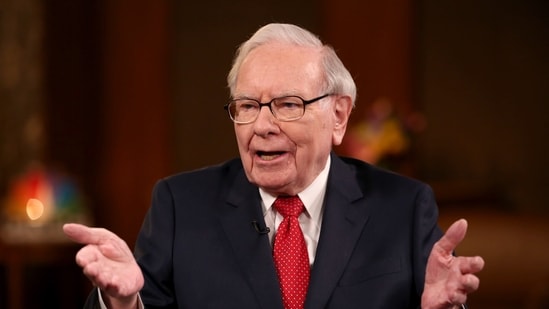
Buffett has never explained his investment strategy in great detail. Instead, he has shared broad principles that investors can follow. According to The Motley Fool, these principles can work with different investment styles, including growth investing, value investing and income investing.
Suggested For You
The first step in Buffett's strategy is to find good companies. Investors should look for businesses with strong long-term potential before deciding to buy their stocks.
However, finding a good company does not mean investors should immediately buy its shares. Popular and successful companies often have expensive stocks because many investors want to own them.
This is why the second step is to buy stocks at an attractive price. Investors should avoid paying too much for a company, even if they believe it has a strong future.
Waiting for the right price requires patience. Investors can study valuation measures to understand whether a stock is fairly priced, expensive or available at a discount. According to The Motley Fool, tracking stock valuation metrics can help investors control their excitement and wait for a better buying opportunity.
{{/usCountry}}Waiting for the right price requires patience. Investors can study valuation measures to understand whether a stock is fairly priced, expensive or available at a discount. According to The Motley Fool, tracking stock valuation metrics can help investors control their excitement and wait for a better buying opportunity.
{{/usCountry}}The third step is to hold stocks for the long term. This is considered the most difficult part of Buffett's strategy because investors must resist the temptation to keep buying and selling their investments.
The main idea behind holding stocks is to benefit from the long-term growth of the companies. Instead of worrying about every daily price movement, investors give businesses time to grow and build value.
Buffett's approach puts long-term investing ahead of frequent trading. Investors may feel that they are missing opportunities when they are not actively buying or selling stocks. However, if they have already selected good companies and bought them at reasonable prices, they do not need to make constant changes to their portfolios.
The Motley Fool explains that the stock market often encourages investors to remain active. However, Buffett's strategy shows that sometimes doing nothing and allowing investments to grow can be more beneficial than reacting to every market movement.
S&P 500 shows why long-term investing matters
The long-term performance of the S&P 500 index also shows why holding investments through market downturns can be important. The index has experienced several major falls over the years, but it has recovered from those declines and gone on to reach new record highs.
Some of the major downturns in the S&P 500's history include the dot-com crash, the Great Recession and the coronavirus pandemic. During these periods, investors saw stock prices fall sharply, but the index recovered after each downturn.
These market movements show that stock market declines do not always mean investors should sell their holdings. Historically, the S&P 500 has recovered from major downturns and continued its long-term upward movement.
Also Read Nvidia stock could hit $500 by 2030 as AI data centre spending and Vera Rubin chips drive growthBuffett has also suggested that investors who want to keep investing simple can skip the process of selecting individual companies and trying to find the right buying price. Instead, they can invest in an S&P 500 index fund.
One example is the Vanguard S&P 500 ETF (VOO), which tracks the S&P 500 index. The index includes major US companies and is widely used to measure the performance of the broader US stock market.
Investing in an S&P 500 index fund allows people to invest in a broad group of large US companies instead of depending on the performance of a single business. This also means investors can follow the overall market without having to research and select individual stocks.
Buffett believes this can be a simple way for ordinary investors to build wealth over time. However, the important part is to stay invested for the long term instead of selling whenever the market falls.
Why investors should avoid selling during a bear market
Holding stocks for the long term can be difficult during both rising and falling markets. During a bull market, when stock prices are increasing, investors may feel that they should buy more stocks to avoid missing out on potential profits.
This feeling is commonly known as the fear of missing out (FOMO). It can push investors to make rushed decisions, buy stocks at high prices or frequently change their investments because they do not want to miss a market opportunity.
The situation can become more difficult during a bear market. When stock prices continue to fall, investors may see the value of their portfolios decline every day. This can create fear and pressure them to sell their investments to avoid further losses.
A prolonged market decline can also affect investors emotionally. Watching investments lose value can lead to sleepless nights, stress and difficulty concentrating on everyday activities.
However, selling stocks simply because the market is falling can mean that investors miss out on a possible recovery. The S&P 500's recovery after previous major downturns shows why selling out of fear may not always be the right decision.
According to The Motley Fool, investors who follow Buffett's approach should understand that market declines are part of investing. Instead of reacting to every fall, they should focus on the long-term potential of the businesses they own.
Prepare for the next bear market
Buffett's three basic principles can be followed by investors with different financial goals and investment preferences. They can choose individual stocks or invest in broad market funds, depending on their approach.
However, the most important part of the strategy is staying invested. Finding good companies and buying them at reasonable prices are important, but investors also need the patience to hold their investments through market ups and downs.
Investors should prepare themselves mentally for the next bear market instead of waiting until stock prices start falling. Having a long-term plan can help them avoid making rushed decisions when markets become unstable.
Nobody can predict exactly when the next bear market will begin. However, market downturns are a normal part of investing, and another one is likely to happen sooner or later.
Buffett's strategy ultimately highlights one important lesson: successful investing is not always about knowing when to buy or sell. Sometimes, the most important decision is to hold good investments and give them enough time to grow.
Explore More
ABOUT THE AUTHOR
Durva More is a Senior Content Producer at Hindustan Times, where she covers finance, and global news. She brings experience across digital and television journalism, with a strong focus on breaking news, business reporting, and international affairs. Before joining Hindustan Times, Durva worked as an International News Writer at The Economic Times, covering a diverse range of subjects including global politics, business, sports, entertainment, and major world events. She also worked as a Business Reporter with NDTV Profit. A postgraduate diploma holder in Journalism from the Asian College of Journalism, Durva is passionate about field reporting and storytelling. She thrives on the adrenaline of chasing stories, speaking with people from different walks of life, and amplifying voices that deserve to be heard. Her reporting is driven by curiosity, accuracy, and a commitment to making complex subjects accessible to readers. When she is not chasing stories or covering breaking news, Durva enjoys reading books and painting. She loves exploring new ideas, meeting people, and learning about different perspectives. For her, both journalism and art are ways to understand the world and tell stories that matter.