E-Paper


What is IEEPA? Law at the center of Trump's Liberation Day tariffs
The U.S. Supreme Court ruled 6-3 that IEEPA does not give the president the authority to impose tariffs, reaffirming that Congress controls trade taxes.

 Prefer HTon Google


The Supreme Court of the United States on Friday struck down President Donald Trump’s sweeping tariffs that he pursued under a law meant for use in national emergencies, ruling that the International Emergency Economic Powers Act (IEEPA) does not give the president the power to impose tariffs, in a decision with major implications for the global economy.
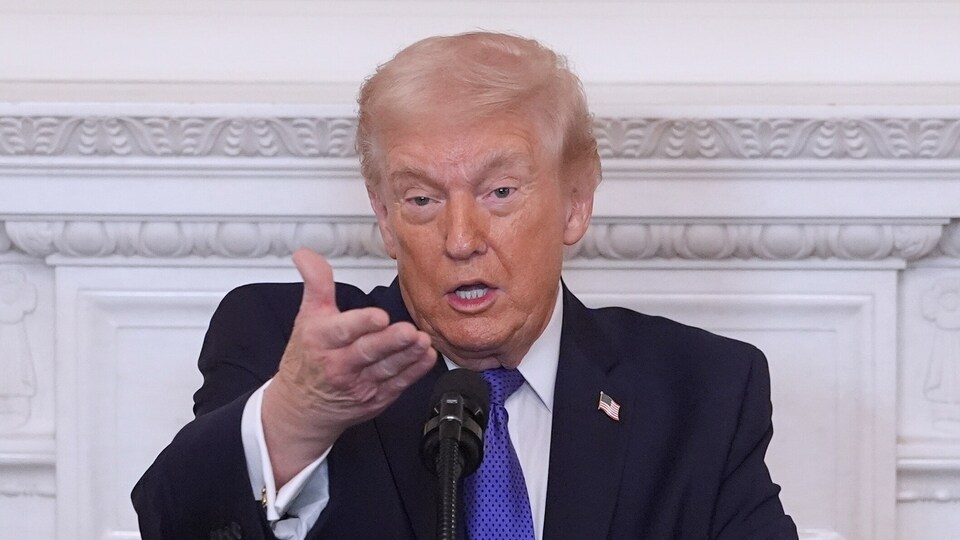
According to Reuters, the justices ruled 6-3 in a decision authored by Chief Justice John Roberts, upholding a lower court’s finding that Trump exceeded his authority under the 1977 law.
What is IEEPA?
The International Emergency Economic Powers Act (IEEPA) is a US federal law passed in 1977. It allows the president to regulate international commerce, freeze assets, and impose sanctions during a declared national emergency caused by foreign threats to US security, foreign policy or economy.
It has historically been used to impose sanctions or freeze assets of foreign adversaries. The law does not specifically mention tariffs.
Also Read: What is Trump's ‘back-up’ plan after Supreme Court strikes down tariffs - Explained
What did the Supreme Court say?
The court ruled that the Trump administration’s interpretation of IEEPA would intrude on Congress’s authority and violate the “major questions” doctrine. This doctrine requires actions by the executive branch of “vast economic and political significance” to be clearly authorized by Congress.
According to Reuters, Roberts, citing a prior Supreme Court ruling, wrote that "the president must 'point to clear congressional authorization' to justify his extraordinary assertion of the power to impose tariffs," adding, "He cannot."
The US Constitution grants that the Congress, not the president, have the authority to issue taxes and tariffs. The court said Trump’s use of IEEPA to impose tariffs on nearly every U.S. trading partner without congressional approval went beyond his powers.
Economic impact and legal challenge
According to Reuters, President Donald Trump used tariffs as a major economic and foreign policy tool after returning to office in 2025, triggering a global trade war that unsettled markets and strained ties with trading partners.
The tariffs were expected to raise trillions of dollars over the next decade. Economists at the Penn-Wharton Budget Model estimated more than $175 billion had already been collected under IEEPA which may now need to be refunded.
The case was brought by affected businesses, 12 US states and toy company Learning Resources. The Supreme Court of the United States had previously backed Trump in other emergency rulings.