E-Paper


SpaceX rocket to crash into Moon today: Will it create a crater? What scientists expect
Collision of Falcon 9 rocket stage offers scientists a chance to study lunar impacts.

 Prefer HTon Google


A discarded SpaceX Falcon 9 rocket stage is set to crash into the Moon on Wednesday, with scientists expecting the high-speed collision on the lunar surface.
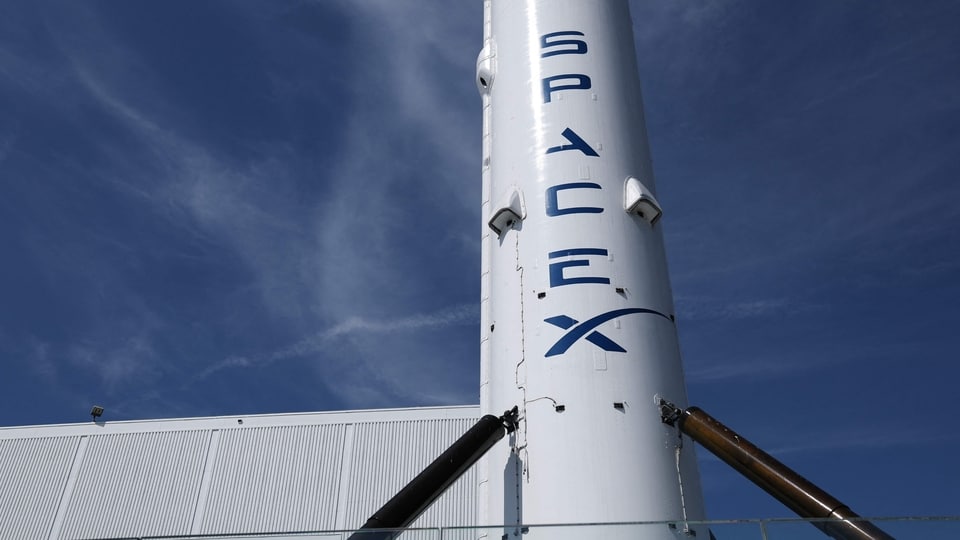
The upper stage of the Falcon 9 rocket, launched in January 2025 during a mission carrying two commercial lunar landers, is expected to hit near Einstein Crater on the Moon’s sunlit western limb. Space-tracking expert Bill Gray has predicted that the object will strike the lunar surface at around 5,400 mph (8,700 km/h).
While the collision sounds dramatic, NASA has said it poses no danger to Earth. “There is no danger to Earth,” NASA spokesperson Jimi Russell said, adding that the agency will continue monitoring the booster and study the impact site after the crash.
The impact is expected at around 2:35 am Eastern Time on Wednesday (7:35 am UK time). However, people on Earth are unlikely to see the moment of collision directly.
Scientists say the flash will be too faint to observe with the naked eye and could be difficult to capture even through telescopes because the impact zone is currently illuminated by sunlight.
Also Read: SpaceX's Falcon 9 rocket returns to Earth 8 minutes after launching Axiom-4
Will the SpaceX rocket create a crater on the Moon?
Yes, scientists expect the collision to leave behind a crater on the lunar surface.
Benjamin Fernando, a scientist at the Los Alamos National Laboratory, said the impact will send up a plume of dust and rubble. Because the Moon has low gravity and no atmosphere or wind to disperse particles, the debris could remain suspended for longer.
Fernando estimates that the collision could create a crater around 90 feet (27 meter) wide and 16 feet (5 meters) deep. A separate study involving NASA researchers suggested the crater could measure between 65 and 90 feet (20 to 30 meters) across.
The crater will not be visible from Earth but could be studied by spacecraft. NASA’s Lunar Reconnaissance Orbiter and South Korea’s Danuri lunar orbiter are expected to observe the crash site and compare images taken before and after the impact.
Why is the Moon impact important for scientists?
The accidental collision is giving researchers a rare chance to study how artificial objects behave when they strike the lunar surface.
The Falcon 9’s upper stage remained in space after completing its mission to deliver Firefly Aerospace’s Blue Ghost lunar lander and Japan-based ispace’s Resilience lander towards the Moon. The rocket’s first stage returned to Earth, but the upper stage was pushed onto a new trajectory due to a combination of gravitational forces and solar activity.
Scientists are also using the event to understand risks linked to future lunar missions. As NASA’s Artemis program aims to establish a longer-term human presence on the Moon, managing space debris around the lunar environment is becoming increasingly important.
Fernando said the event could help researchers understand “how much of a hazard debris impacts pose to future astronauts”.
Bill Gray also warned about growing congestion in space, saying: “Things are getting crowded up there.”
The Falcon 9 impact will mark only the second known accidental crash of a human-made object on the Moon. In 2022, debris believed to be from a Chinese rocket stage struck the lunar far side, creating two craters.