Boulder attack suspect Mohamed Sabry Soliman, 45, had praised radical Islamist group the Muslim Brotherhood on social media in the years before the Colorado incident. Several people were hospitalized with burns after Soliman tossed Molotov cocktails at a group that had gathered in support of Israeli hostages.
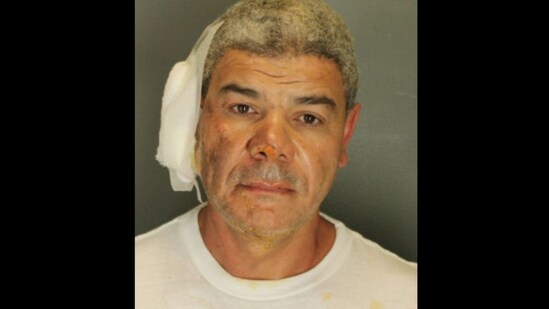
Soliman, an Egyptian national identified by the White House as an “illegal alien” who overstayed his visa, had filled his Facebook account with posts in support for the Muslim Brotherhood, CNN reported. The page was last updated a decade ago, and featured several photos of Mohamed Morsi, the group’s leader. Morsi served as Egypt’s president from 2012 to 2013, but was eventually ousted in a military coup.
Morsi was Egypt’s first democratically elected president. He rose to power after vowing to end autocracy and promising that a transparent government would respect human rights. However, protests that were soon held accused Morsi of seizing unlimited powers and using violence against opponents. He was also accused of imposing the Brotherhood’s conservative brand of Islam.
Mohamed Sabry Soliman’s social media posts
Soliman had shared posts backing the Muslim Brotherhood protests against Morsi’s removal. One August 2013 post even featured a four-finger salute, a symbol that was used to show support for the Rabaa protest encampment, which was dispersed in the violence during the Morsi-linked unrest.
{{/usCountry}}Soliman had shared posts backing the Muslim Brotherhood protests against Morsi’s removal. One August 2013 post even featured a four-finger salute, a symbol that was used to show support for the Rabaa protest encampment, which was dispersed in the violence during the Morsi-linked unrest.
{{/usCountry}}After being arrested, Soliman told investigators that he wanted to “kill all Zionist people,” according to the New York Post. He had been planning the attack for a year, according to prosecutors.
What is the Muslim Brotherhood?
The Muslim Brotherhood is Egypt’s oldest and largest Islamist organization, and has offshoots throughout the Arab world. According to the Council on Foreign Relations, “After the ouster of former president Hosni Mubarak in the Arab Spring protests of 2011, the group’s political arm won a plurality of seats in Egypt’s lower house of parliament and its candidate, Mohammed Morsi, was elected president. But Morsi was ousted by the military in July 2013, and the Brotherhood’s members were imprisoned, went into exile, or were forced underground.”
It added, “As part of a wide-ranging crackdown on political opposition, the Egyptian government has labeled the group a terrorist organization, as have Saudi Arabia and the United Arab Emirates (UAE). U.S. President Donald J. Trump has expressed interest in following suit, but many experts say a designation—whether of the original Egyptian group or of kindred groups throughout the region—would stretch the bounds of the law and also complicate U.S. diplomacy across much of the Middle East and North Africa.”