
 E-Paper


What is a Molotov cocktail, used in attack on pro-Israel activists in US?
A suspect, identified as Mohamed Sabry Soliman, allegedly used Molotov cocktails, leading to six people being injured during the attack

 Prefer HTon Google


Molotov cocktails were used in a “targeted terror attack” on a pro-Israel demonstration in the United States on Monday. A suspect, identified as Mohamed Sabry Soliman, also used a makeshift flamethrower in the attack, reported the Associated Press. Six people were injured, with their wounds being consistent with burns.
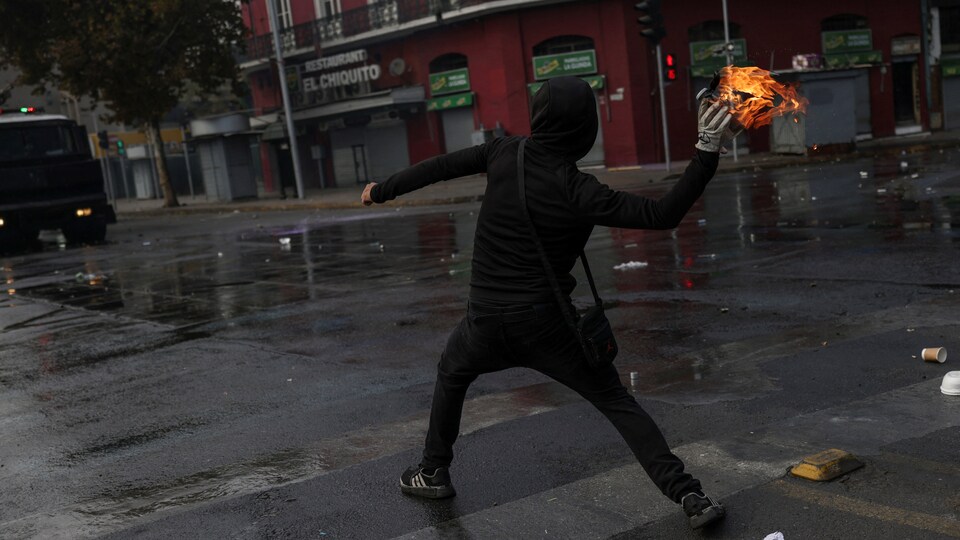
Several videos have also emerged on social media showing the suspect holding Molotov cocktails in his hand. The 45-year-old suspect himself was also reportedly injured and was taken to the hospital for treatment.
What is a Molotov cocktail?
A Molotov cocktail is a makeshift flame-throwing device used to cause fires. The crude bomb is made of a bottle filled with a flammable liquid (such as gasoline) and usually fitted with a wick (such as a rag ) that is ignited just before the bottle is hurled at its target.
According to the American historian William Trotter, the phrase comes from Finnish, where it is called "Molotovin koktaili."
Also Read: ‘Palestine is free’: FBI investigates ‘targeted terror attack’ in Boulder, Colorado
The history of the improvised incendiary device can be traced to Russian politician Vyacheslav Molotov, who was the foreign minister of the Soviet Union during World War II, as per a report from LiveScience.com.
In 1939, during the Winter War, Russian foreign minister Molotov produced propaganda against their enemies in Finland, on Soviet radio, claiming that bombing missions over the country were “airborne food deliveries” for their “starving neighbours.”
The bombs were sarcastically named by the Finnish people as “Molotov bread baskets." Later, when the hand-held fire-throwing bottles were invented, they were named “Molotov cocktails,” as a drink to go with the bombs (breadbaskets) being dropped by Russia.
The outnumbered Finnish population developed the firebomb as a means to easily attack and destroy Soviet tanks, which were fueled by gasoline and were extremely flammable.
Due to its simple ingredients - a bottle, gasoline and a wick - Finland managed to mass-produce the Molotov cocktails, with state liquor factories making vodka, manufacturing the devices instead.
The Alko corporation in 1939, made 5,00,000 of the flamethrowing bottles which empowered the Finnish to push back Soviet forces despite their superior military strength.
The Molotov cocktail also allowed the Finnish people, who were equipped with limited weaponry and armaments, to isolate large Soviet tanks from the infantry troops and attack them with the flamethrowers in a difficult terrain, where they could not manoeuvre away from the bomb.
The Molotov cocktail became a key weapon in several civil uprisings and revolutions after its conception in the 1930s.


