An expert witness for the defense, who had no involvement in Lindsay Clancy's treatment, testified that she had engaged in acts of “self-harm" and even nearly died.
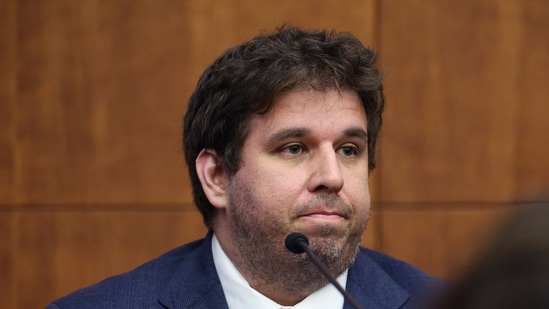
Dr. Michael Vulfovich examined Clancy's medical records, clarifying the injuries documented and the level of care required, which led to her being airlifted to Brigham & Women's Hospital.
Vulfovich, who is an emergency medicine doctor at Newton Wellesley Hospital, informed the jurors that as the responders transported Clancy, her blood pressure decreased and her pulse became weak. Subsequently, she experienced a total cardiac arrest at Brigham & Women's and required two sessions of CPR, which included chest compressions and medication, before she was successfully revived. According to him, she was in a state of "severe" hypothermia upon her arrival at South Shore Hospital.
Deep Dive
What did Dr. Michael Vulfovich reveal about Lindsay Clancy's medical condition after her fall?
How did Lindsay Clancy's defense argue her mental state during the trial?
What specific injuries did Lindsay Clancy sustain from her fall and other events?
Also Read: Is Lindsay Clancy's Duxbury home buyer a prosecutor? All we know about Michael Phippen
Lindsay Clancy was left paralyzed
Although Clancy survived the fall, she was left paralyzed from the waist down. Her legal representatives contend that she was experiencing postpartum psychosis and should not be deemed criminally liable.
{{/usCountry}}Although Clancy survived the fall, she was left paralyzed from the waist down. Her legal representatives contend that she was experiencing postpartum psychosis and should not be deemed criminally liable.
{{/usCountry}}Vulkovich reviewed the images captured at the crime scene in conjunction with the medical documentation from South Shore Hospital and Brigham and Women's Hospital.
Michael Vulfovich testified about Lindsay Clancy hypothermia
Clancy was found to be hypothermic at South Shore Hospital, according to Vulkovich. Her heart rate was over 100 beats per minute, and her blood pressure was below the normal range. Vulkovich noted that the medical team at South Shore Hospital managed to stabilize her condition prior to her transfer to Brigham and Women's Hospital in Boston.
According to Vulkovich, Clancy sustained both superficial and "full thickness" lacerations on her wrists and both sides of her neck. He characterized "superficial" as scrapes, while he explained that "full thickness" referred to injuries that penetrated through the outer layer of skin into the subcutaneous fatty layer.
Vulkovich stated that he has dealt with multiple patients who have either attempted or successfully committed suicide through throat cutting.
Kevin Reddington grills Vulkovich about Lindsay Clancy's injuries
Later, Lindsay Clancy attorney Kevin Reddington inquired if Vulkovich could describe Clancy's neck injuries considering these past experiences. "They were consistent with self-injurious behavior," Vulkovich stated about Clancy's neck wounds, as per Patriot Ledger.
Vulkovich subsequently detailed Clancy's spinal injuries, which encompassed several fractures in her cervical and thoracic spine, as well as a "burst fracture" of the C-1 vertebra.
During her time at Brigham and Women's, Clancy experienced a total cardiac arrest, as testified by Vulkovich. Additionally, she underwent a blood transfusion. Tubes were inserted into her chest cavity, resulting in the removal of 300 cubic centimeters of blood from both sides of her chest, according to Vulkovich..