
 E-Paper



US, Ukraine ‘refine’ Trump's peace deal to end Russia’s war: What's inside the new plan?
Ukraine said the newest version included some of its own points. A joint statement said both sides had prepared a "refined peace framework" after discussions.

 Prefer HTon Google


Delegations from the United States and Ukraine held what they called “highly productive” discussions on US President Donald Trump’s proposal to halt the war in Ukraine, while Trump criticised Ukraine's leadership on Sunday for “expressing zero gratitude” for his efforts to stop the conflict.
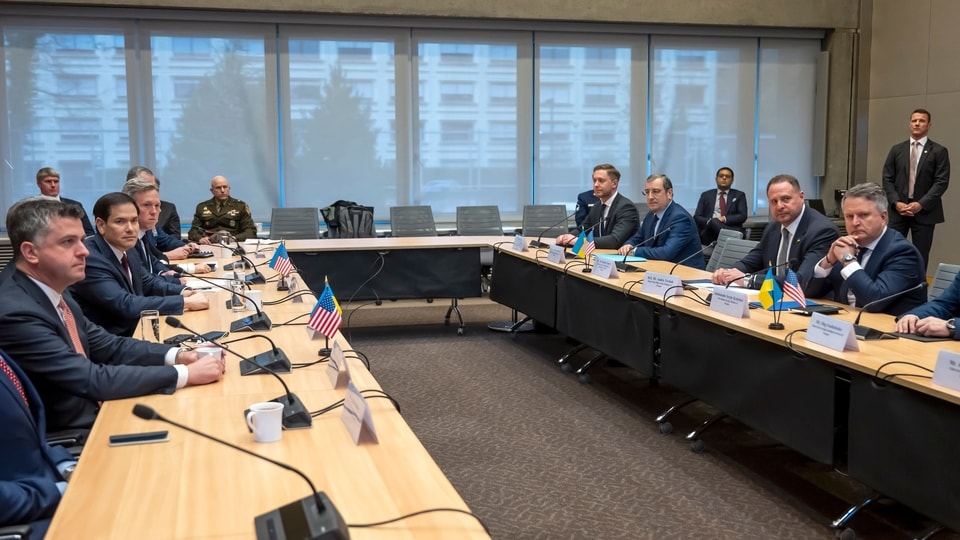
In Geneva, senior officials from both countries sat down to adjust the 28-point draft plan. Ukraine said the newest version included some of its own points. Trump has given Ukraine until November 27, when the United States celebrates Thanksgiving, to agree to the plan.
"The talks were constructive, focused, and respectful, underscoring the shared commitment to achieving a just and lasting peace," the joint statement said.
It also said both sides had prepared a "refined peace framework" after their discussions in Geneva on Sunday.
ALSO READ | On Russia-Ukraine, Trump explains why he ‘inherited’ a war that ‘should have never happened’
What’s inside the 'updated and refined' peace deal?
The first 28-point proposal offered by the United States last week asked Ukraine to give up territory, reduce its military and agree to stay out of NATO. For many Ukrainians, those terms would be seen as giving in after almost four years of fighting in Europe’s deadliest war since World War Two.
Sources told Reuters that the original plan was unexpected for US officials across the administration, and that it was created at an October meeting in Miami attended by US special envoy Steve Witkoff, Trump’s son-in-law Jared Kushner and Kirill Dmitriev, a Russian envoy under US sanctions.
Under the terms suggested by the United States, Ukraine would have to pull back troops from parts of the eastern Donbas region that Russia has not fully taken. This area would become a neutral buffer zone that the international community would recognise as Russian.
This way, Moscow would also gain recognition over Crimea, Luhansk and Donetsk. Most of the rest of the frontline, including in Kherson and Zaporizhzhia, would remain in place.
In their counter plan, Ukraine and its European partners said talks with Russia on any exchange of territory can begin only after the war stops along the current line of contact, Bloomberg reported quoting people aware of the matter.
Their reply to the US 28-point plan asks for a security guarantee from the Americans similar to NATO’s Article 5 mutual-defence clause, and calls for frozen Russian funds to be used to rebuild and compensate Kyiv, the report said. They dismiss Moscow’s demand that Kyiv give up areas in the east that Russia has not taken.
As per the counter proposal, the United States would receive payment for the strong guarantees it offers, and Russian funds would stay frozen unless Moscow agrees to cover the damage it has caused. Other sanctions would be lifted in stages, and Russia would slowly be allowed back into the global economy if it follows the agreement.
Marco Rubio on Ukraine peace deal
US secretary of state Marco Rubio said the 28-point peace plan had been put together with input from Russia, and that it also included earlier points from Ukraine. As he left for Geneva for talks on the Russia-Ukraine peace plan, Rubio said the proposal had been written only by the US.
After a full day of talks, Rubio said "tremendous" progress had been made, and the head of Ukraine's delegation Andriy Yermak also told reporters the sides had made "very good progress".


