Wadi Al-Salam cemetery in Iraq is the world's largest graveyard. More than six million bodies including those of prophets, kings, scientists, are buried in the cemetery, spread over an area of 917 hectares. According to UNESCO, burials have been taking place in the cemetery for more than 1400 years.
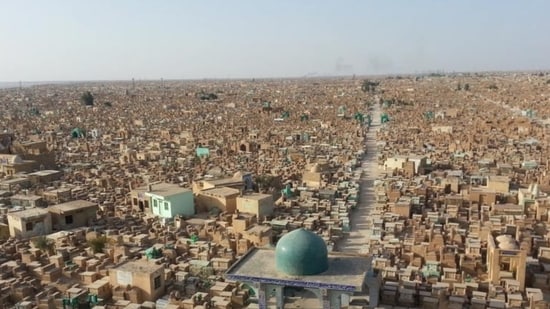
Wadi Al-Salam, which translates to Valley of Peace in English, is located in the city of Najaf and accounts for 13 per cent of its total area. Muslims from across the world visit the cemetery to pay their tributes to their loved ones buried there.
The official website of UNESCO shares the big cultural importance of the cemetery. According to the website, the cemetery "stands as a witness to a unique or at last an exceptional example of a cultural tradition."
According to UNESCO, burials have been taking place in the cemetery since the middle ages. Reportedly, the cemetery involved different kinds of burials like lower graves and high graves. Burials were also done inside vaults.
Notable persons who were buried in Wadi Al-Salam cemetery
{{/usCountry}}According to UNESCO, burials have been taking place in the cemetery since the middle ages. Reportedly, the cemetery involved different kinds of burials like lower graves and high graves. Burials were also done inside vaults.
Notable persons who were buried in Wadi Al-Salam cemetery
{{/usCountry}}UNESCO notes that the kings of Al-Hira and it's leaders from Al-Sassani Era (637-226) were buried in the cemetery. Moreover, Sultans, princes of the state of Hamdania, Fatimia, Al-Buwayhyia, Saffawayia, Qajar,and Jalairiyah also had their burials in the cemetery.
The shrine of Imam Ali Ibn Abi Talib is also located here.
Other highlights of the Wadi Al-Salam cemetery
- It forms a prominent traditional method of land use. Muslims rever the site as it forms part of their religious beliefs.
- It is associated with events, traditions and beliefs. There is a special law of the land protecting the site, General Endowment Act, No.64 of 1966, as amended. And law No.40, of 1999.