Almost six months after becoming Iran's Supreme Leader, Mojtaba Khamenei has not been seen, heard or photographed even once and his prolonged silence is now fueling rumors that he may already be dead.
Where is Mojtaba Khamenei and what happened to him?
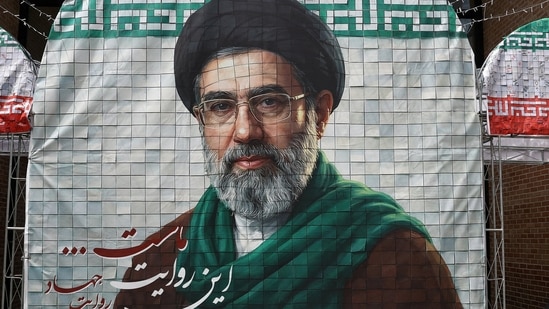
Mojtaba took over as Supreme Leader after his father, Ayatollah Ali Khamenei, was killed in joint US-Israeli strikes on February 28, which set off the ongoing war.
Reports say Mojtaba was injured, and possibly disfigured, in the strikes that killed his father, and that he is being treated. He hasn't made a single public appearance since becoming Supreme Leader, not even at his father's funeral last month.
Last Tuesday, Mojtaba hosted a wake for his father at Tehran's biggest mosque, attended by thousands, including top political figures. But Mojtaba himself, the event's official host, was nowhere to be seen. No picture, video or audio of him has surfaced since he took power, as per The Atlantic.
Even Iran’s Foreign Minister Abbas Araghchi has said he has not seen Mojtaba. IranWire reported that no cabinet member has met with him since he became Supreme Leader. Mohammad Hossein Khoshvaght, a former official and relative of Mojtaba, said fewer than five people have met him since he took power “due to security precautions.”
{{/usCountry}}Even Iran’s Foreign Minister Abbas Araghchi has said he has not seen Mojtaba. IranWire reported that no cabinet member has met with him since he became Supreme Leader. Mohammad Hossein Khoshvaght, a former official and relative of Mojtaba, said fewer than five people have met him since he took power “due to security precautions.”
{{/usCountry}}The reason may be linked to security concerns. Mojtaba would be a likely target for an Israeli or US airstrike, similar to the one that killed his father, and any direct communication from him could give Iran's enemies clues about his whereabouts. According to reports, he has been staying in touch with senior officials through a slow network of intermediaries to reduce the risk of being targeted.
Also read: Mojtaba Khamenei's voice finally heard: Iran shares new video amid health concerns
Rumors of death grow as officials insist he is alive
Despite the rationale, growing silence from his office has triggered rumors of his death. "I believe Mojtaba has either passed away or is brain-dead," a staffer at a government institution in Tehran told The Atlantic, citing the drop-off in even indirect communication. At least two other officials reportedly said the same, with one saying he believed Mojtaba died or became brain-dead earlier this month.
Two sources in the Iranian government told IranWire that word had spread among the "highest level of the regime" that Mojtaba was doing very poorly and could die at any moment. About two weeks ago, a public appeal asked Iranians to pray for his health and sacrifice sheep for him, saying his life was "under threat" and that some clerics had warned he might be killed.
Officials close to him insist otherwise. Khoshvaght told The Atlantic he was certain Mojtaba is alive, calling the death rumors "part of a psychological war hoping to demoralize Iran's officials and its people, for them to give up to the pressures and threats of America." Abdolreza Davari, a former adviser to the interior ministry, said the leader is "in full health" and will soon be revealed to the public.
The office's most recent statement came on August 9, saying Mojtaba had met with President Masoud Pezeshkian. Pezeshkian confirmed to Iranian media that he spent seven hours with Mojtaba discussing the war and the economy.
Why his absence matters for Iran
Whether Mojtaba is alive or dead, his absence is causing problems for Iran's government. The Supreme Leader holds most of the power in Iran and has always been the one to settle disputes between rival groups in the government, a job Mojtaba doesn't seem to be doing right now, at a time when it matters most.
A 13-member National Security Council, led by President Pezeshkian, is effectively running the country. It also includes parliamentary speaker Ghalibaf and IRGC chief General Ahmad Vahidi. In June, 12 of the 13 members agreed to a deal with the US. Mojtaba said he supported the deal but added that he had opposed it "in principle" at first. Hardliners used this to claim that Ghalibaf had pressured him into accepting it. Mojtaba has not confirmed or denied the claim, as per The Atlantic.
Meanwhile, the war has entered its sixth month and the Strait of Hormuz remains mostly blocked. Thousands of sailors are still stranded, while ship traffic remains much lower than normal.
With agency inputs