Ever since IT expert Deepak Joshi moved to London in early 2014, guests have flocked to his flat, particularly this time of the year, when sunny and warm weather beckons the Indian elite and others in droves – but not now.
Joshi was expecting at least three confirmed visits over the summer from friends in Delhi, Guwahati, Indore and Goa, but all have cancelled. “Ab kaun ayega yahan (who will come now). London as you know has the largest number of cases in the UK”, he says despairingly.
The bigger picture of nearly 9,000 deaths and tens of thousands of cases in UK hospitals is played out at the micro level in individual stories of frustration, adjustments in everyday life, cancellations, and strategies to dodge others in supermarkets and queues.
Also Watch |UK PM Boris Johnson hospitalised; Queen Elizabeth II addresses nation
Almost everyone in the Indian community knows someone who has had the virus, is in quarantine at home, or in hospital. Social distancing is relatively easier in western societies, which even before the virus struck were much more formal in their interactions than Indians, which is reflected in the ‘Indian’ areas in London.
It is significant that London boroughs with the highest cases are those with large concentrations of people of Indian origin: Ealing Southall, Brent, Barnet and Harrow. “It is frustrating to remain at home, but there is no option”, says Maidenhead-based Ravi Singh.
Everyday life in India and the UK is more integrated than ever, with news channels, internet and social media ensuring close connectivity. Singh quips that in India it is no longer a matter of prestige to say that one is ‘London-returned’; some may even hide the fact.
Writer Mihir Bose, a long-time London resident, says social distancing is the main problem, but adds that the elderly have discovered the benefits of social media and video-conferencing that enable connectivity in the time of isolation.
{{/usCountry}}Writer Mihir Bose, a long-time London resident, says social distancing is the main problem, but adds that the elderly have discovered the benefits of social media and video-conferencing that enable connectivity in the time of isolation.
{{/usCountry}}“Many of my elderly British friends now meet in virtual drinking sessions. We had several of these; the calendar is booked up.”
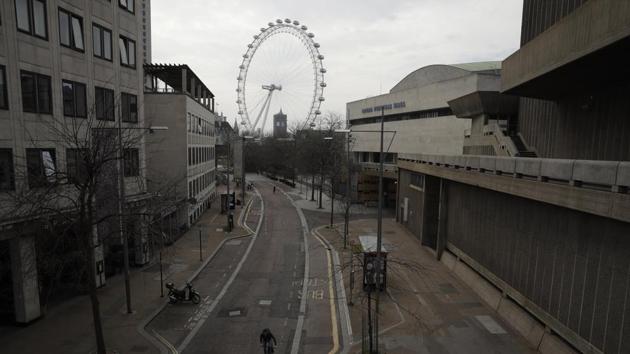
It is said that if you are tired of London, you are tired of life, but Samuel Johnson never faced such a lockdown. London no longer looks and feels like the London everyone knows; it is as if a giant hoover has sucked life out of its throbbing streets.
The scene is particularly dystopic in central London buzz-spots such as Oxford Street, Piccadilly, and Trafalgar Square.
Traffic lights are on, but there is hardly any traffic, except for police cars, ambulances and vans of electricians, plumbers and road maintenance staff. The price of petrol has come down to nearly a pound, but cars in residential areas have hardly moved an inch.
The BAPS Swaminarayan Temple in Neasden is closed since March 13, streaming its daily ‘arti’ online to followers across London and the UK. Other places of worship have made similar arrangements to prevent gathering of large number of people.
Medical experts of Indian origin such as Kamlesh Khunti of the University Leicester worry that the ethnicity-wise figures when released will show a disproportionate high incidence of the virus in the community. Initial data has already suggested this.