Former Chinese premier Zhu Rongji, who pushed sweeping economic reforms and helped steer China into the World Trade Organisation, has died, state media reported. He was 98.
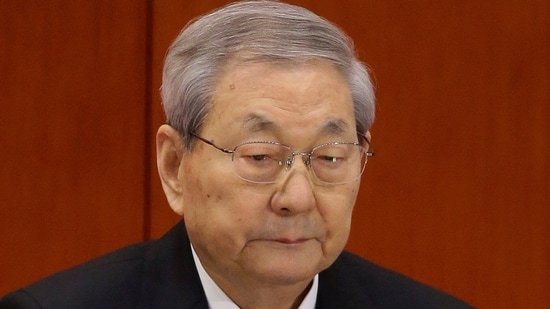
Zhu died in Beijing at around 11 am on Wednesday after medical treatment for an unspecified illness failed, the official Xinhua News Agency reported. He is survived by his wife, Lao An, and their two children.
ALSO READ | ‘Border affairs to decide India-China ties': MEA on Arunachal standoff reports
Who was Zhu Rongji?
Born in Hunan province in October 1928, Zhu studied electrical engineering at Tsinghua University and joined the Communist Party in 1949.
He worked for China's state planning agency before being labelled a “rightist” after criticising Mao Zedong's economic policies. During the Cultural Revolution, he spent years working on a farm, raising pigs and planting rice.
Rehabilitated in 1978, Zhu rose through the government ranks. He became mayor of Shanghai in 1987, vice premier in 1991 and joined the Communist Party's Politburo Standing Committee in 1992.
{{/usCountry}}Rehabilitated in 1978, Zhu rose through the government ranks. He became mayor of Shanghai in 1987, vice premier in 1991 and joined the Communist Party's Politburo Standing Committee in 1992.
{{/usCountry}}After leaving the premiership in 2003, Zhu largely stayed out of frontline politics, focusing on Tsinghua University and supporting rural education through donations from his book royalties.
ALSO READ | An awkward dance of the dragon and the elephant
China's premier
Zhu served as premier from 1998 to 2003, after years as one of China’s leading economic planners, The Hill reported.
As governor of the People’s Bank of China from 1993 to 1995, Zhu also introduced measures to open China’s financial sector to foreign investors and oversaw the country’s first global bond sale.
Known for his sharp tongue and willingness to take difficult decisions, he pushed major reforms of state-owned enterprises, shutting down thousands of inefficient or loss-making companies, as per a Bloomberg report.
The reforms resulted in millions of job losses but were aimed at reducing debt.
ALSO READ | China races to solve $148 billion property threat as leases end
He later helped establish asset-management companies to take on about 1.4 trillion yuan ($220 billion) in bad loans from China’s four major state banks. This reportedly allowed lenders to clean up their balance sheets and become more market-oriented.
Helped China enter WTO
Zhu played a key role in securing China’s entry into the World Trade Organisation in 2001. This helped resolve a deadlock in negotiations with the European Union.
The decision also reportedly accelerated China’s integration into the global economy and contributed to it emerging as the world’s biggest exporter.
Zhu also oversaw China through the 1997 Asian financial crisis and a period of double-digit inflation.
Former Chinese leader Deng Xiaoping described Zhu as a “rare talent” who understood the economy and was willing to confront difficult challenges, Bloomberg reported.
‘One-chop Zhu’
Zhu also launched an anti-corruption campaign and sought to reduce government bureaucracy. His efforts to cut red tape and the number of official approvals earned him the nickname “one-chop Zhu”, referring to the official seals, or “chops”, used on government documents.
He was also known for his fluent English and humour during meetings with foreign leaders.
At a 1999 joint press conference with then-US President Bill Clinton, Zhu joked about allegations that China had made political contributions to the Democratic Party, saying China could have spent billions if such contributions were actually effective.