A suicide bomber blew himself up in a mosque killing at least 10 Shiite minority Muslims, including six children, and wounded 12 others in a remote southwestern Pakistani town on Thursday, officials said.
The attack took place as Shiites gathered at the mosque to observe the holy month of Moharram in the town of Chalgari in restive Baluchistan, some 170 kilometres (105 miles) southeast of the provincial capital, Quetta.
“At least 10 people were killed and 12 others were wounded after a suicide bomber blew himself up at a Shiite mosque,” provincial home minister Sarfraz Bugti told AFP.
Local administration official Mohammad Waseem confirmed the attack and death toll.
Bugti said there were six children between 10 and 12 years old among the dead and that some women had also been killed.
He added that the death toll may rise.
Waseem said the suspected suicide bomber appeared to be about 18 years old and was wearing a woman’s burqa, an all enveloping head-to-toe garment.
Sectarian violence -- in particular that carried out by Sunni militants against Shiites, who make up roughly 20 percent of Pakistan’s population of 200 million -- has claimed thousands of lives in the country over the past decade.
{{/usCountry}}Sectarian violence -- in particular that carried out by Sunni militants against Shiites, who make up roughly 20 percent of Pakistan’s population of 200 million -- has claimed thousands of lives in the country over the past decade.
{{/usCountry}}Many of the worst atrocities have taken place in the southwestern province of Baluchistan, home to some 200,000 Shiites.
Shiite gatherings and processions during Moharram mark Hussain’s martyrdom in the Battle of Karbala, Iraq, in 680 AD.
Hussain is equally revered by Sunnis, but hardliners oppose the public mourning of his martyrdom.
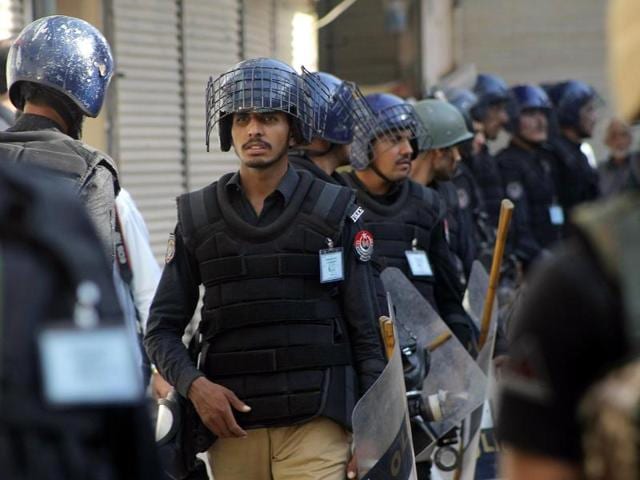
Pakistan has deployed some 10,000 troops and 6,000 paramilitary members to prevent sectarian violence during Moharram, which began last Thursday and is frequently marred by sectarian violence.
Clashes between Sunnis and Shiites led to at least 11 deaths two years ago in the garrison city of Rawalpindi, close to the capital Islamabad.
In July the leader of an anti-Shiite group behind some of Pakistan’s worst sectarian atrocities was killed in a shoot-out with police, along with 13 other militants.
Malik Ishaq and his fellow Lashkar-e-Jhangvi (LeJ) militants, including senior commanders, were shot dead in in Punjab.
Earlier this year, Islamic State militants were behind a brutal attack that killed 45 Shiites in Karachi in May, despite the government’s long-held stance that the jihadist group does not have a presence in the country.
Baluchistan province, of which Quetta is capital, is rife with Islamic, sectarian and separatist insurgencies.
The mineral-rich province has long been targeted by militants, and has been the scene of several attacks against the Hazara Shiite community in previous years.
In early 2013, more than 180 people were killed in two suicide bombings in Quetta in one of the bloodiest attacks on the Shiite minority.
Baluch separatists demanding more autonomy and control over gas and mineral resources have also frequently targeted security forces, although there has been a lull this year after a police clampdown.