
 E-Paper



Afghan refugees face deportation from Pakistan amidst international neglect
The second phase of deportations is underway, with broader geopolitical tensions overshadowing the plight of Afghan refugees.

 Prefer HTon Google


While all eyes were on the crisis unfolding in West Asia, the mass expulsion of Afghan refugees from Pakistan in November 2023 received scant attention from the international community. Now, as the second phase of deportation is underway, broader geopolitical tensions have once again muffled the issue.
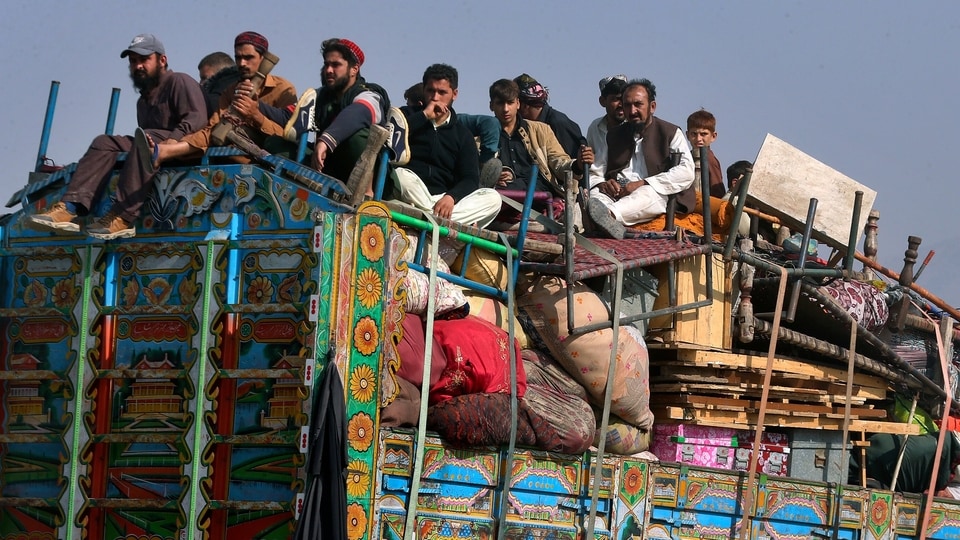
Pakistan has generously played host to Afghan refugees for over four decades, with estimates typically ranging from three to four million. This process began as early as 1979 due to foreign interventions, civil wars, recurrent natural disasters, and bleak economic opportunities. The latest influx to Pakistan occurred after the Taliban recaptured power in 2021 — a watershed event midwifed by Pakistan itself - after which an estimated 600,000 trickled into the country.
Islamabad’s long-standing support for Afghan refugees was cut short at a time when Af-Pak ties had reached their nadir due to the Taliban’s unwillingness to rein in the Tehreek-e-Taliban Pakistan (TTP). The TTP, which has become emboldened to conduct deadly attacks in Pakistan since the Taliban’s takeover, is an ideological offshoot of the Afghan Taliban intent on overthrowing the Pakistani Army and imposing sharia or a strict interpretation of Islamic law.
Contextualising the ongoing repatriation
Afghan refugees in Pakistan can primarily be categorised into three groups: undocumented Afghans, approximately 840,000 holding Afghan Citizen Cards (ACC), and 1.3 million Proof of Registration (PoR) card holders. In 2017, ACCs were issued (in collaboration with the Afghan government), to those Afghans who had failed to obtain UNHCR-issued PoR cards during a 2006-7 census. These three groups have varying levels of access to basic services. Undocumented Afghans have the least degree of access, while PoR cardholders enjoy the most, including legal access to public education, and health care, as well as the liberty to acquire SIM cards and open bank accounts.
On October 3 2023, the then military-backed caretaker government of Pakistan, led by Prime Minister Anwar-ul-Haq Kakar, unveiled the first phase of the ‘Illegal Foreigners’ Repatriation Plan’ (IFRP). Under this, all undocumented foreigners were issued an ultimatum to leave voluntarily before November 1, failing which they would be forcibly deported. In theory, it was aimed at all illegal foreigners residing in Pakistan, irrespective of their provenance, but in practice, it predominantly targeted the 1.7 million undocumented Afghans.
The then-caretaker interior minister, Sarfraz Bugti (presently the chief minister of the Balochistan province) had claimed that Afghan nationals were involved in 14 out of 24 suicide bombings recorded in 2023, while a similar assertion was made by Kakar himself. Since then, more than half a million Afghans, including those born in Pakistan and those who had not visited Afghanistan in aeons, have left the country.
In March of this year, the Pakistani newspaper, Dawn, reported that all concerned authorities were instructed to “expedite the mapping of ACC holders”. The drive, also hailed as the second phase of the repatriation, was said to pick up pace after Eid-ul-Fitr, which was celebrated on April 10th in Pakistan. Shortly after, Amnesty International’s report on April 4 warned that this would “unleash another wave of harassment and detentions after the holy month of Ramadan” and described Pakistan’s “callous disregard” for Afghan refugees as “heartbreaking”.
More recently, however, Pakistan’s ministry of foreign affairs said there are no plans to repatriate the ACC holders, as per reports by the VOA. Notwithstanding this declaration, statistics from local media outlets in April indicated that thousands of Afghans are currently being expelled. According to UNHCR, the UN Refugee Agency, between April 1-20, the rate of arrest and detention for ACC holders and undocumented Afghans was 25% higher compared to PoR holders and asylum seekers.
Following the completion of the second phase, the third phase will extend to PoR cardholders. The only saving grace though is that they have freshly been granted an extension till June 30 to legally reside in the country. This could have stemmed from a recalibration in the newly elected government's approach, particularly as some have voiced concerns about the unjust nature of deporting 'legal' Afghans (both ACC and PoR cardholders). For instance, the spokesperson for the Khyber Pakhtunkhwa government lamented that such a course of action would "foment hatred, misunderstanding and mistrust between Pakistan and Afghanistan", as Dawn reported.
Existing legal mechanisms or the lack thereof
Pakistan, like all South Asian countries (barring Afghanistan), is not a party to the 1951 Geneva Convention on Refugees or its 1967 protocols. Neither does it have a domestic refugee framework to dictate its policies, despite a decades-long history of sheltering Afghan refugees. The instructions, thus far, carry a spectre of colonial legacy, as they are based on the Foreigners Act of 1946.
However, Pakistan is bound by numerous international obligations and a universally recognised principle of non-refoulement, under which it cannot repatriate Afghan refugees, knowing their freedom and rights may be jeopardised. Moreover, Pakistan has acceded to the 1984 Convention against Torture and Other Cruel, Inhuman or Degrading Treatment or Punishment (CAT). According to Article 3 of the Convention, “No State shall expel, return ("refouler") or extradite a person to another State where…. he would be in danger of being subjected to torture.”
During the first phase, Pakistan authorities not only generated a mass exodus but also harassed both legal and illegal Afghan refugees, prompting many to ‘voluntarily’ leave out of fear. This, too, amounted to refoulement as they were technically coerced into leaving. The mistreatment against Afghans included night raids by the police, bulldozing their homes, confiscating livestock, jewellery and other personal belongings, sexual harassment and demanding exorbitant bribes from them, as reported by Human Rights Watch. These actions contravened many international safeguards in place.
Pakistan had contended that with the stabilisation of the security situation in Afghanistan, Afghan nationals could shed concerns regarding persecution and subsequently move back to their country of origin. However, the fact of the matter is that women, religious minorities, journalists, musicians, civil society activists, individuals who previously worked with the US and NATO forces, or the erstwhile Afghan government have well-founded reasons to harbour qualms regarding state persecution. Although the Taliban government had avowed to provide “general amnesty” to the latter two groups, its resolve to the same has been undermined by umpteen reports of revenge killings.
To compound the situation, western countries, especially those signatories to the 1951 Refugee Convention, have faltered in their commitments to efficiently relocate at-risk Afghans. Last year, the US shared a list of 25,000 vulnerable Afghans eligible for resettlement in their country, for which US officials even undertook a flurry of visits to Islamabad in the first half of December 2023. The meetings were to no avail, as Pakistan proceeded with their deportations and arrests.
What's the need of the hour?
In hindsight, Pakistan’s decision to forcibly evict millions of Afghans into a country already dependent on humanitarian aid, with a significant internally displaced population (of over six million), and an administration ill-equipped to absorb the influx, ought to be revised. Further, the expulsion of predominantly Muslim Afghans is hardly congruent with Pakistan’s image as a “fortress of Islam”.
From the harrowing sight of Afghan refugees clinging to planes amid the Taliban takeover in 2021 to them being forced to pack their entire lives into trucks, they continue to grapple with unimaginable challenges with meagre support. Hence, exerting international pressure on Pakistan and Afghanistan’s neighbouring countries, such as Iran, Tajikistan, and Uzbekistan (since they too host a considerable section of Afghans) to act judiciously while dealing with Afghan refugees becomes the need of the hour. This is more so when there is a burgeoning perception of the world having abandoned Afghanistan and the crises its people are reeling under.
Bantirani Patro is a research associate at the Centre for Air Power Studies, New Delhi. The views expressed are personal.


