Chief of Defence Staff (CDS) General Bipin Rawat on Tuesday said that air defence was becoming more and more complex in the larger context of the proposed setting up of an air defence theater command. He said there were large use of air space, not limited to just aircraft and helicopters.
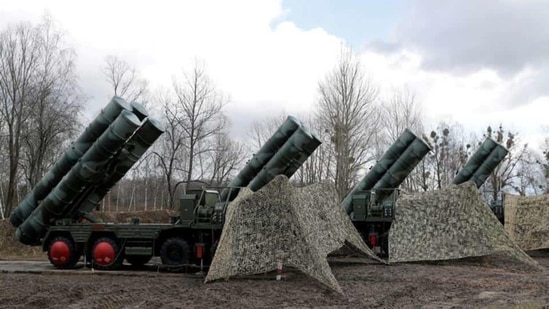
The on-going stand-off with the People's Liberation Army (PLA) on China in East Ladakh with the presence of two S-400 squadrons of anti-aircraft systems at Hotan air base in Xinjiang and Nyingchi air base in Tibet, just across Ladakh and Arunachal Pradesh respectively, has forced the national security planners into a rethink about air defence and counter-measures. To add to this increasingly complex scenario are armed UAVs, swarm drones, missiles and rockets, which are now part of stand-alone weapon systems of the PLA.
Also watch | China tried to scuttle India-US team-up in Quad: Joe Biden's big revelation
While India is expected to get five squadrons of S-400 systems from Russia starting December 2021, the potency of the anti-aircraft system is such that it can target a fighter 400 kilometres away. This means that any aircraft that gathers height and stabilises for shooting down a target becomes a target of this weapon system itself. Perhaps, this is the reason why the Indian Air Force (IAF) is relying on Hammer air-to-ground missile on Rafale fighter as a future weapon as the missile does not need to be fired from a height; it just hugs the mountain features, zooms to a height when approaching the target and then destroys it top down at an ninety degree angle with the capacity of last minute target adjustments using three different guidance systems apart from GPS. The IAF has already tested the Hammer missile and is already in its inventory with the French even offering joint development and production of this long range potent weapon.
With the air defence system under challenge from a technologically advanced adversary in the north, the fundamental question that is being asked is should India invest in more aircraft and helicopters or stand-alone systems that will dictate future wars. While the IAF has been mandated to have 42 aircraft squadrons, each with 18 aircraft, the present strength is around 30 with the potential of six more squadrons to be added.
{{/usCountry}}With the air defence system under challenge from a technologically advanced adversary in the north, the fundamental question that is being asked is should India invest in more aircraft and helicopters or stand-alone systems that will dictate future wars. While the IAF has been mandated to have 42 aircraft squadrons, each with 18 aircraft, the present strength is around 30 with the potential of six more squadrons to be added.
{{/usCountry}}With Rafale capable of doing more than twice the number of sorties than a Russian MiG and the S-400 system a game changer in air defence, does IAF need 42 squadrons? Perhaps the answer lies in India raising more armed UAV, rocket and missile regiments that can suppress the troop and air defences of the adversary. It is for these very reasons that the Indian military is soon approaching the government for acquisition of armed Predator drones from the US on government to government basis. The US has also offered to train Indian personnel on cybersecurity as the defence systems are vulnerable to cyberattacks from adversaries acting on behalf on enemies of indian state.
It is quite evident that the war scenarios are changing with aircraft carriers, air bases and huge military cantonments all under threat from long distance missiles. The future lies in long range radars that can pick up enemy posture deep within its territory and a rapid response missile that obliterates the potential threat. India has to think China not Pakistan as the principal adversary has changed.